





 Portuguese
  English
  Spanish
  3 min of reading
  69 comments


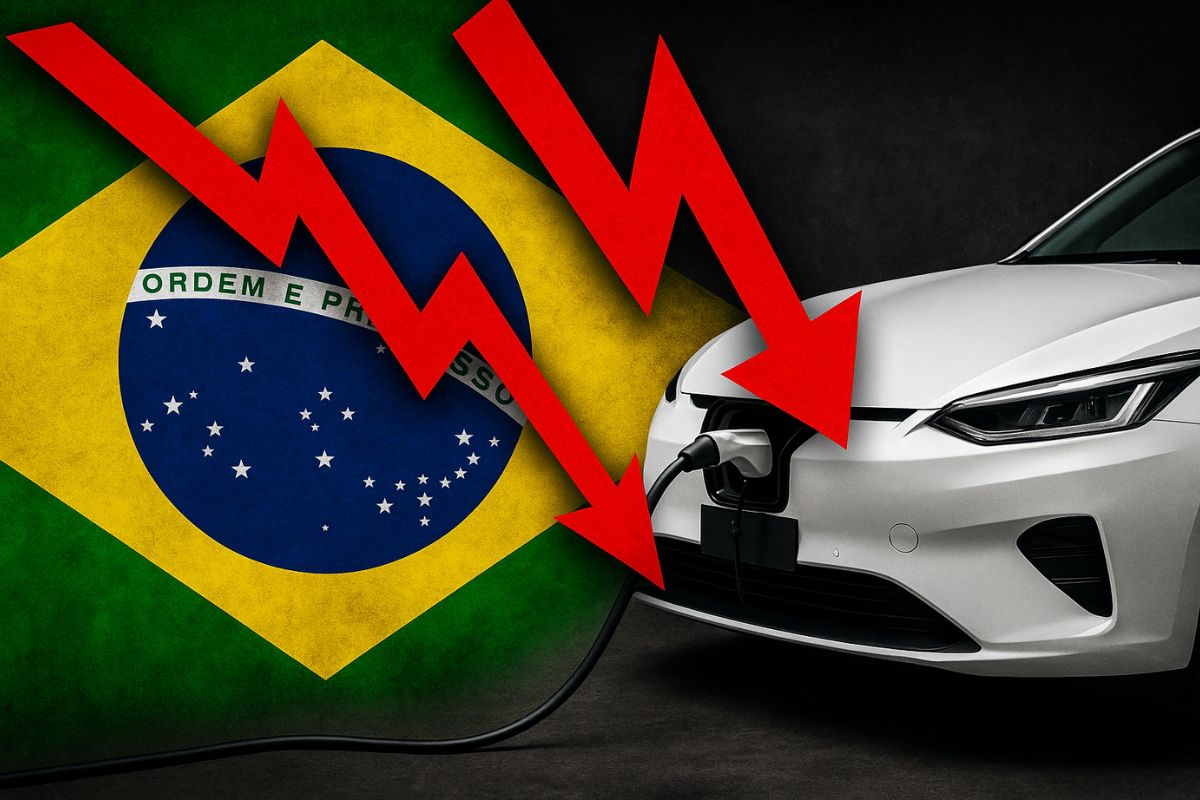


Manufacturers Warn of Deindustrialization Risks If Government Accepts Import Tariff Reductions on Disassembled Electric and Hybrid Cars.
The Brazilian automotive industry may reconsider the R$ 180 billion forecasted in investments by 2030 if the federal government accepts the Chinese automaker BYD’s request to reduce taxes on the import of semi-finished vehicle kits. The warning was given by the president of Anfavea, Igor Calvet, in an interview with Estadão.
The proposal will be analyzed by Camex (Foreign Trade Chamber) on the 30th, the day before the application of new trade tariffs by the United States. The sector fears a competitive imbalance if Brazil relaxes its trade barriers amidst a scenario of productive contraction and increased imports.
A Risky Scenario for the Brazilian Automotive Industry
BYD requested a reduction in the import tax for SKD (semi knocked down) and CKD (completely knocked down) kits used in the assembly of vehicles at its new factory in Camaçari (BA). The percentages would drop from the current 20% for hybrids and 18% for electric vehicles to only 10% and 5%, respectively.
-
The largest food company on the planet, JBS, has just opened a 4,000 square meter laboratory in Florianópolis to develop customized proteins that modulate muscle mass gain, immune response, and metabolic performance.

-
After nearly 30 bids and competition among industry giants, a Spanish company purchases one of the largest airports in Brazil for almost R$ 3 billion and takes over the management of Galeão in a concession that will last until 2039.

-
The Federal Revenue Service now automatically cross-references everything you declare with data from banks, credit cards, brokerage firms, and insurance companies, and any discrepancy between your income and your expenses triggers an alert in seconds.

-
Amid global tensions, Brazil blocks the United States’ proposal at the WTO and paves the way for a trade crisis and possible retaliations.


If approved, the measure could pave the way for vehicles partially assembled in Brazil to be classified as “national production”, creating what Calvet defines as “maquiladoras,” or operations of simple assembly with no real value added to the Brazilian industrial chain.
The Brazilian Automotive Industry Already Feels the Impacts
According to Anfavea, only in the first half of 2025, 228,000 imported vehicles were registered in the country — equivalent to the production of a medium to large factory. In the same period, national production fell by 6.5% and retail sales dropped by 10% compared to 2024. More than 600 jobs were lost in June.
For Calvet, the approval of BYD’s request would be inconsistent with the industrial policy announced by the government, which prioritizes strengthening national production, the use of biofuels, and support for the auto parts industry.
Production or Assembly? The Debate on Nationalization
One of the most sensitive points is the concept of “production.” With the reduction of tariffs for disassembled kits, the country risks registering as local production what is, in practice, merely final assembly. This would harm the auto parts industry, which accounts for approximately R$ 50 billion of the projected investments by 2030.
Moreover, Anfavea warns of the possibility of “looting the Brazilian market under the guise of national production,” generating unfair competition with manufacturers already established and committed to full production in the country.
The Geopolitics of Tariffs and the Weight of the Brazilian Decision
BYD’s request comes at a critical moment for global trade. With the US about to raise tariffs on Chinese products, Brazil finds itself pressured to adopt a strategic position. According to Anfavea, even China charges 15% on imports of disassembled kits, a higher percentage than what BYD is asking for Brazil.
The Camex decision will have direct effects on the sector’s competitiveness, industrial employment, and the technological sovereignty of the Brazilian automotive industry.
Do you think Brazil should protect its industry or open the market to new players like BYD? Comment below and join the debate.








Questão sensível! Realmente as grandes montadoras tradicionais abusam dos preços e da falta de qualidade e tudo isso é amplificado pelos altos impostos. Por outro lado sabemos que essas empresas com a produção nacional, garantem empregos diretos e indiretos, coisa que não aconteceria com a montagem de carros a partir de kits importados: isso diminuiria em parte os empregos diretos nas montadoras e seria um caos nos empregos indiretos!
Qual a solução: em 1° lugar o governo desoneração a folha de pagamento, reduzir impostos e assim realmente desoneração o valor final do produto e em 2° lugar, mas não menos importante, as montadoras terem vergonha cara e pararem de explorar o brasileiro. E, em último lugar, (mais fácil falar do que fazer), o consumidor nacional boicotar os preços abusivos! Lei da oferta e da procura é bidirecional!
Acho que deve abrir o mercado visto que as indústrias brasileiras (?), mesmo com todos os incentivos não diminuem os preços dos veículos. Aliás, tb não melhoram designer, segurança e só enchem de penduricalho.
Chega de carros super caros. BYD entrega mais por muito menos. Traz igualdade e eficiência.
Vc não sabe o que fala amigo, o custo de produção no Br e impostos são muito elevados. Va trabalhar na China como escravo para ver se é bom…