





 Portuguese
  English
  Spanish
  4 min of reading
  0 comments


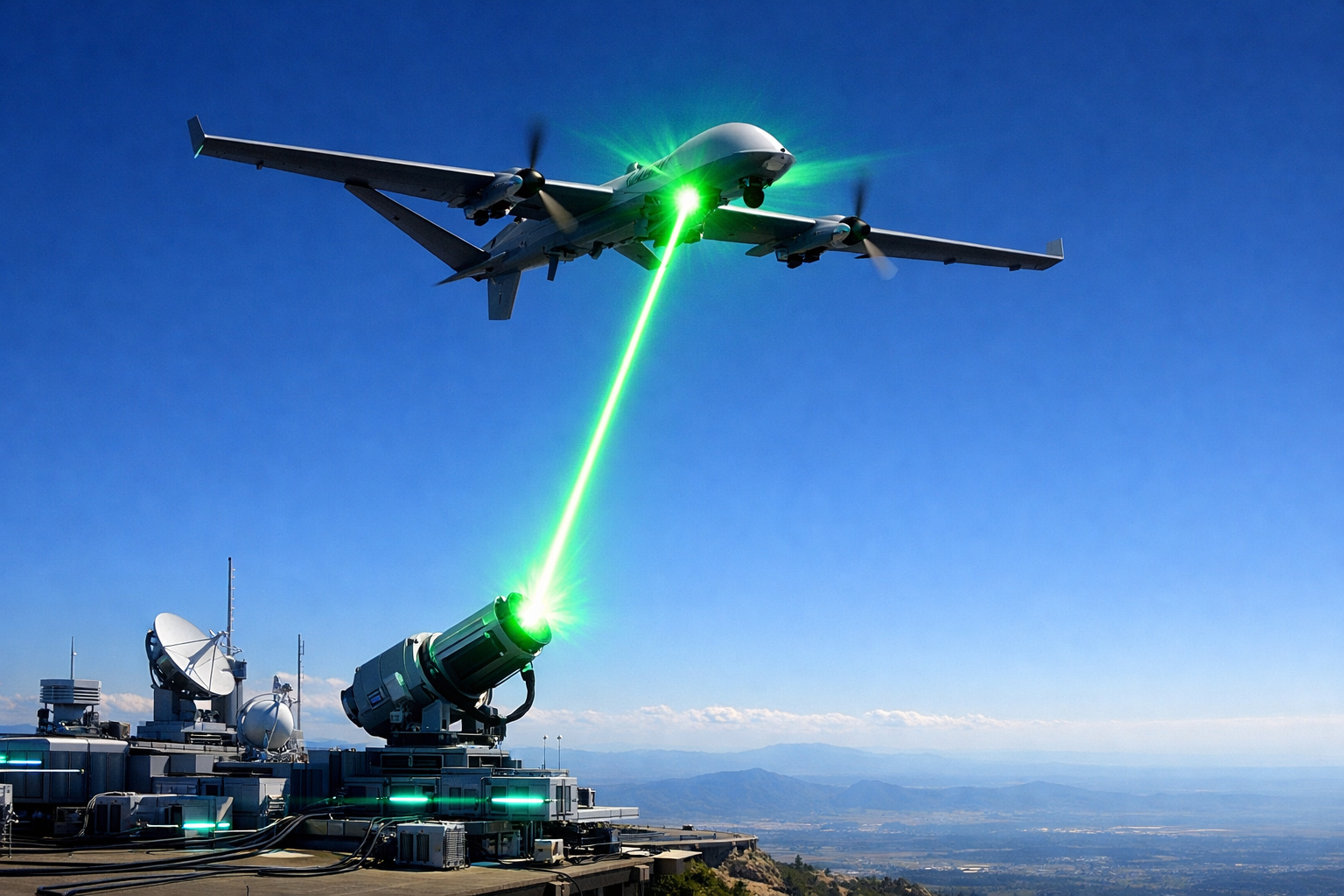
Technology Developed in the United States Uses Kilowatt Laser Beams to Keep Drones 100% Charged Throughout the Flight
The concept of “infinite flight” has always seemed distant. However, a new laser energy transmission technology could transform this idea into reality. The American company PowerLight Technologies announced a system capable of recharging drones in mid-air, eliminating the need for frequent landings to recharge.
The information was reported by “CNN Brasil,” based on an official statement from the company headquartered in Kent, United States. According to the company, the system was created in partnership with the United States Department of Defense (DoD), which reinforces the strategic potential of the innovation.
Currently, commercial drones need to return to base every 30 or 60 minutes. However, with laser charging, this limitation may cease to exist. Instead of constantly landing, the drone could stay in the air for days or even weeks, performing only scheduled maintenance.
-
The German “steel monster” weighing 55 tons fires up to 10 projectiles per minute at over 40 km and avoids counterattacks on the battlefield by moving quickly to escape enemy attacks; meet the Panzerhaubitze 2000.

-
USS Gerald R. Ford, the largest aircraft carrier in the world, returns to sea after a fire in the laundry in the Red Sea; repaired in Crete, it resumes missions of Operation Epic Fury against Iran.

-
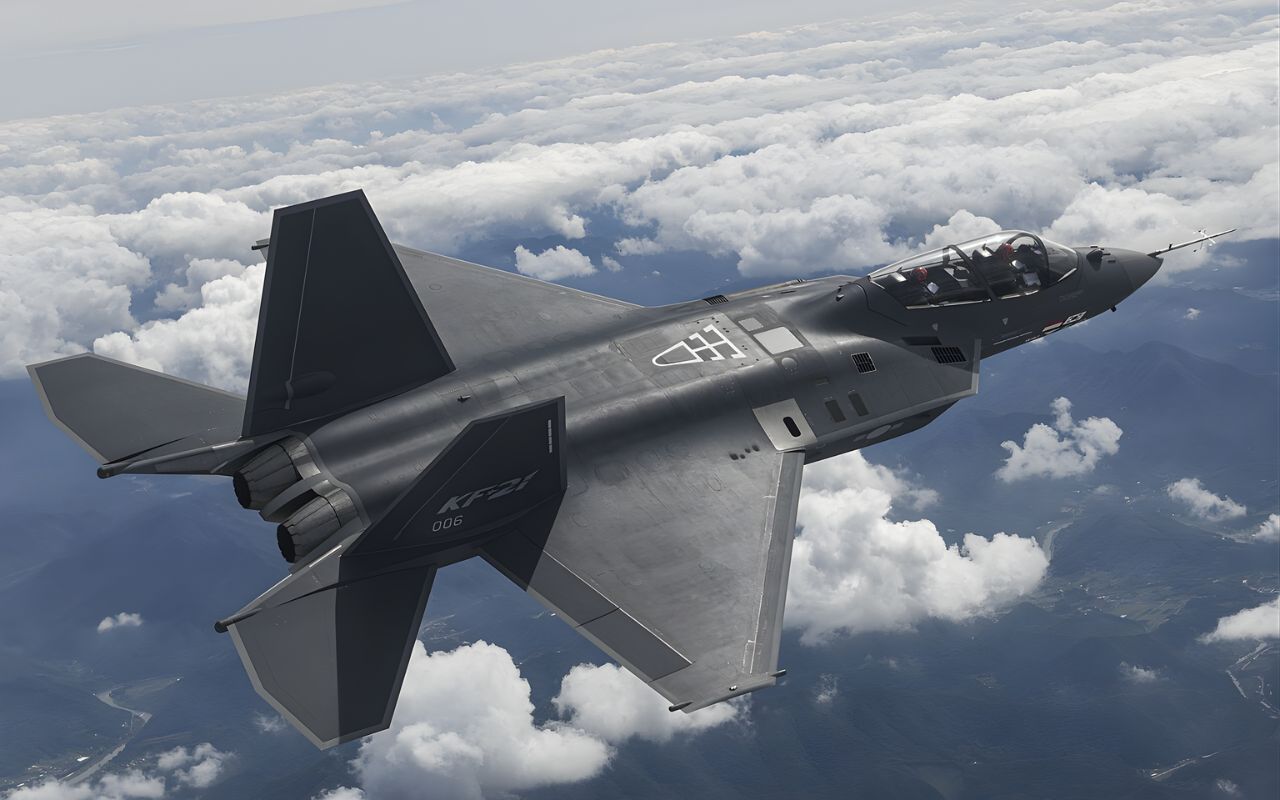
Military power: South Korea’s new KF-21 fighter jet will be a key component in replacing the aging aircraft of the air force, placing the country on the map of air military powers.
-
With 310 meters, 80 thousand tons, and capable of operating for 45 years, the new nuclear aircraft carrier France Libre will be the largest in France and will enter service in 2038.


How the Ground Laser Energy Transmitter Works
The system combines two main components: a ground transmitter and an onboard receiver. Unlike conventional lab lasers that operate in milliwatts, PowerLight’s transmitter works in the kilowatt range — thousands of watts of power.
Additionally, the transmitter uses advanced control software to lock onto and track the drone continuously. This ensures safe transfer even with the aircraft in motion.
According to the company, the system operates with drones flying at altitudes of up to 1,500 meters. On the ground, the transmitter applies beam modeling through an advanced optical system. This feature maintains the laser’s ideal properties over kilometers, allowing energy to reach the drone with minimal losses.
The Role of the Onboard Receiver in the Drone


The receiver weighs only 2.7 kilograms and acts as the heart of the system in the air. It captures the monochromatic beam and converts light energy directly into electricity.
Unlike traditional solar panels that absorb broad-spectrum light, the photovoltaic cells of the receiver are exclusively tuned to the specific frequency of the laser. Consequently, energy efficiency increases.
As a result, the batteries remain 100% charged throughout the flight. The analogy is simple: it works like a phone plugged in constantly but without wires.
Intelligent Tracking and Operational Safety
One of the system’s greatest differentiators is active tracking. Advanced algorithms process real-time data, such as speed, vector, and altitude of the drone. They then continuously adjust the direction and intensity of the beam.
If the system detects any obstruction or loss of contact, it immediately stops the transmission. This reduces risks for manned aircraft, birds, and people on the ground.
Additionally, communication operates through a bidirectional data architecture. Sensors on the drone monitor battery temperature and instantaneous consumption. Subsequently, they send this information via optical link. On the ground, operators modulate power according to demand.
The CTO and co-founder of PowerLight, Tom Nugent, stated: “Our transmitter tracks speed and vector, delivering energy exactly where needed.”
Tests with the K1000ULE Drone Begin in 2026

The PowerLight has scheduled tests for early 2026 using the K1000ULE electric drone from Kraus Hamdani Aerospace. The model has a wingspan of five meters and a range of up to 26 hours.
If the laser system works as expected, this time could multiply drastically. Thus, the promise of “infinite flight” may come closer to operational practice.
Overcoming the Limited Flight Autonomy of Drones

Unmanned Aerial Vehicles (UAVs) already perform strategic functions in precision agriculture, rescue operations, public safety, and audiovisual production. Additionally, they participate in military missions, as is the case with the Raven RQ-11B drone.
However, all face the same obstacle: limited autonomy. In commercial drones, the maximum time typically hovers around one hour. In surveillance and reconnaissance missions, this restriction can compromise critical operations.
Therefore, PowerLight aims to go beyond simple in-flight recharging. The company plans to implement a distributed energy infrastructure based on a wireless energy mesh network. In this model, portable transmitters could power multiple drones simultaneously.
“It’s not just point-to-point transfer,” Nugent stated. “We are building an intelligent energy network capacity.”
Still, the system needs to overcome technical and regulatory challenges. Civil aviation agencies will have to assess specific regulations for the use of high-power laser beams in shared airspace.
Despite these barriers, laser energy transmission already represents a significant advance in drone technology.
Do you believe that infinite flight could transform sectors such as agriculture, defense, and air logistics in the coming years?









-

-

-

4 pessoas reagiram a isso.