





 Portuguese
  English
  Spanish
  4 min of reading
  0 comments


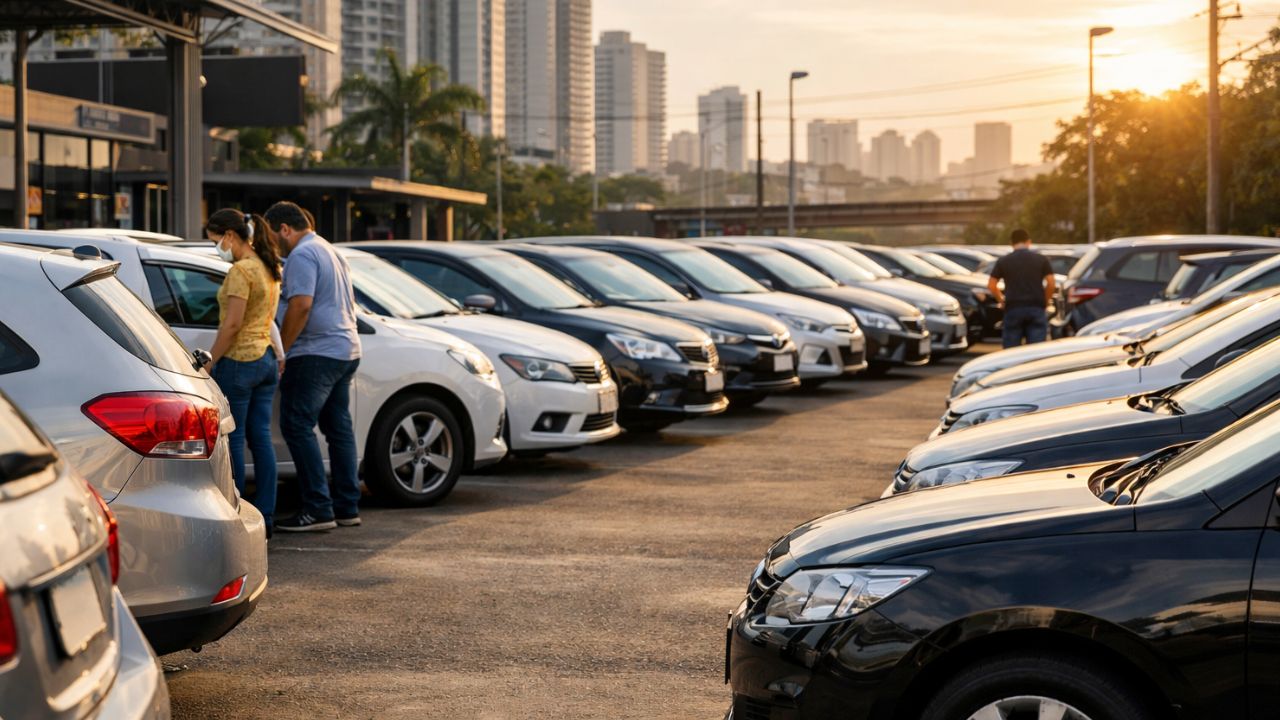
High In Used Cars In 2026 Reinforces Recovery Of The Automotive Market In Brazil And Increased Demand For Used Vehicles.
The inflation of used cars has accelerated again in Brazil at the beginning of 2026, reflecting a hotter automotive market and growing demand for used vehicles.
Data from the IBV Auto index, from Banco BV, shows that prices for used light vehicles rose by 0.55% in February, after an increase of 0.90% in January, recording the best performance for the month since 2022.
This movement occurs in a context of a resilient economy, even in the face of high interest rates and persistent inflation, which continues to pressure the cost of new vehicles.
-
The car stored for 38 years: when opening the barn door, what appears is breathtaking and looks like a scene from a movie!

-
Fiat works miracles in the Brazilian market, lowers the price of its 0 km hatch to R$ 69,990, reestablishes the model as the cheapest car in the country, and reignites the battle against Kwid and C3.
-
Chevette with cooking gas: How the gas cylinder ends up being used in cars clandestinely and why this makeshift solution can result in leaks, explosions, damaged engines, and seized vehicles.
-
Fiat launches the new 2027 Toro hybrid with 48V, 176 hp, an electric motor of 15.5 hp, a 0.85 kWh battery, up to 7% fuel savings, 8% fewer emissions, and possible exemption from IPVA.

In the accumulated 12 months until February, the indicator shows an increase of 6.60%, the highest level since March 2023. The result reinforces the perception that the automotive market in Brazil started the year with greater dynamism than expected.
See also: Waking Up At 3 AM Can Be Normal, Says Sleep Science About Biphasic Sleep
See also: Strait Of Hormuz: Hundreds Of Ships And Oil Tankers Stranded After Attacks In The Middle East
Inflation Of Used Cars Grows And Follows Economic Activity
The evolution of used car prices follows broader signs of economic recovery. According to experts, the sector’s behavior indicates that consumption remains active even in a challenging financial environment.
According to Roberto Padovani, chief economist at Banco BV, the growth rate stands out, especially in the annual accumulation.
Although February’s inflation is more moderate than that observed in January, the acceleration rate of prices over 12 months is noteworthy. The index rose from 5.31% in December to 6.60% now, he states.
According to the economist, inflation in the automotive market reflects an economy supported by higher public spending, strong exports, and a domestic activity that continues to be resilient.
We are seeing a re-acceleration of the economy in Brazil and worldwide. Even with high interest rates, the vehicle market is performing better than expected, he affirms.
Automotive Market Sees Increased Demand For Used Vehicles
Another important factor for the rise in prices is the change in consumer behavior. In recent years, the prices of new vehicles have significantly increased, leading many buyers to shift to used cars.
This shift has strengthened the used car segment, sustaining price increases even during historically weaker sales periods.
Traditionally, the beginning of the year tends to be slower for the sector. However, the performance recorded in January and February indicates a break from this seasonal pattern.
For Jamil Ganan, vice president of Retail at Banco BV, the combination of strong demand and price transfer explains the current scenario.
The highest increase for February since 2022, combined with January’s advance, reinforces the heating of the used market at the beginning of this year. Even in a high Selic environment, the sector continues to be quite dynamic in 2026, he states.
Regional Differences In The Used Car Market In Brazil
The appreciation of used vehicles also showed significant regional differences.
The Central-West region recorded the largest monthly increase in February, with growth of 0.77%, primarily driven by the markets in Mato Grosso and Mato Grosso do Sul.
Meanwhile, in the 12-month accumulation, the North region leads the appreciation in the Brazilian automotive market. The largest advances were recorded in:
- Rondônia (+7.67%)
- Amazonas (+7.63%)
- Tocantins (+7.49%)
These numbers indicate that the expansion of demand for used cars is occurring in various regions of the country, accompanying the growth of income and consumption.
Used Vehicles That Had The Greatest Appreciation
Among the most popular vehicles in the automotive market, some models showed appreciation above the average.
The highlight was the Chevrolet Onix, which registered an increase of 2.06% in prices in February.
Next in line are:
- Toyota Corolla (+1.69%)
- Volkswagen Gol (+0.56%)
On the other hand, some models pressured the index downward, such as:
- Toyota Hilux SW4 (-3.30%)
- Volkswagen T-Cross (-0.96%)
- Nissan Kicks (-0.89%)
This variation shows that inflation behavior in the used car market can vary according to the type of vehicle and consumer demand.
Electrics And Hybrids Depreciate Faster
The data also reveals relevant differences between types of motorizations.
Electric vehicles launched in 2023 have accumulated an average depreciation of 45.1% by February 2026, influenced by the drop in prices of new models and increased competition among manufacturers.
In the same period:
- 2023 hybrids experienced an average drop of 26.4%
- comparable combustion vehicles fell 21.6%
Among 2022 models, the difference is even greater. Electric vehicles have accumulated a depreciation of 48.4%, while hybrids fell 21.1% and combustion cars recorded an average decline of 13.4%.
Automotive Market Functions As An Economy Thermometer
Experts point out that the behavior of the automotive market often anticipates movements in the economy.
This happens because the purchase of vehicles directly depends on factors such as income, credit, and consumer confidence.
Therefore, the acceleration of used car inflation may indicate that the Brazilian economy started 2026 at a stronger pace than expected.
At the same time, the scenario requires attention from monetary authorities. According to Padovani, the heating of activity could keep inflation pressured and influence future decisions of the Central Bank regarding interest rates.
Sales Of Used Vehicles Maintain Strong Pace In 2026
The sales numbers reinforce this positive scenario.
According to Fenauto, the used segment started 2026 with 1,340,333 units sold in January, a growth of 9.3% compared to the same period in 2025.
The result confirms the continuation of the expansion of the Brazilian automotive market, which had already recorded a sales record last year.
With gradual improvement in economic indicators, falling unemployment, and expectations of interest rate reductions throughout the year, experts believe that the demand for used cars and vehicles is likely to remain strong in the coming months in Brazil.








Seja o primeiro a reagir!