





 Portuguese
  English
  Spanish
  4 min of reading
  1 comment


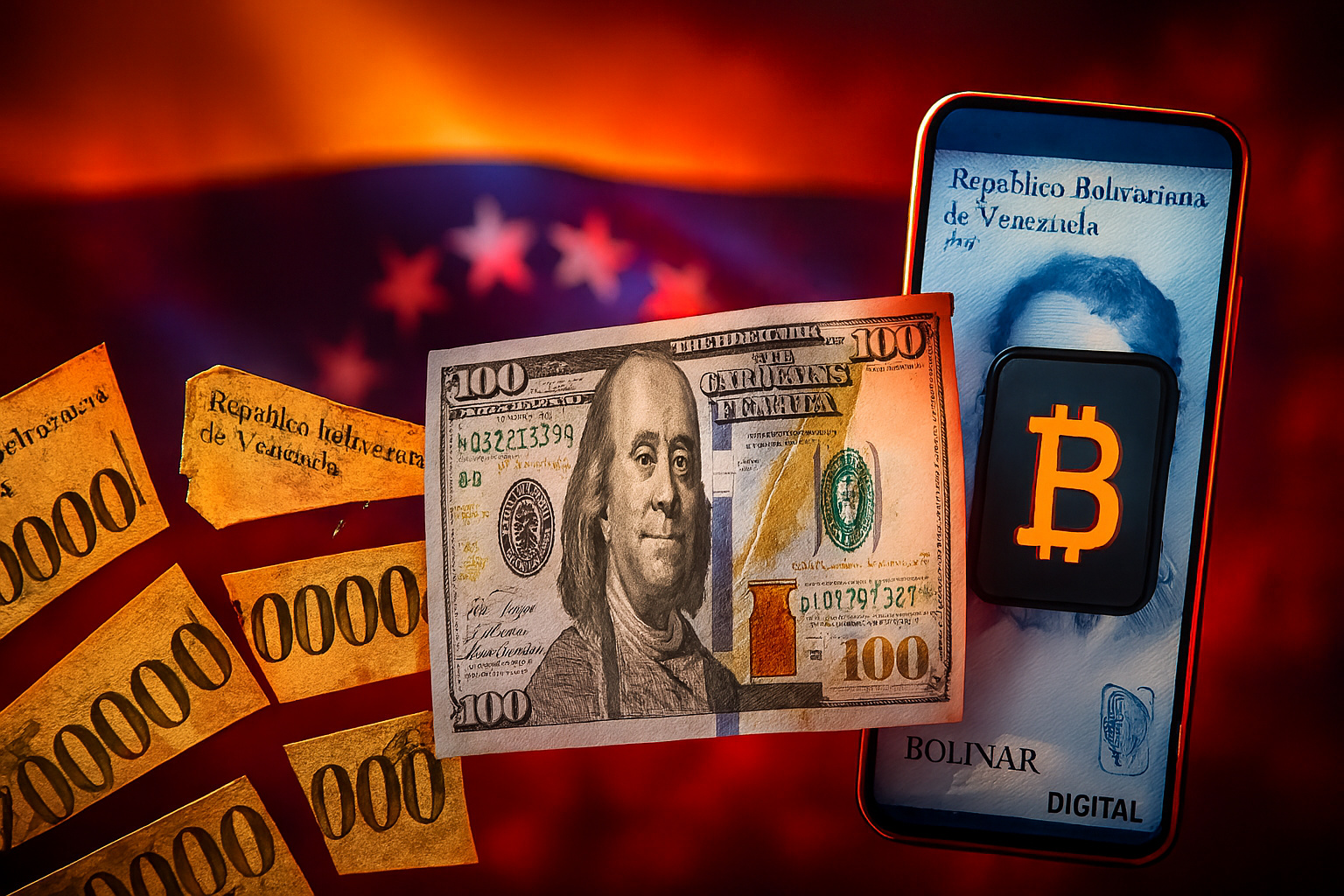


Venezuela Cut 14 Zeros from the Bolívar and Created the Digital Bolívar in 2021, but Inflation Continues to Erode Wages and the Dollar Dominates the Economy.
Few countries in the world have faced such devastating monetary instability as Venezuela. In less than two decades, the country led by Hugo Chávez and then Nicolás Maduro saw its currency lose value so dramatically that it had to be restructured several times. Between 2008 and 2021, the Venezuelan government removed 14 zeros from the Bolívar in different rounds of “redenomination,” trying to regain confidence. In 2021, it announced the launch of the Digital Bolívar, presented as a modern solution to simplify transactions and reduce the impact of hyperinflation. But in practice, the virtual currency did not solve the problems: prices continue to skyrocket and wages remain eroded by the loss of purchasing power.
The Venezuelan Hyperinflation
The monetary collapse began to intensify in mid-2013, following the drop in oil prices—the main export product of Venezuela, responsible for over 90% of foreign exchange earnings. Without enough dollars, the government began to finance domestic spending with uncontrolled printing of money.
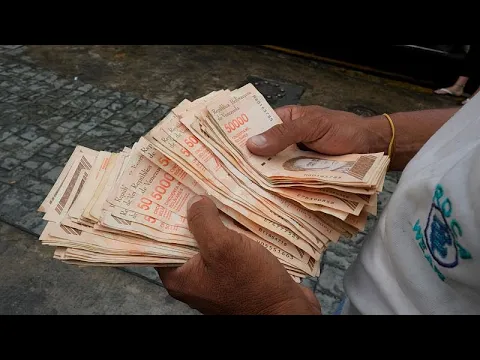

The result was an inflationary spiral. Between 2016 and 2019, annual inflation exceeded 1,000,000%, according to data from the International Monetary Fund (IMF). In practice, this meant that prices doubled within days.
-
China alone accounts for 70% of trade within the BRICS, while Brazil establishes itself as an essential supplier of food and minerals: understand how the group, which already represents nearly 40% of the world’s GDP, is changing the game.
-
Starting in May, those who do not have registered biometrics will not be able to apply for Bolsa Família, sickness benefits, or unemployment insurance: understand the new rule that changes access to benefits for millions of Brazilians.
-
A new law being voted on in Brazil proposes a minimum fare of R$ 10 per trip and R$ 2.50 per kilometer for Uber and 99 drivers, and promises to ensure they earn as well as taxi drivers did during the golden age of taxis in the country.

-
Bauer Group collapses after failed judicial recovery: 25 years, 800 vehicles, and a network of gas stations leave a debt of R$ 50 million and 100 layoffs, exposing costs, tight margins, and expensive credit in Brazil.

For the average citizen, the consequence was devastating: wages that couldn’t buy even a kilogram of rice, empty supermarkets, and the need to carry bags full of money to pay for basic items.
The Cuts of Zeros from the Currency
Faced with chaos, the Venezuelan government attempted to “reset” the currency several times:
- 2008 – creation of the Bolívar Fuerte, cutting 3 zeros from the old Bolívar.
- 2018 – creation of the Bolívar Soberano, removing 5 additional zeros.
- 2021 – launch of the Digital Bolívar, cutting another 6 zeros.
In total, between 2008 and 2021, 14 zeros were removed from the currency. In practice, an account of 100,000,000,000,000 Bolívars in 2007 was worth only 1 Digital Bolívar in 2021.
The Birth of the Digital Bolívar
In October 2021, Nicolás Maduro announced the creation of the Digital Bolívar, promising to modernize the economy, promote electronic payments, and simplify financial transactions.
The digital currency, however, should not be confused with cryptocurrencies like Bitcoin or even with the Drex, being tested in Brazil. The Digital Bolívar has no blockchain, mining, or decentralization. It is nothing more than an electronic version of the official currency, used to reduce the circulation of cash and facilitate banking operations.
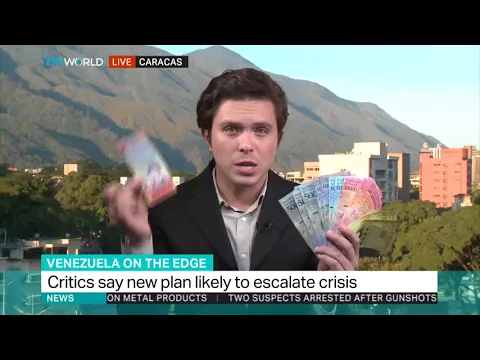
The launch was accompanied by government advertising campaigns claiming that Venezuela was entering the era of “digital economy.” But the reality for people’s pockets told a different story.
The Inflation That Was Never Defeated
Despite the name change and the removal of zeros, inflation continued to erode wages and contracts. In 2022, Venezuela’s annual inflation was still 234%, according to the Central Bank of Venezuela. In 2023, even with a slowdown, it remained above 130%, one of the highest in the world.
This means that although the Digital Bolívar facilitates transactions, it has no real purchasing power. The population, skeptical of the national currency, began to adopt the U.S. dollar as a reference for prices, wages, and savings.
In many regions, the Bolívar is accepted only for small payments, while larger transactions are quoted in dollars.
Informal Dollarization
One of the strongest side effects of the crisis was the informal dollarization of the Venezuelan economy. Although Maduro’s government has never officially declared the dollar as the national currency, the circulation of the American currency has become the norm in supermarkets, stores, and even transportation.
Today, more than 60% of transactions in the country are made in dollars, according to independent surveys. The Digital Bolívar has been relegated to a secondary function, mainly used in bank transfers or as change.
The Impact on the Population
Hyperinflation was not just a monetary crisis. It had profound consequences:
- Decline in Purchasing Power – minimum wages fell to less than US$ 5 per month during some periods.
- Mass Exodus – over 7 million Venezuelans have left the country since 2014, forming one of the largest current diasporas in Latin America.
- Parallel Markets – the scarcity of basic products created an informal economy based on barter and smuggling.
- Social Inequality – those with access to dollars survived; those who depended solely on the Bolívar saw their lives turn into desperation.
The Symbolic Note: From Paper to Digital
If Zimbabwe became famous for the 100 trillion dollar note, Venezuela entered history for another reason: the currency that lost 14 zeros in just 13 years.
It’s as if suddenly, R$ 100 trillion turned into only R$ 1. For many Venezuelans, the process showed a complete loss of confidence in the national currency—a trauma that will be hard to forget.
The creation of the Digital Bolívar was yet another desperate attempt to save the Venezuelan currency, but it did not solve the central problem: uncontrolled inflation and the lack of confidence from the population.
Today, Venezuela lives a paradox. It has a modern digital official currency that almost no one believes in; and a foreign currency, the dollar, that has not been officialized but is accepted almost everywhere.
And you, reader: if your currency lost 14 zeros in just over a decade, would you continue to believe in it or seek refuge in another more stable currency?










I do agree with all the ideas you have introduced on your post They are very convincing and will definitely work Still the posts are very short for newbies May just you please prolong them a little from subsequent time Thank you for the post