





 Portuguese
  English
  Spanish
  4 min of reading
  36 comments


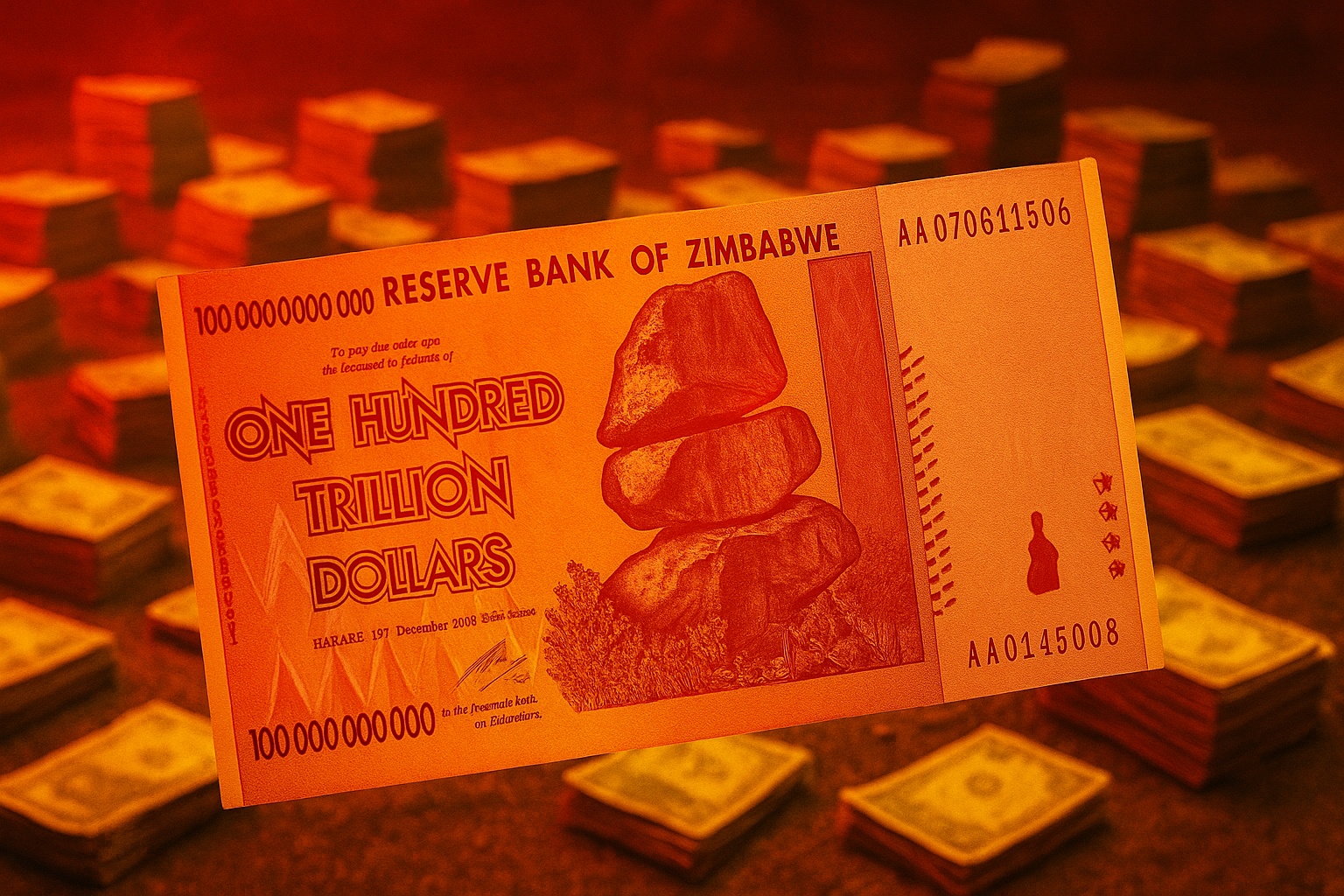


Zimbabwe Lived Hyperinflation So Extreme That It Had to Print Bills of 100 Trillion Dollars, A World Symbol of a Collapsing Economy.
Few countries in modern history have experienced an inflationary crisis as devastating as Zimbabwe. The hyperinflation that hit the African nation in the late 2000s was marked by a surreal scene: the issuance of 100 trillion Zimbabwean dollar bills, an unimaginable amount that became a symbol of a collapsing economy.
The episode shocked the world, became an example in economics manuals, and is still remembered as one of the largest financial tragedies in recent history. But what led an entire country to experience this situation, and how did a bill with so many zeros turn into a relic?
The Beginning of Hyperinflation
The crisis began to take shape in the late 1990s, when Zimbabwe faced severe political and social problems. The government of Robert Mugabe adopted a series of measures that generated instability:
-
These living root bridges and ladders are over 700 years old and help indigenous people survive in one of the rainiest regions in the world.

-
From sertanejo star to international investor: Ana Castela invests millions in a mansion in the USA, creates a themed accommodation in Orlando, and shows that the “boiadeira” also wants to grow away from the stage.

-
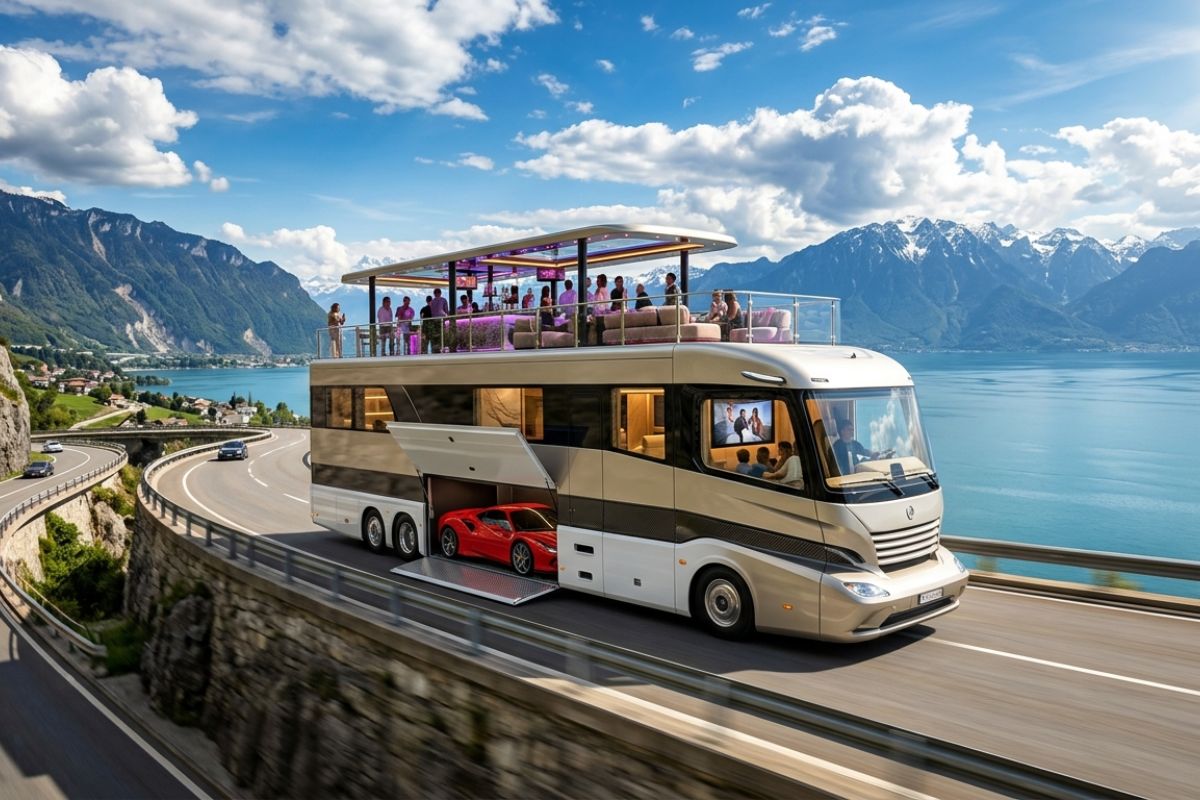
The 10 most stunning motorhomes in the world: a $3 million trailer with a rooftop nightclub and garage for a Ferrari, “palaces on wheels” with Italian marble, private cinema, and five-star hotel luxury for billionaires.
-
Trump wanted to spend $400 million on the White House, but the courts prohibited the million-dollar construction.



- A forced land reform, which confiscated farms from white producers without planning, led to a collapse in agricultural production and caused capital flight.
- A drop in exports, especially of tobacco, drastically reduced the inflow of foreign currency.
- The Congo war, funded by the Zimbabwean government, increased public spending.
To cover the deficit, the Central Bank began to print money at a rapid pace, quickly eroding the purchasing power of the population.
The Escalation of Prices with the 100 Trillion Zimbabwean Dollar Bill
Between 2007 and 2008, prices began to rise at a dizzying pace. The International Monetary Fund (IMF) estimated that, in November 2008, the monthly inflation rate reached 79.6 billion percent. This means that, on average, prices doubled every 24 hours.
In practice:
- A loaf of bread that cost 2 billion Zimbabwean dollars in the morning could cost 4 billion by the end of the day.
- Workers would receive their salaries and rush to the market, because the next day the money wouldn’t buy anything.
- People began to use wheelbarrows full of notes to make basic purchases.
The 100 Trillion Dollar Bill
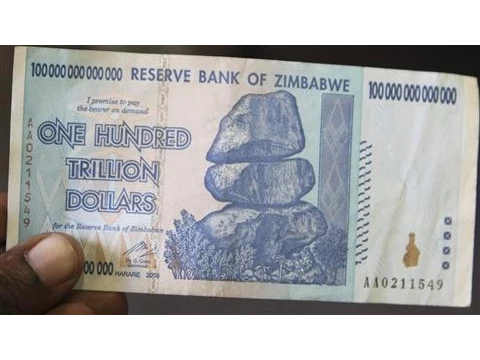
In the face of chaos, the Reserve Bank of Zimbabwe issued successive bills with increasingly higher denominations: first millions, then billions, until reaching the peak of 100 trillion Zimbabwean dollars in 2008.
This bill, considered the highest denomination ever issued in world history, was worth in practice only a few American dollars on the parallel market. In other words, even with so many zeros, it had no real purchasing power.
The bill became an international symbol of hyperinflation. Today, it circulates only as a collector’s item, sold on sites like eBay for prices between US$ 50 and US$ 200 — ironically, more than it could buy when it was in circulation.
The Collapse of the Currency
The situation became unsustainable. In 2009, Zimbabwe simply abandoned its national currency and authorized the use of the American dollar, South African rand, and even other foreign currencies in domestic commerce.
This temporarily stabilized the economy, as prices were quoted in strong currencies. But it also left the country without its own monetary policy, dependent on foreign currency to function.
The Social Consequences
Hyperinflation was not just a financial disaster. It brought profound effects to the population:
- Food scarcity – with disorganized agriculture, supermarkets were empty and famine spread.
- Collapse of public services – hospitals, schools, and transport were abandoned due to lack of resources.
- Mass emigration – millions of Zimbabweans fled to neighboring countries, such as South Africa and Botswana, in search of survival.
- Total loss of savings – entire families saw decades of savings evaporate in weeks.
Hyperinflation destroyed not only money but also trust in the economic structure itself and in the government.
Lessons from the Zimbabwean Case
Economists around the world cite the episode as an extreme example of what can happen when there is:
- Uncontrolled issuance of unbacked money,
- Disorganized economic policies,
- Loss of international credibility.
The clearest lesson is that trust in the value of money is an asset as important as any material reserve. When it is lost, no number of printed zeros can restore purchasing power.
Zimbabwe After Hyperinflation
After abandoning its national currency, the country experienced years of relative stability but without robust growth. In 2019, the government attempted to reintroduce the Zimbabwe Dollar (ZWL), but the population’s trauma from hyperinflation led many to continue preferring to use American dollars.
To this day, full trust has never been restored. The episode of the 100 trillion dollar notes serves as a permanent warning to monetary authorities around the world.
Zimbabwe made history by printing the largest bill ever seen, but not as a symbol of wealth — rather as one of economic collapse. The 100 trillion dollar bill is a portrait of a country that lost control of its own currency and plunged into one of the most severe hyperinflations on record.
For the citizens, the bitter memory remains of worthless salaries, empty supermarkets, and a future mortgaged by mismanagement.
And you, dear reader: what would you do if the money you receive today lost half its value by tomorrow? Would you be prepared to live in a country where even 100 trillion cannot buy even a loaf of bread?







O Brasil nos anos 80 passou praticamente pelas mesmas situações, uma inflamação galopante de 2500 por cento ao ano e o governo era de direita, mas temos que entender que o plano real foi elaborado pelo governo de direita, é interessante manter a estabilidade da moeda para conter a infração.
Engano seu, governo era PSD partido social Democrático, Presidente da época era o Sarney, depois veio o Collor de Melo que com seu governo pegou a poupança de muitos brasileiros. O Brasil só começou a melhorar quando o Collor sofreu o impeachment e Itamar Franco assumiu, deu uma melhorada na economia e fez o plano real bater de frente com o Dólar, mas o nosso atual governo foi contra o plano real, daí depois do Itamar o Fernando Henrique aproveitou as plantações de Itamar Franco e manteve o Brasil crescendo no primeiro governo dele, o Fernando Henrique como de centro, hj descrito como centrão, daí veio o Lula que no primeiro mandando fez um bom governo, o segundo deixou a desejar, colocou a Dilma no lugar e daí sabe o restante da história. Mas o Sarney era do centrão de hj em dia, ficava literalmente em cima do muro pra escolher um lado.
O centrão no Brasil é a proteína que transporta o câncer chamado esquerda no país. Eles vão sempre pro lado que paga ou favorece mais.
A diferença é que à época da super inflação em 80, os governos não desapropriaram terras e nem abandonaram o serviço social. E o governo de centro foi quem roubou as cadernetas de poupança. Já os governos de esquerda estão corroendo o poder de compra da população com taxas e sobretaxas, cerco tributário ao contribuinte sufocando a população, e aumentando de forma bilionária os gastos com a máquina pública.
Graças a Deus vivo no país abençoado e estabilizado. Prefiro não imaginar o pior.
Alta de preços é um veneno criado pela extrema direita
Alta de preços é “criada”? Seu conhecimento em economia deve ser o mesmo do Haddad: zero. Ao menos leia a reportagem completa para entender o que causou essa alta e a inflação desgovernada. Faça um paralelo com nossa política atual e verá que nossa realidade não está tão distante do que ocorreu com o Zimbábue se continuarmos neste caminho atual.