





 Portuguese
  English
  Spanish
  3 min of reading
  1 comment


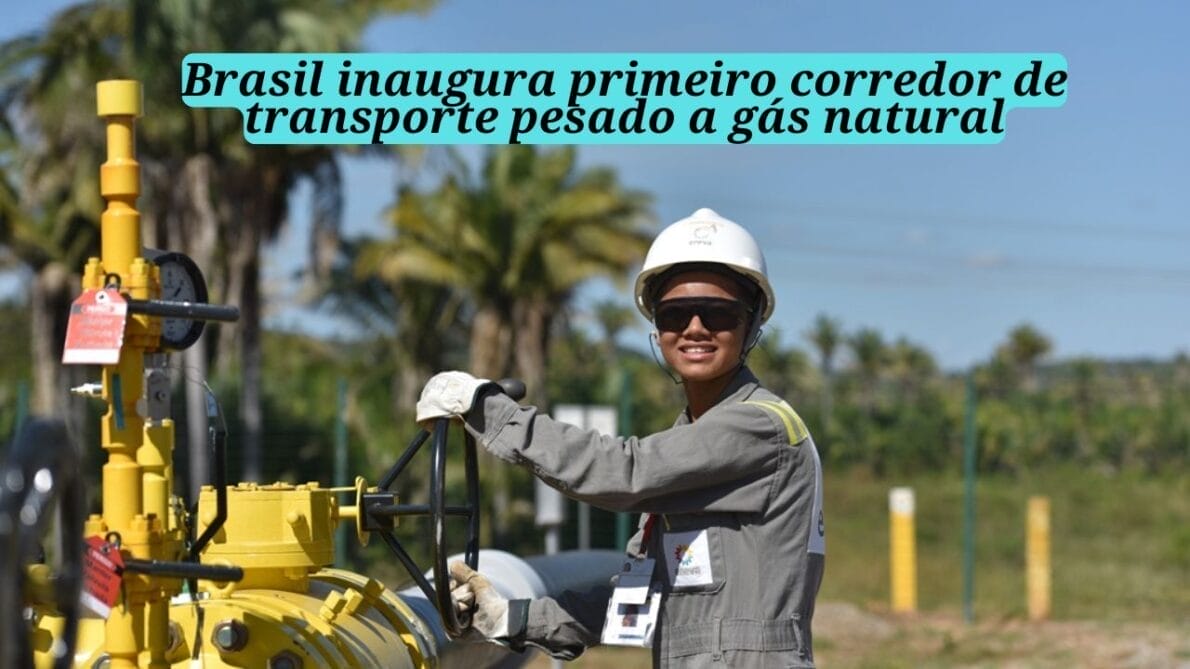

Brazil Launches First Heavy Transport Corridor with Natural Gas, Starting from Maranhão
Get ready for a revolution on Brazilian roads! Natural gas is about to transform heavy transport in the country, bringing environmental and economic benefits that seem straight out of a science fiction movie.
Brazil gains its first heavy transport corridor with natural gas, with operations launched in Maranhão and plans for expansion to other states. Eneva, a natural gas operator, will supply LNG to the truck fleet of Virtu GNL, which will be used in the distribution logistics of Yara Brasil, a global leader in plant nutrition.
Introduction of Natural Gas in Heavy Transport
“We are taking an important step towards decarbonizing the country with the introduction of natural gas in heavy transport,” stated Marcelo Lopes, Executive Director of Marketing, Commercialization, and New Business at Eneva. This cleaner fuel will replace diesel, significantly reducing pollutant gas emissions and promoting a more sustainable energy matrix.
-
Offshore industrial demand in Macaé skyrockets with the recovery of oil and gas and could grow by up to 396% by 2026 in the Campos Basin.
-
Offshore industrial demand in Macaé surges with the recovery of oil and gas and could grow by up to 396% by 2026 in the Campos Basin.
-
Brazilian giant expands borders in the Southeast: Petrobras confirms new oil discovery in ultra-deep waters in the pre-salt of the Campos Basin.

-
Alert in the global energy market: Severe tropical cyclone hits the coast and disrupts gas production at major plants in Australia, threatening global supply.


The transportation contract was signed on September 24th during the ROG-e fair, in the presence of the Minister of Transport, Renan Filho. The contract provides for the transportation of 50,000 tons of fertilizers per year, starting in January 2025, using trucks powered by natural gas and supplied by Eneva. This will result in a 20% reduction in CO₂ emissions and 90% reduction in NOx and SOx emissions, harmful gases to health.
Eneva and Yara
“The adoption of a more efficient transport matrix, with lower costs and impact, is crucial for us to become a carbon-neutral company by 2050,” said Alberto Rodrigues, Logistics Director of Yara Brasil. José de Moura Jr., CEO of VirtuGNL, added: “Yara is a company that shares our commitment to decarbonization. We are excited about this partnership.”
Eneva has a production capacity of 600 cubic meters of natural gas per day at the Parnaíba Complex in Santo Antônio dos Lopes (MA). In the Matopiba region, which includes Maranhão, Tocantins, Piauí, and Bahia, there is a high consumption of fuels that can now be replaced by natural gas, ensuring a cleaner energy matrix for the country. “If we manage to convert 10% of this new market, it would be equivalent to approximately 1 million cubic meters of LNG per day,” commented Lopes.
Use of Natural Gas
The Minister of Transport, Renan Filho, emphasized the project’s importance for the sustainability of cargo transport in Brazil. “We are committed to stimulating the creation of blue cargo transport corridors to promote the use of natural gas,” he stated. Among the planned actions is the installation of fueling stations along strategic routes and allocating 1% of highway auction revenues to promote new, less polluting transport technologies.
Do you believe that the heavy transport corridor with natural gas will be a game changer for sustainability in Brazil? Share your opinion in the comments!







Com toda certeza a implantaçao de tecnologia equipada com.a IA. Vai fazer toda a diferença no trans porte de veiculos pesados abastecidos com.gas natural! Agregado a essa expansão estão os óculos Orion com tela e resolução que irá desbancar os celulares, promessa da META de Zuckerberg!