





 Portuguese
  English
  Spanish
 3 min of reading


Sinop Hosts Technical Meeting Dedicated to Cutting-Edge Agrotechnology and Debating the Potential of Biological Fertilization
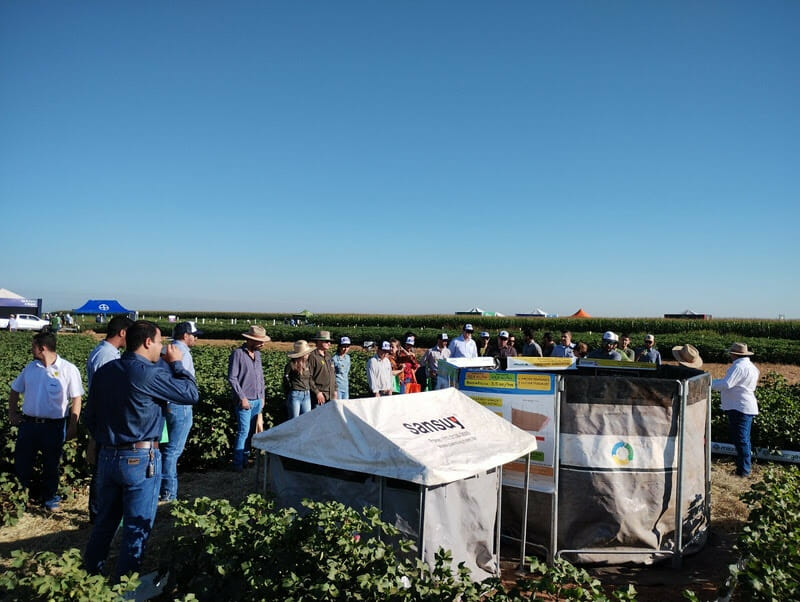
The stage for an important discussion about the future of Brazilian agribusiness was Fazenda Nova Sinop, located in the homonymous city, famous for being one of the largest production hubs in the state of Mato Grosso. In May, EPR Consulting & Research hosted the 2nd Technical Meeting focused on corn and cotton crops, attracting an audience made up of rural producers and professionals from the sector.
From Farm to Future: Microgeo® and the New Green Wave in Agribusiness
At the center of attention was Microgeo, a proud national innovator in biotechnology, which presented its biological solutions aimed at more sustainable agriculture. Participants had the opportunity to learn about and discuss a wide range of innovations that promise to transform the sector, within a space of 20 hectares, segmented into 25 experimental stations.
Innovative techniques were demonstrated in practice, including the use of 60 corn hybrids and 35 cotton cultivars. Among these experiments, participants had the chance to observe the effects of biological fertilization, the result of biotechnology developed by Microgeo®.
-
Oncorp wins auction and enables biodiesel and gas thermal plants in Brazil, with strategic projects in Suape and Xavantes Aruanã.

-
Raízen Recovery: Shell Cosan May Reduce Control After R$ 65 Billion Debt

-
Outback Montes Claros: Chain Confirms First Unit in Northern Minas in 2026

-
Inpasa Creates Advisory Council and Brings José Olympio to Strengthen Corporate Governance


The use of this biological management represents a significant advancement for the sector, providing a series of benefits that encompass everything from soil and plant health to disease resistance, enhancing the physical structuring of the soil, and ultimately contributing to greater productivity.
Sustainable Solutions: The Impact of Biological Fertilization on Cotton Cultivation
In this context, cotton cultivation stood out as an illustrative example of the advantages of biological fertilization. Microgeo specialists observed a decrease in the severity of diseases, such as ramularia leaf spot, as well as an improvement in the physical structuring of the soil, resulting in less compaction. This characteristic is crucial for the health of the cotton root system, which is extremely sensitive to soil compaction.
The results also included more robust plants, with superior development of the aerial part and reproductive structures, resulting in a greater volume and weight of cotton bolls. These benefits, when combined, culminate in a higher productivity of the crop.
With the growing concern around sustainability, biological fertilization proves to be a powerful ally for farmers seeking to increase productivity in a more sustainable and balanced manner. This is the path taken by many in the current agricultural sector, who aim to combine high production with environmental preservation.
The Microgeo® solution operates through the Continuous Liquid Composting Process (CLC), nourishing, regulating, and maintaining a constant production of biological fertilizer. This unique innovation in the market is the only one capable of restoring soil microbiomes, being widely used not only in Brazil but also in neighboring countries like Paraguay and Uruguay.
Expanding Horizons: The Versatility of Biological Fertilizer Application
The biological fertilizer resulting from biotechnology can be applied in various ways, whether by spraying, fertigation, or alongside other inputs, such as chemical or biological pesticides and fertilizers. Its versatility allows it to be used in any climatic condition, contributing to the optimization of agricultural production.
Microgeo’s presence at the Technical Meeting was a unique opportunity to share its expertise with participants and exchange knowledge with other specialists in the sector. The company reaffirmed its commitment to driving the sustainable development of Brazilian agriculture, aiming for a greener and more promising future for agribusiness.










Seja o primeiro a reagir!