





 Portuguese
  English
  Spanish
  4 min of reading
  26 comments


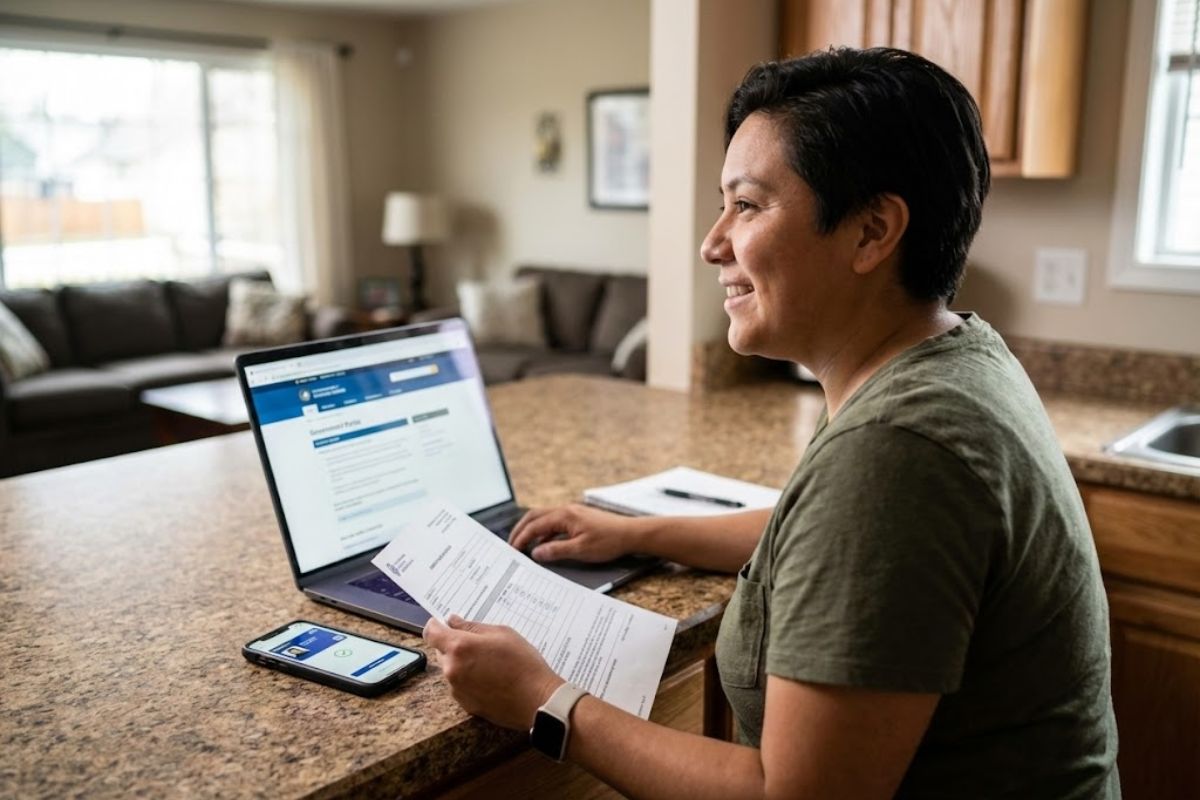


Joint Ordinance of December 2025 Allows, Exceptionally, for Sick Leave to Be Requested via Atestmed with Document Submission and No In-Person Examination. The Absence Limit Increases to 60 Days, Even in Non-Continuous Periods, and the Validity Is 120 Days, Valid Until April 2026.
The INSS has begun to apply an exceptional rule that changes the path of sick leave for some insured individuals: the request can be made online, through document analysis at Atestmed, without in-person medical examination. The measure comes at a time when about 1.2 million requests are pending, with an average waiting time of 62 days.
The focus of the new design is to shorten the queue and provide predictability for leave when adequate documentation is available. At the same time, the package itself recognizes the risk of pressure on public accounts and is already born with a timeframe: validity of 120 days, remaining in effect until April 2026.
What Changes in the Granting of Sick Leave by INSS
The joint norm issued in December 2025 extended, for a determined time, the maximum limit of assistance for temporary incapacity, formerly known as sick leave, when granting occurs via Atestmed.
-
Mercado Livre “opens the vault” and announces a record investment of R$ 57 billion in Brazil in 2026, a value 50% higher than the previous year, with an expansion plan that includes 14 new logistics centers, totaling 42 units in the country and hiring an additional 10,000 employees.

-
How investment in technology can revolutionize the national economy and enhance industrial gains, according to a study that highlights the direct impact on productivity, innovation, and wealth retention within Brazil.

-
The largest food company on the planet, JBS, has just opened a 4,000 square meter laboratory in Florianópolis to develop customized proteins that modulate muscle mass gain, immune response, and metabolic performance.

-
After nearly 30 bids and competition among industry giants, a Spanish company purchases one of the largest airports in Brazil for almost R$ 3 billion and takes over the management of Galeão in a concession that will last until 2039.


In practice, the INSS allows the waiver of in-person examination in these cases, provided that the analysis is made based on medical documents sent online.
The central point is the new ceiling: insured individuals whose benefits are acknowledged through document analysis, even if the periods of absence do not occur continuously, are entitled to up to 60 days of leave within the exceptional mechanism.
This is a change that alters the timeframe of sick leave and affects the planning of those who depend on the benefit.
What Is Atestmed and Why Has It Gained Importance Now
Atestmed was introduced during the COVID-19 pandemic to allow insured individuals to send medical certificates and reports online, eliminating the need for in-person appointments.
With the ordinance of December 2025, this path returns to the center of the debate because it now supports sick leave for a longer period, without in-person examinations, during the temporary window.
In practice, this means a shorter flow: the insured organizes the documents, sends them via Atestmed, and the INSS decides based on the consistency of the submitted material.
The logic is to clear the entryway, especially when the examination queue is the bottleneck of the system.
What Documents Need to Be Included in the Online Request
The set of documents is not optional. For the sick leave to progress in Atestmed, the submitted papers must clearly include the signature of the healthcare professional, the ICD code, and the duration of the leave.
This tripod provides support for the document analysis and defines whether the INSS can decide without an in-person examination.
In the verification, details matter: an absence period incompatible with the described condition, lack of ICD, or illegible signature tend to weaken the request.
As this measure was designed to accelerate processing, any document gap leads to delays and pushes the insured individual back to the traditional path.
60-Day Limit, 120-Day Validity, and the Window Until April 2026
The ordinance defines two different clocks.
The first is the absence limit within Atestmed: up to 60 days, even when the periods are not continuous.
The second is the validity period of the rule: 120 days of validity, remaining effective until April 2026.
This framework makes it clear that the INSS does not consider the change to be definitive.
It is an operational test on a national scale, with a direct impact on the queue and the internal organization of services, while sick leave continues to be one of the benefits most sensitive to the capacity for analysis and the provision of examinations.
Impact on the Queues and the Debate on Public Spending
The declared objective of the changes is to significantly reduce the waiting time for granting benefits, targeting the point where demand becomes stalled.
With 1.2 million requests pending and an average waiting time of 62 days, the potential gain is substantial if Atestmed absorbs a significant part of the cases without in-person examinations.
But there is a counterpoint: there are concerns about a possible increase in public spending given the ease of submitting documents.
Some entities criticize the design, and the INSS bets that the document screening will yield results in the short term, without losing control of sick leave due to a lack of criteria.
What the Insured Should Observe Before Sending Atestmed
To reduce the risk of back and forth, the insured needs to check if the certificate or report is complete, legible, and consistent with the declared duration of absence.
It is worth confirming whether the document includes the ICD, if there is a signature from the professional, and if the requested period fits within the 60-day limit under Atestmed.
It is also important to understand the temporary nature: the rule has a validity of 120 days, and the calendar until April 2026 defines the horizon of this exception.
Sick leave continues to exist outside of Atestmed, with examinations when necessary, but this window opens a faster route when the documents support the INSS’s decision.
The INSS package aims to unlock sick leave by pushing some requests to Atestmed, with in-person examinations waived when the documents are consistent.
The test, limited in time, may alleviate the queue, but also expands the debate on control, verification, and the cost of absence.
Do you trust that Atestmed, without an in-person examination, will accelerate the INSS sick leave process without increasing fraud and expenses in the system?









Algumas vezes que fiz perícia, algumas indeferidas. Com exames laudos e tudo certinho. Será que o hospital errou todos os exames em todas as vezes! Os médicos também e só o perito sabe !
Fiz uma cirurgia do manguito rotador em setembro 2025,o cirurgião pediu 6 meses de afastamento das minhas atividades para recuperação do movimento e força. Os primeiros 60 dias se deu com apresentação documental como pedem. Recebi os 2 meses sem problemas. Acabando os 60 dias tive que pedir novamente um laudo para o cirurgião e entrar com novo pedido,isso em dezembro de 2025,agora precisa de perícia que consegui com data mais próxima para 12 de fevereiro 2026,não recebi nada,sou eu quem sustenta a casa,não tenho dinheiro pra nada e nem de onde tirar,graças a Deus recebo a cesta básica da empresa. Estou em tratamento,fazendo fisioterapia,sentindo dor sem poder trabalhar e sem dinheiro, esperando mais de 2 meses pra fazer uma perícia. O processo tinha que ser mais rápido pois nós assalariados não temos como fazer reserva, e voce querendo ou não é descontado todo mês do seu pagamento INSS.
Talvez ajude um pouco, levando-se em consideração que tem mts que se dizem peritos não tem capacidade nenhuma de fazer uma perícia decente e humanizada. Já passei por diversas situações desumanas com peritos, humilhações e justificativas incompatíveis com a realidade…