





 Portuguese
  English
  Spanish
  4 min of reading


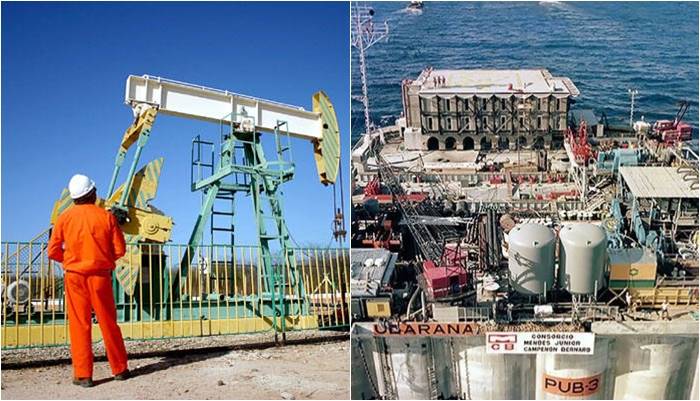
The State of Rio Grande do Norte Is One of the Northeastern States That Will Receive the Largest Shares of Investments in Onshore Oil and Gas Exploration and Production in a Task Force Nicknamed by the Government as “Onshore Turnaround”
The Brazilian onshore oil and gas sector, which has long been in a significant decline, is beginning to show clear signs that it will enter an upward cycle with prospects for new investments in the short term. Notably, Pratica Engenharia recently signed a major contract with Petrobras E&P onshore and offshore in RN and Ceará. Learn more here.
The environment of change in the scenario was established with the launch of the Oil and Natural Gas Exploration and Production Revitalization Program in Onshore Areas (REATE), led by the Ministry of Mines and Energy, specifically by the Secretariat of Oil, Gas, and Biofuels, which was headed by Mr. Márcio Félix. This program began its first phase in 2017 and was reissued in 2019 under the name REATE 2020, with the motto “Onshore Turnaround”.
The program establishes actions to ensure the resumption of activities through policies that foster an environment for attracting investments with a goal of reaching a production of 500,000 barrels/day of oil equivalent by 2030. Topics such as Innovation and Regulation, Institutionalization of the Industry, Gas, Multiplication of Companies, and Promotion of Free Competition are on the program’s agenda and continue to be discussed by professionals and entities operating in the sector.
-
The village where two rivers run side by side without mixing in Santarém and Alter do Chão reveals some of the most beautiful freshwater beaches on the planet.
-
Mars is accelerating, and scientists have discovered that the planet’s day is getting shorter, revealing surprising signs of internal activity.

-
Artemis 2 is set to launch on April 1 at 7:24 PM to orbit the Moon with four astronauts, but a class X solar flare and coronal mass ejection could interfere with communications and threaten the launch.
-
The largest deposit of Vale was discovered by accident and today represents almost all the ore produced by the company.

For Rio Grande do Norte, REATE 2020 is exceptionally important, considering that in the past we produced over 100,000 barrels/day, and today our production is less than half, specifically 38,000 barrels. With incentive policies, our production could double in the next 5 (five) years, ensuring the recovery of the state’s economy through the oil industry.
How to believe in this new scenario for Potiguar Onshore? Quite easily. From November 2018 to today, we have very positive signs. First, due to the consolidation of Petrobras’ Topázio project, which has already ensured the transfer of the Riacho da Forquilha field, with a production of 6,000 barrels/day, and the Macau field, with production close to 3,000 barrels/day, which will be operated, respectively, by Potiguar E&P and 3R Petroleum. In addition to this, there is the prospect of sales from the Fazenda Belém field and the success of the Permanent Offering auction that had 19 blocks auctioned in the Potiguar Basin. For the next auction, even greater demand for blocks in the Potiguar Basin is expected from operators.
In terms of financial movement, the Riacho da Forquilha field was purchased for US$ 384 million, with the expectation that Potiguar E&P will invest another US$ 150 million over the next five years, aiming to double production. 3R Petroleum paid approximately US$ 191.1 million for the Macau field and plans to invest around US$ 80 million to also double its production. With the Permanent Offering auction, another US$ 4.8 million is expected to be injected into the state’s economy to ensure the Minimum Investment Program of the companies in the auctioned blocks.
Overall, the investments announced by independent operators in this new Potiguar Onshore scenario amount to around US$ 234.7 million or R$ 957 million, with the dollar quoted at R$ 4.08. It is worth noting that investments already consolidated or announced by Petrobras and other operators for the fields currently in operation are not included.
The outlook for Rio Grande do Norte is promising, especially for the supply chain, which has been significantly affected over the past four years. For this sector, it guarantees the generation of new business opportunities and, consequently, the resumption of hiring specialized personnel and overall economic revival, as a large portion of these companies’ purchases will be localized.
Another chance is being given to the economy of the state and the oil and gas producing municipalities regarding future planning; now it remains to be seen that the homework is done well to ensure that this resumption of activities projects new economic horizons for these federative entities and that companies, together with workers and society, are the great beneficiaries of this entire process.
Source: Gutemberg Dias, President of Redepetro RN and Professor at the Department of Geography of UERN.








Seja o primeiro a reagir!