





 Portuguese
  English
  Spanish
  6 min of reading
  0 comments


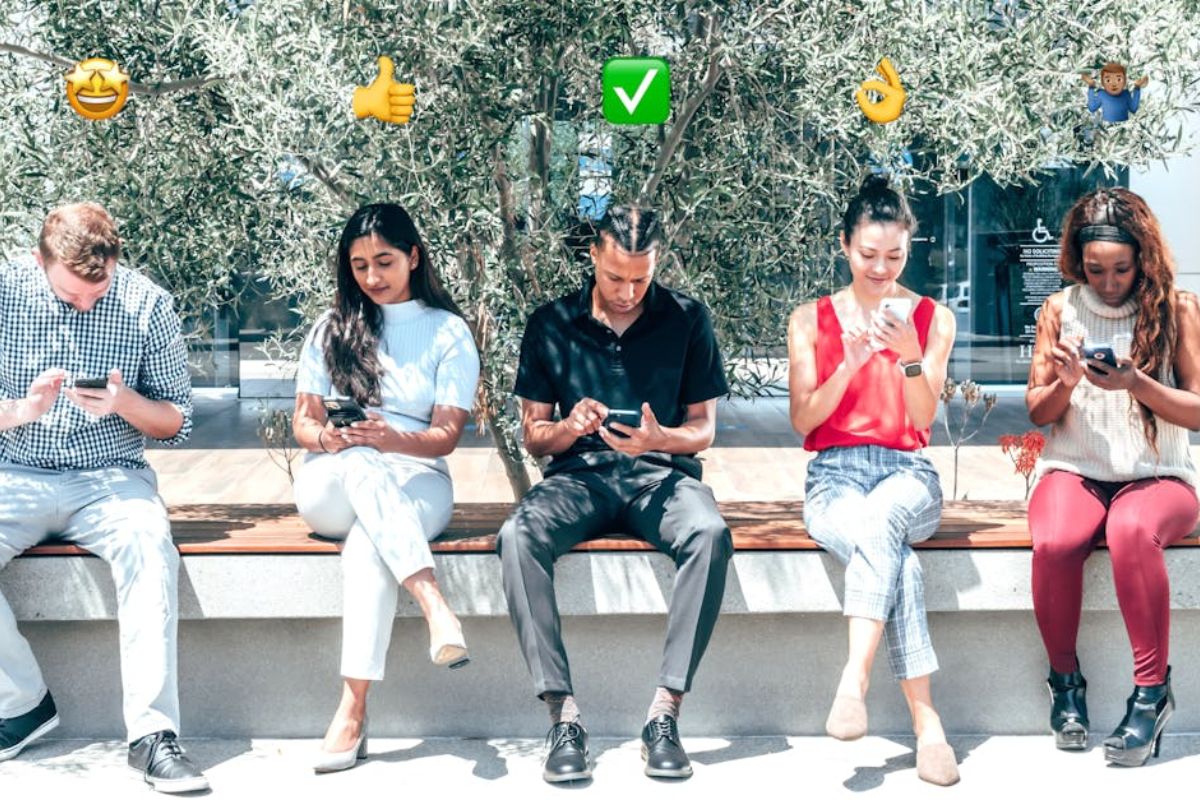
When it comes to iPhone updates, attention often falls on more powerful cameras and faster chips. However, the innovations that Apple brought to the iOS ecosystem in 2026 show that the smartphone has evolved far beyond hardware. Customization, accessibility, and digital expression features have transformed the way millions of people communicate and interact with their devices in daily life.
Among these features, the iPhone emoji has gained a new dimension with artificial intelligence tools that allow for the creation of custom emoticons. But the changes don’t stop there: the operating system has also expanded accessibility options, redesigned the lock screen, and introduced new modes of interaction that make the device more adaptable to each user’s profile.
Genmoji: when the iPhone emoji gains artificial intelligence
One of the most talked-about additions in recent years is Genmoji, a feature that uses Apple Intelligence to generate personalized emojis from textual descriptions. Just type something like “cat wearing sunglasses on the beach” and the system creates a unique emoticon, ready to be sent in messages, used as a sticker, or applied as a reaction in conversations.
-
The longest public work in history began in Antiquity, spanned empires, was attempted by Nero, and was only completed 2,500 years later, turning the Corinth Canal into one of the most incredible stories of world engineering.

-
The USA invaded Brazil to create a city: founded after the war, the municipality of 250,000 inhabitants is the safest in São Paulo.

-
With a length of 399.9 meters and a capacity for over 24,346 containers, the MSC Irina becomes the largest ship in the world and revolutionizes global maritime transport.

-
With nearly 6,000 square meters and an investment of $100 million, the building that seems to move in Las Vegas has a reflective stainless steel façade, creates optical illusions, and has become a symbol of creativity worldwide.


Genmoji works on the iPhone 15 Pro, iPhone 15 Pro Max, and the entire iPhone 16 lineup. The technology behind the feature combines language models with image generation directly on the device, preserving user privacy by processing everything locally. This type of personalization was unthinkable a few years ago and represents a leap in how people express themselves through text.
For those who want to explore the entire catalog of emoticons available on the Apple platform, including traditional emojis and the new additions from each version of iOS, the iPhone emoji can be consulted in specialized catalogs that detail each icon by category and system version.
The exclusive emojis of the Apple ecosystem in 2026
In addition to Genmoji, iOS 19 brought new emoticons following the recommendations of Unicode 16.0. Among the additions are icons representing previously absent professions, regional foods from different cultures, sustainability symbols, and new variations of facial expressions that expand users’ visual vocabulary.
The design of Apple’s emojis continues to set a benchmark in the market. The three-dimensional finish, detailed shading, and careful proportions make the iPhone emoji convey emotions more clearly compared to other operating systems. This visual quality is one of the reasons why marketing and communication professionals prefer to use Apple’s emoticons as a reference in digital materials.
Comparing how the same emoticon appears on different platforms is an increasingly common practice among content creators and communication teams. Emojisup gathers all emojis organized by platform, allowing users to see the differences between Apple, Google, Samsung, Microsoft, and other systems side by side.
Memoji with new customization features
Memoji, Apple’s customizable avatars, have also received significant updates. New accessories, hairstyles, clothing options, and cultural elements have been added so that users can create more accurate representations of themselves. These avatars can be used as profile pictures, stickers in messages, and even in video calls via FaceTime.
The facial capture technology present in models with Face ID allows Memoji to replicate the user’s expressions in real-time during video calls. This feature, which seemed like a toy when it was launched, is now used by professionals who want to participate in meetings without appearing on video, maintaining non-verbal communication through the animated avatar.
Memoji as an inclusion tool
Apple has invested in making Memoji more inclusive with each update. Options representing hearing aids, wheelchairs, prosthetics, and different physical conditions have been progressively added. In 2026, new body and face customization options further expanded representation, allowing people with different characteristics to see themselves reflected in digital avatars.
Accessibility: the iPhone as a tool for digital inclusion
The accessibility updates of the iPhone in 2026 deserve special attention. The Personal Voice feature, which allows users to create a synthesized voice from their own voice, has been enhanced with more natural intonations and support for new languages, including Brazilian Portuguese. People with conditions affecting speech can now communicate using a voice that sounds like their own.
Assistive Access, a simplified mode of the iPhone designed for users with cognitive difficulties, has gained new compatible apps and an even more intuitive interface. The feature reduces the complexity of the operating system so that elderly family members or people with special needs can use the smartphone independently.
Sound detection and visual alerts
Environmental sound recognition has been expanded to identify fire alarms, doorbells, baby cries, and other relevant sounds, notifying the user through vibrations and visual alerts. For professionals working in noisy environments, such as industrial platforms and construction sites, this feature adds a layer of safety to device use.
Lock screen and widgets: personalization that changes the experience
The iPhone’s lock screen has undergone transformations that go beyond aesthetics. With iOS 19, interactive widgets have gained new functionalities that allow actions to be performed directly from the home screen, without opening apps. Controlling music, checking the weather, tracking deliveries, and responding to quick messages now happen with just a few taps.
The StandBy mode, which transforms the iPhone into a smart display when positioned horizontally during charging, has been expanded with new layouts and integration with connected home devices. The device has ceased to be just a phone and has started functioning as a hub for information and home control.
This evolution in personalization reflects a trend by Apple to make each iPhone unique to its owner. From choosing favorite iPhone emojis in keyboard shortcuts to configuring automations with the Shortcuts app, the system offers layers of customization that adapt to each person’s lifestyle.
Apple Intelligence: the engine behind the innovations
A large part of the functionalities presented in 2026 is powered by Apple Intelligence, the company’s artificial intelligence framework. Unlike solutions that rely exclusively on the cloud, Apple Intelligence processes data locally on the device whenever possible, which strengthens user privacy.
The AI system is responsible not only for Genmoji but also for more contextual text suggestions, automatic notification summaries, real-time audio transcription, and the ability to understand complex commands via Siri. The integration between dedicated hardware and optimized software allows these functionalities to run smoothly on compatible models.
Privacy as a competitive differential
While other technology companies rely on cloud processing for AI functions, Apple maintains its commitment to privacy by executing most operations on the iPhone’s own chip. When remote processing is necessary, the company uses dedicated servers with what it calls Private Cloud Compute, a system designed so that even Apple does not have access to user data.
This stance attracts professionals and companies that work with sensitive information and seek technological tools that respect data confidentiality. In the corporate scenario, where information security is a priority, the iPhone emoji and other AI functionalities operate within an ecosystem that prioritizes user protection.
What to expect from the iPhone in the coming years
The innovations of 2026 indicate that Apple continues to invest in making the iPhone an increasingly personal, accessible, and intelligent tool. The combination of personalized emojis with AI, expanded accessibility features, deep interface customization, and local artificial intelligence processing shapes a smartphone that adapts to the user, not the other way around.
For those following the evolution of mobile technology, it is clear that the differentiators of the iPhone today lie less in megapixel and gigahertz numbers and more in the complete experience that the system offers. From expressive emoticons to tools that make technology accessible to everyone, the Apple ecosystem continues to set trends that influence the entire mobile device industry.









Seja o primeiro a reagir!