





 Portuguese
  English
  Spanish
  4 min of reading
  0 comments


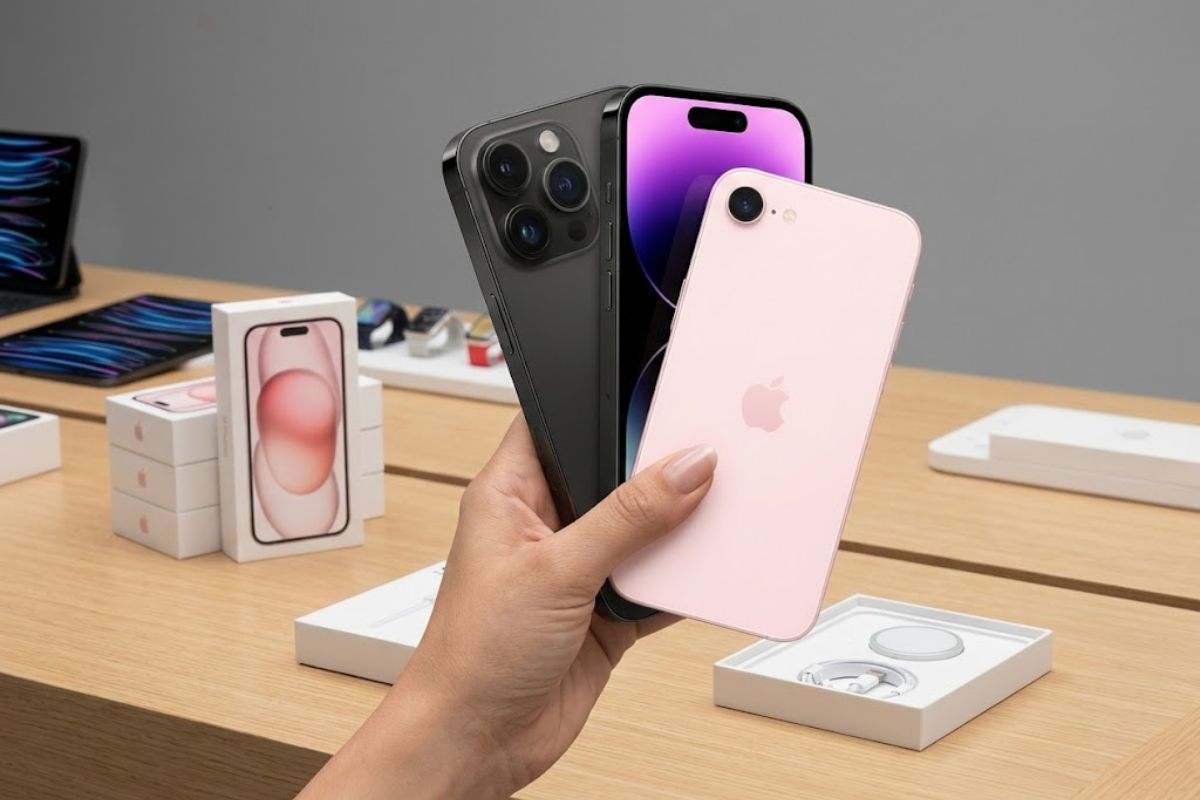
Announced this Monday (2), the iPhone 17e is the most affordable option in the 17 family and arrives in Brazil on March 11. Apple maintains 256 GB and 512 GB, cuts 128 GB, and reduces R$ 800 from 2025, with prices ranging from R$ 5,8 thousand to R$ 7,3 thousand.
The iPhone 17e was presented as the most affordable alternative of Apple’s new generation of smartphones, with a launch scheduled for March 11 and official prices in Brazil ranging from R$ 5,8 thousand to R$ 7,3 thousand, depending on storage. The proposal combines a price lower than the previous year and hardware updates, without creating a “separate line” within the 17 family.
The most visible change is the balance between cost and configuration: the company cuts the entry-level version and only keeps larger capacities, in addition to offering the device in black, white, and pink. In practice, the strategy tries to deliver an iPhone with a technical basis aligned with the rest of the generation, but with a lower price positioning within its own line.
Prices in Brazil and What “Cheaper” Means in the 17 Family

Apple positions the iPhone 17e as the cheapest in the iPhone 17 line, and this is directly reflected in the announced price table for Brazil.
-
In a flooded well, archaeologists found a 1,700-year-old Roman egg that still contains clear and yolk intact inside the very thin shell.

-
Something is happening around the Earth: Inside the huge explosion of fireballs in 2026

-
A hot air bubble coming from Argentina expands over Brazil, causing thermometers to exceed 38 degrees with a thermal sensation of 40 degrees in late March, affecting 6 states at once.

-
The radish leaf that almost everyone throws away has more polyphenols, flavonoids, and fiber than the consumed root, and a 2025 study showed that the leaf contains compounds that protect the intestine, combat inflammation, and may inhibit the growth of cancer cells.

The available versions cost R$ 5,8 thousand (256 GB) and R$ 7,3 thousand (512 GB), in a move that places the model below the level practiced the previous year.
Another important point is the declared comparison with 2025: the two configurations maintained had a reduction of R$ 800 compared to the same models offered that year.
This cut helps to sustain the narrative of “more accessible,” but without turning the device into a classic entry-level option, as the initial version has been discontinued.
The 128 GB Version Is Gone and Storage Became Part of the Strategy
By removing the 128 GB option, Apple changes the entry point of the iPhone 17e: now, consumers start at 256 GB and can upgrade to 512 GB. This isn’t just a number swap, because storage influences final price, longevity of use, and even how each person manages apps, photos, and videos over time.
In practice, the “cheaper” iPhone 17e becomes “cheaper within the generation,” and not “cheaper in the absolute sense.” This decision also simplifies the portfolio and makes the choice more straightforward: those wanting the most accessible iPhone in the 17 family decide between two storage capacities, with a clear price difference between them.
A19 Chip in the iPhone 17e and the Promise of Performance Gains
At the heart of the iPhone 17e is the A19 chip, the same processor used in the other devices of the 17 family. Apple describes the component with a six-core CPU and five-core GPU, signaling a technical base aligned with the generation, even though it is the most affordable model.
According to the manufacturer, the average performance of the iPhone 17e is about 10% higher than the previous generation.
Such advances tend to appear in everyday tasks, such as opening apps, smoothness in games, and image processing, but the disclosed indication is “average,” not a fixed number for all usage scenarios.
Artificial Intelligence on the Radar and What the A19 Enables
Apple associates the new chip with the ability to run most of the artificial intelligence features it plans to gradually incorporate into its mobile devices.
The iPhone 17e, therefore, is not treated as a “watered-down” processing model: the ambition is to maintain compatibility with future features, within what the company intends to make available over time.
This helps explain why Apple emphasizes the presence of the A19 in the iPhone 17e: when a device is sold as more affordable, the expectation is that it will remain relevant for a longer period.
The message here is that the price cut and the removal of the entry version do not mean giving up the performance base that supports heavier features.
C1X Modem, Connectivity, and the Arrival of MagSafe on the iPhone 17e
In addition to the chip, the iPhone 17e adopts the C1X modem, a component related to mobile connectivity. Apple promises faster and more stable connections, indicating a focus on signal consistency and network experience in daily use, especially in scenarios of movement and coverage variations.
Another change is the compatibility with MagSafe chargers, enabling magnetic induction charging without cables.
More than just convenience, this places the iPhone 17e in the same ecosystem of magnetic accessories already associated with the brand, reinforcing the idea of expanding technological resources even within a line classified as more economical.
The iPhone 17e arrives in Brazil with a well-defined combination: reduced price within the 17 family, two storage options (256 GB and 512 GB), promise of superior performance over the previous generation, and connectivity and charging updates with C1X modem and MagSafe.
At the same time, Apple makes it clear that “more accessible” does not mean “basic,” as the entry version has been removed from the portfolio.
Now it’s time for a real debate: for you, does it make sense for a “cheaper” iPhone to start at 256 GB, even with the R$ 800 drop compared to 2025?
Do you prefer more price options with 128 GB, or do you see an advantage in Apple standardizing larger storage and focusing on performance and features? Share what weighed more in your decision: price, storage, A19 chip, or MagSafe.









-

-

5 pessoas reagiram a isso.