





 Portuguese
  English
  Spanish
  7 min of reading
  0 comments


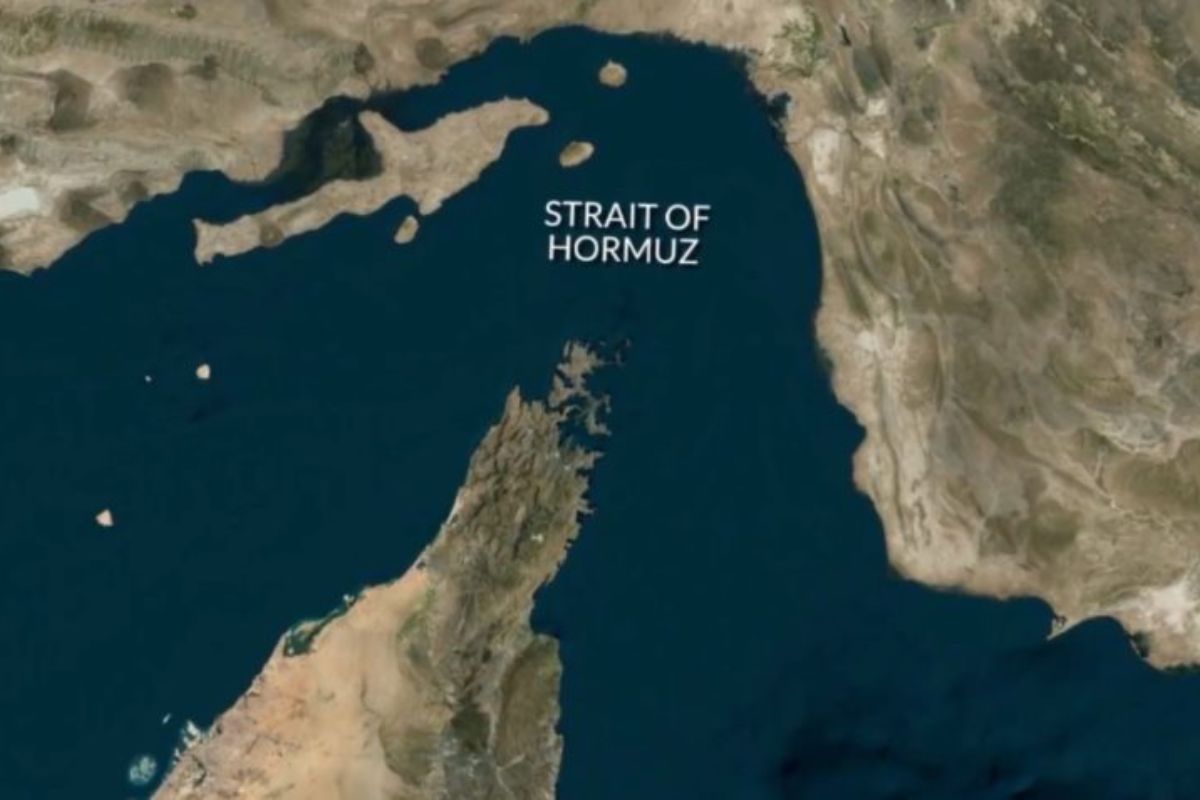
The Iranian parliament officially established on Monday the toll collection for ships crossing the Strait of Hormuz, completely blocked vessels from the United States and Israel, and transformed the most strategic maritime passage of the global oil market into an instrument of geopolitical pressure with direct impact on energy prices.
The Iranian Parliament’s Security Commission approved on Monday (March 30, 2026) the regulation that establishes the toll collection for ships transiting through the Strait of Hormuz, the maritime passage through which about 20% of all oil consumed in the world flows. The state broadcaster IRIB confirmed that the measure aims to reinforce what Tehran calls the “sovereign role of Iran and its armed forces” over the waterway, and the toll will be charged in rials, the Iranian currency.
In addition to the toll for ships, the new legislation completely prohibits the passage of vessels belonging to the United States and Israel, according to CNN. The decision transforms the Strait of Hormuz into a sovereign checkpoint and raises tensions on a route that, until February, recorded more than four thousand monthly crossings and now operates with a 97% drop in traffic. The global oil market is already feeling the effects: the Brent barrel jumped from about $70 before the conflict to $110 last Friday.
What the Iranian parliament approved and how the toll for ships in the Strait of Hormuz works

The regulation approved by the Iranian parliament’s Security Commission contains multiple components. According to IRIB, the plan includes security measures to safeguard the waterway, rules to ensure maritime navigation, and financial regulations that formalize the toll for ships in rials. In practice, any vessel intending to cross the Strait of Hormuz will need prior authorization from Tehran and will be subject to the fee.
-
Government cancels R$ 25 million “celebration” for Brasília’s anniversary and allocates funds to health.

-
Winning money seems like a dream, but it can quickly turn into a nightmare when financial success awakens envy, demands, and opportunism from all sides; this was the case with Jack Whittaker, who won $315 million in 2002 and ended up alone, bankrupt, and devastated.

-
The former CEO of Petrobras got straight to the point: Brazil has a lot of oil but depends on imports for gasoline and diesel because Brazilian refineries were designed to process a type of oil that the country hardly produces anymore.
-
The Mar Sem Lixo program has already removed 133 tons of waste from the São Paulo coastline and pays more than R$ 1 million to fishermen.

The measure does not come out of nowhere. Since early March, when the conflict erupted following attacks by the United States and Israel on Iranian targets, the Islamic Revolutionary Guard Corps (IRGC) had already been operating an informal toll collection system. According to Lloyd’s List, one of the world’s most traditional maritime publications, vessels had been paying up to $2 million per trip to obtain the so-called “safe passage.” The authorized route bypasses the Iranian islands of Larak and Qeshm, under the direct surveillance of the IRGC. What the parliament has done now is provide a legal basis for a practice that was already consolidating in fact.
Why the Strait of Hormuz is so important for the global oil market
The Strait of Hormuz is a waterway between Iran to the north and Oman and the United Arab Emirates to the south. Through this passage, between 17 million and 21 million barrels of oil flow daily, equivalent to approximately 20% of all oil consumed on the planet.
In addition to oil, a significant portion of liquefied natural gas (LNG) from Qatar, the world’s largest exporter, also depends on this route. There is no equivalent maritime alternative: pipelines in Saudi Arabia and the United Arab Emirates relieve only part of the flow.
Controlling the Strait of Hormuz is, in practice, controlling a decisive slice of the global economy. In 2024, 84% of the oil that crossed the passage had Asian markets as destinations; China, India, Japan, and South Korea are the main affected.
But the rising costs reverberate worldwide: at the gas pump, in freight costs, in food prices, and in production chains that depend on energy and logistics to function.
The 97% drop in crossings and the direct impact on oil prices
The numbers reveal the severity of the scenario. The number of crossings through the Strait of Hormuz plummeted from 4,140 in February to 125 in March—a drop of 97%, or 4,015 fewer trips. Almost two thousand vessels are stranded near the passage, and major shipping operators like Maersk, MSC, and CMA CGM have suspended operations in the region and redirected their routes around the Cape of Good Hope.
The reflection on prices was immediate. Before the conflict, the Brent barrel was trading around $70; last Friday, it reached $110, after nearly touching $120 throughout the month. This escalation of more than 50% pressures production chains worldwide.
According to economist Robson Gonçalves from FGV, the increase in oil prices quickly turns into global inflation, affecting transportation, industry, and food production. In Brazil, the impact is amplified because 65% of cargo is transported by trucks; when diesel prices rise, freight costs increase, and the cost reaches the consumer’s table.
Does the toll for ships violate international law? What do experts say
The legality of the toll is contested by jurists and governments. Article 38 of the United Nations Convention on the Law of the Sea (UNCLOS) establishes that all ships enjoy the right of passage in transit through international straits, and this right cannot be suspended by any country. Robert Huebert, an expert from the University of Calgary, states that charging a toll for ships in the Strait of Hormuz would clearly violate international maritime law and face opposition from virtually all states.
U.S. Secretary of State Marco Rubio classified the plan as “illegal,” and President Donald Trump threatened to attack Iranian power plants if the Strait of Hormuz is not fully reopened. Tehran, on the other hand, maintains that the toll is an exercise of territorial sovereignty.
In practice, the balance of power matters more than the text of the convention: countries like China, India, Malaysia, Egypt, and South Korea are already negotiating directly with Iranian authorities to ensure the passage of their ships, according to investigations by Al Jazeera and Bloomberg.
Lawyer Apurva Mehta from the Indian firm ANB Legal notes that commercial considerations tend to prevail over the legal legitimacy of the fee; countries prefer to pay rather than leave their shipments stranded.
Who can pass through the Strait of Hormuz and who is blocked
The new regulation creates a clear division between allies and adversaries of the Iranian regime. Vessels linked to the United States and Israel are completely prohibited from transiting through the Strait of Hormuz. For others, access depends on prior authorization and payment of the toll for ships in rials.
Iranian Foreign Minister Seyed Abbas Araghchi told Chinese Minister Wang Yi that the passage is open to nations not involved in the war, indicating that ships destined for China, India, Japan, and South Korea can proceed, as long as they comply with the protocols.
The screening system functions as a maritime checkpoint. Shipping operators must submit detailed data about cargo, crew, and final destination before receiving any authorization.
Communication during the crossing is done via radio, and Iranian commanders require immediate identification of the security code provided during the screening stage. The authorized route passes through a narrow corridor between the islands of Larak and Qeshm, under the direct surveillance of the Revolutionary Guard. Maritime tracking data confirm that the few vessels that crossed the strait in recent days followed exactly this route.
The domino effect on the global economy: from oil to the consumer table
The retraction in the flow through the Strait of Hormuz directly affects global oil supply and amplifies uncertainty in the markets. With reduced supply, prices rise, and the increase in oil prices creates a cascading effect that impacts everything from international freight costs to the price of bread at the bakery. Energy-importing countries in Asia and Europe are the most vulnerable in the short term, but emerging economies like Brazil also suffer from inflationary pressure.
In Brazil, ANTT has already updated the minimum freight rates with average adjustments of nearly 5%, and contracts on long routes have recorded increases of 10% to 15%.
Agriculture, which depends heavily on fuels and petroleum-derived fertilizers, is one of the most pressured sectors, especially during the harvest season. Analysts expect that if the blockade of the Strait of Hormuz persists, central banks may keep interest rates high for longer to contain inflation, which slows economic growth and reduces disposable income for families worldwide.
What is at stake while Iran controls the most strategic passage on the planet
The formal approval of the toll for ships in the Strait of Hormuz marks a shift in the crisis. What was an informal practice of the Revolutionary Guard now has legislative backing and transforms Iranian control over the passage into state policy.
The United States threatens military retaliation, and Israel increases diplomatic pressure, but so far the coalition has not found support from allies for a naval escort operation in the strait. The European Union has already signaled that it is not interested in expanding missions in the region.
The scenario combines all the elements of a prolonged energy crisis: an irreplaceable route blocked, escalating prices, supply chains hastily redrawn, and a geopolitical dispute with no resolution in sight.
As long as the Strait of Hormuz remains under Iranian control, the world literally pays the price in every liter of fuel, in every freight charge, and in every product that depends on oil to exist.
In your opinion, should the international community accept paying the toll to maintain the flow of oil, or is it time to seek alternatives to the Strait of Hormuz? Leave your comment.







Seja o primeiro a reagir!