





 Portuguese
  English
  Spanish
  3 min of reading
  0 comments


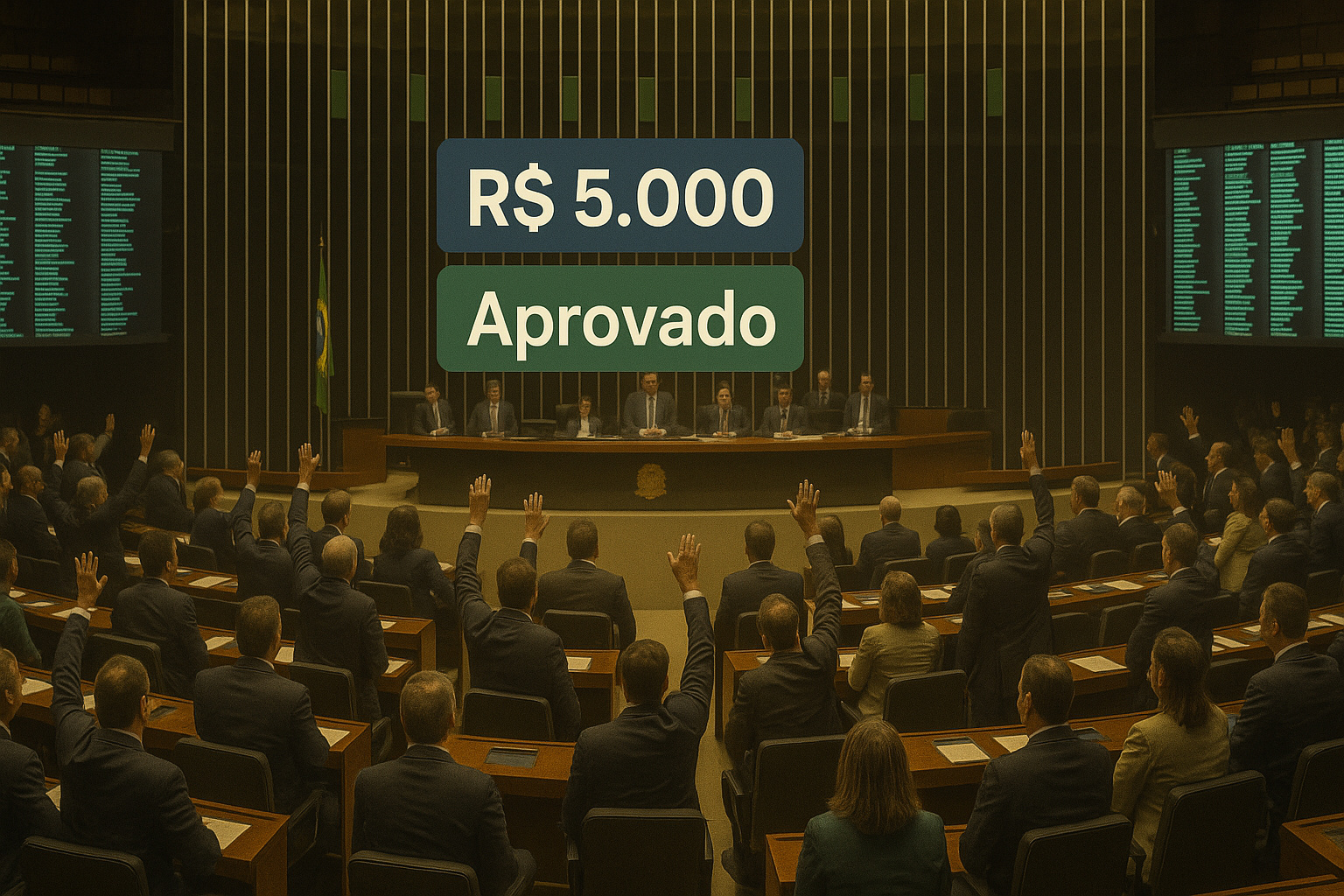
With Wide Majority, Lawmakers Approved a Proposal That Allows Making Permanent the New Income Tax Exemption Bracket and Alters Fiscal Rules of the LDO, Impacting Millions of Workers and Retirees Across the Country
In a decision considered historic for millions of Brazilians, the National Congress approved, this Thursday, the proposal that paves the way for the income tax exemption (IR) for those earning up to R$ 5 thousand per month to have indefinite validity. The measure, which had already been approved by the Chamber of Deputies, now goes to Senate voting before being sent for presidential sanction.
The proposal alters rules of the Budgetary Guidelines Law (LDO), allowing projects that reduce the tax burden on individuals not to follow the five-year duration limitation. Until now, the LDO mandated that any tax benefit created or expanded should have a maximum validity period of five years.
In practice, this means that future updates to the IR table could be permanent, without the need for periodic review. According to a report by G1, the text approved by Congress creates a specific exception for laws that update the tax collection criteria, consolidating a structural change in how Brazil handles income taxation.
-
India announces a plan of $3.06 billion to bring aviation to forgotten regions: 100 new airports, $1.07 billion in subsidies, and regional routes guaranteed for 10 years, from 2026 to 2036, away from the centers.

-
Brazil blocked a proposal from the United States at the WTO that would make the exemption from tariffs on digital products like streaming and ebooks permanent, favoring American tech giants at the expense of developing countries.

-
IPTU exemption for seniors in 2026: see how to secure the benefit.

-
The institute that trained the greatest aerospace engineers in Brazil has just opened its first campus outside São Paulo after 75 years: ITA Ceará will have R$ 445 million, new courses in energy and systems, and classes are expected to start in 2027.


Simone Tebet Defends Permanence of Changes and Rapporteur Speaks of Legal Certainty
The Planning Minister, Simone Tebet, celebrated the approval and stated that the change will allow the income tax changes to “be permanent“, providing predictability for public finances and stability for taxpayers.
The rapporteur of the project, Senator Dorinha Seabra (União-TO), highlighted that the measure brings “legal certainty” and “predictability” to the rules of the IRPF. According to her, the new wording guarantees that any future changes in the Income Tax legislation will not need to be discussed again every five years, avoiding the uncertainty that currently affects both the government and citizens.
With the approval, the text goes to the sanction of President Luiz Inácio Lula da Silva (PT). The expectation in Congress is that the sanction will happen quickly, allowing the new exemption bracket — which directly benefits millions of formal and self-employed workers — to come into effect as early as 2025.
Other Approved Changes: Outstanding Payments and Fiscal Target for 2025
In addition to the tax issue, Congress took the opportunity of the joint session to vote on other points of the LDO. One of them is the creation of mechanisms that ensure the payment of so-called “outstanding payments” — balances of parliamentary amendments not settled in previous fiscal years.
The text extends the deadline for presenting the required documents for the release of funds, the so-called suspensive clauses, until September 2026. The measure corrects a legal mismatch that could impede the execution of amendments registered between 2019 and 2022, already validated by law enacted in March of this year.
Furthermore, deputies and senators approved adjustments to the fiscal targets, authorizing the government to continue aiming for the lower limit of the budgetary target for 2025. This means that, in order to maintain the balance of public accounts, the Executive may carry out spending cuts based on the floor of the fiscal target tolerance range, as already decided by the Federal Court of Accounts (TCU).
These changes also reflect the ongoing debate in the Mixed Budget Committee (CMO), where the rapporteur of the LDO for 2026, Deputy Gervásio Maia (PSB-PB), proposes that, starting next year, the government aims for the center of the fiscal target, set at a surplus of R$ 34.2 billion.
Impacts and Next Steps
With the new guideline approved, Brazil may be facing a permanent change in the revenue system and a more predictable fiscal policy. Experts believe that the measure will bring economic stability and facilitate financial planning for millions of families that fit into the new exemption bracket.
Now, with the text awaiting only presidential sanction, the expectation is that 2025 will mark a new chapter in income taxation, consolidating the government’s commitment to reducing the tax burden on lower-income individuals and maintaining a long-term fiscal responsibility agenda.









-

Uma pessoa reagiu a isso.