





 Portuguese
  English
  Spanish
 3 min of reading
  0 comments


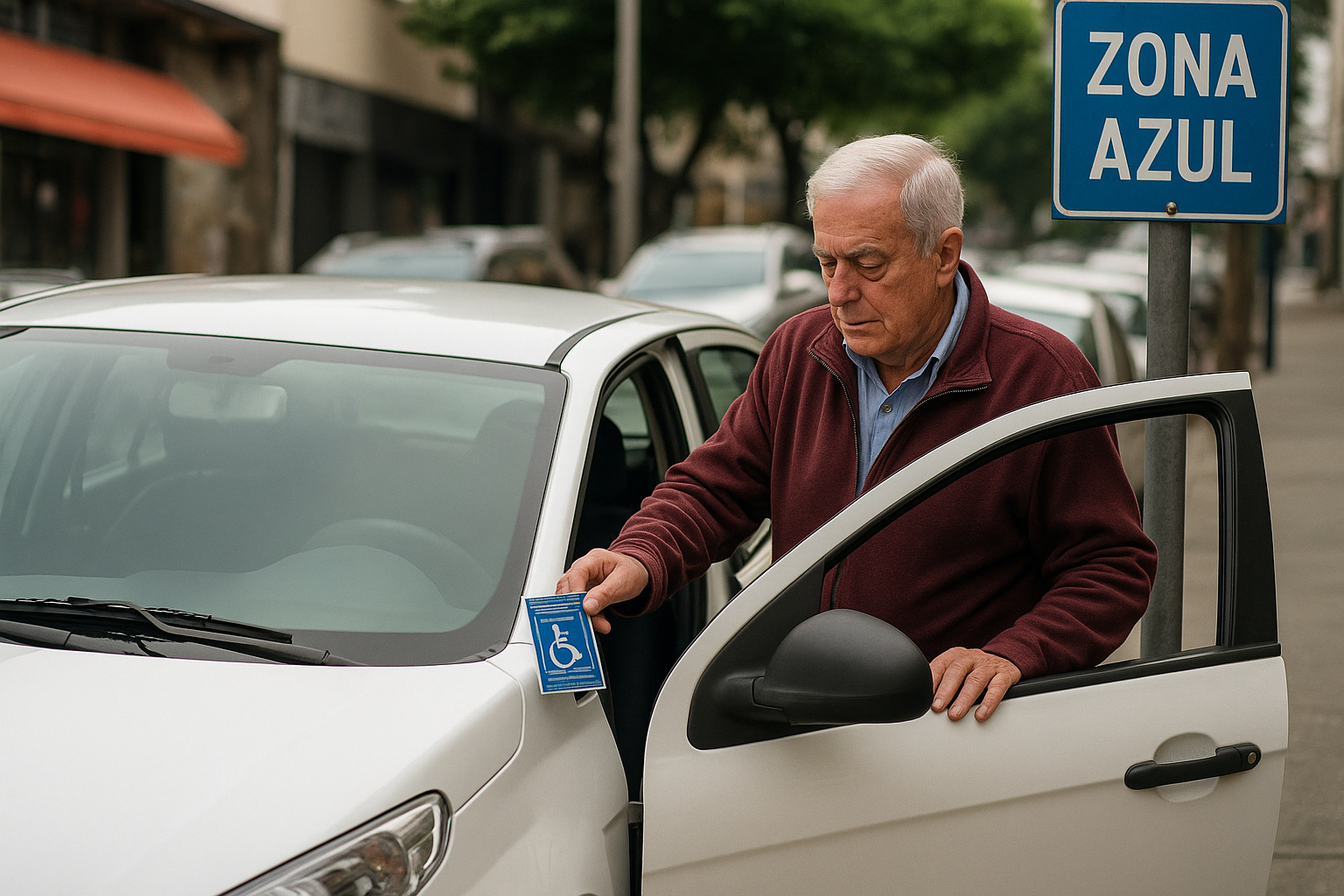
Free Parking Reorganizes Urban Mobility, Boosts Accessibility and Redefines the Use of Public Parking Spaces by Elderly in Well-Known Municipality
A municipal measure of strong social impact has come into effect in Cotia, in the Metropolitan Region of São Paulo, and has since gained national attention. Since 2018, elderly individuals over 60 years old have been granted exemption from payment in the Zona Azul, allowing for free use of rotating parking spaces for up to two consecutive hours, provided that specific legal criteria are met. The initiative reorganizes the use of urban space and enhances mobility protection for this demographic.
The change was instituted by Municipal Law No. 2,011/2018, sanctioned by then-mayor Rogério Franco, and subsequently regulated by Decree No. 8,590/2019. This allowed for a direct alteration in Law No. 555/1993, which established the rotating parking system in Cotia. This move demonstrates a local administrative decision focused on accessibility and inclusion, without imposing federal norms.
Municipal Regulation Redefines Exemption Criteria
The exemption is not automatic and, therefore, depends on compliance with clear rules set forth in municipal legislation. The benefit is only valid when the personal vehicle, used by or for an elderly person, is parked in a properly designated parking space for the elderly. Additionally, the use of a special identification card is mandatory to ensure the exemption.
-
Families have been living for over 30 years under a bridge in Mato Grosso, revealing a housing deficit, irregular occupation in APP, and dependence on fishing as the main source of income.

-
What Changed at Florianópolis Beaches? New Rule Surprises Pet Owners and Restricts Dogs on the Sand at Specific Times

-
Economic Diversification Accelerates in Itatiaiuçu to Reduce Mining Dependence

-
Extreme Rains: Cold Front, Supercell, and Atmospheric Trough Cause Tragedy in MG

This card is issued by the Department of Transport and Mobility of Cotia (Setram), and, as reported by the city hall, the entire application process occurs entirely online. This way, the municipality facilitates access to the benefit and reduces bureaucratic barriers while maintaining control over the system.
Integration with Rights Provided in the Elderly Statute
The municipal legislation directly dialogues with the Elderly Statute, which ensures priority and accessibility in various public services. However, although the statute guarantees preferential parking spaces, it does not stipulate exemption from payment in public parking lots. In this context, Cotia decided to expand existing rights through its own legislation.
This decision reinforces municipal autonomy in the formulation of public policies and positions the city as a reference in initiatives aimed at inclusive urban mobility, while respecting national legal limits.
Operation of the Zona Azul in Cotia
Currently, the Zona Azul of Cotia operates from Monday to Friday, from 9 AM to 6 PM, and additionally, on Saturdays, from 9 AM to 1 PM. In general, the maximum allowed parking duration is two consecutive hours per space. Normally, users must activate parking through a physical card, official app, or authorized points of sale.
However, for elderly individuals and people with disabilities, the charge is waived, provided that all identification requirements and proper use of designated spaces are respected. This way, the system maintains the necessary turnover without compromising the rights guaranteed by law.
Management of the System and Operation of Rotating Parking
The management of rotating parking in Cotia is conducted by the company Dinâmica Administração e Representação Ltda – EPP, responsible for the operation after a public bidding process conducted by the municipality. This ensures that the city hall guarantees the execution of the service within legal norms and integrates the exemption granted to the elderly into the regular management of the Zona Azul.
This structure allows the benefit to function in an organized manner, ensuring adequate oversight and compliance with the rules established by municipal legislation.
In light of this scenario, to what extent can municipal initiatives like this influence other cities to adopt similar mobility and accessibility policies for the elderly population?










-

-

-

-

8 pessoas reagiram a isso.