





 Portuguese
  English
  Spanish
  4 min of reading
  0 comments


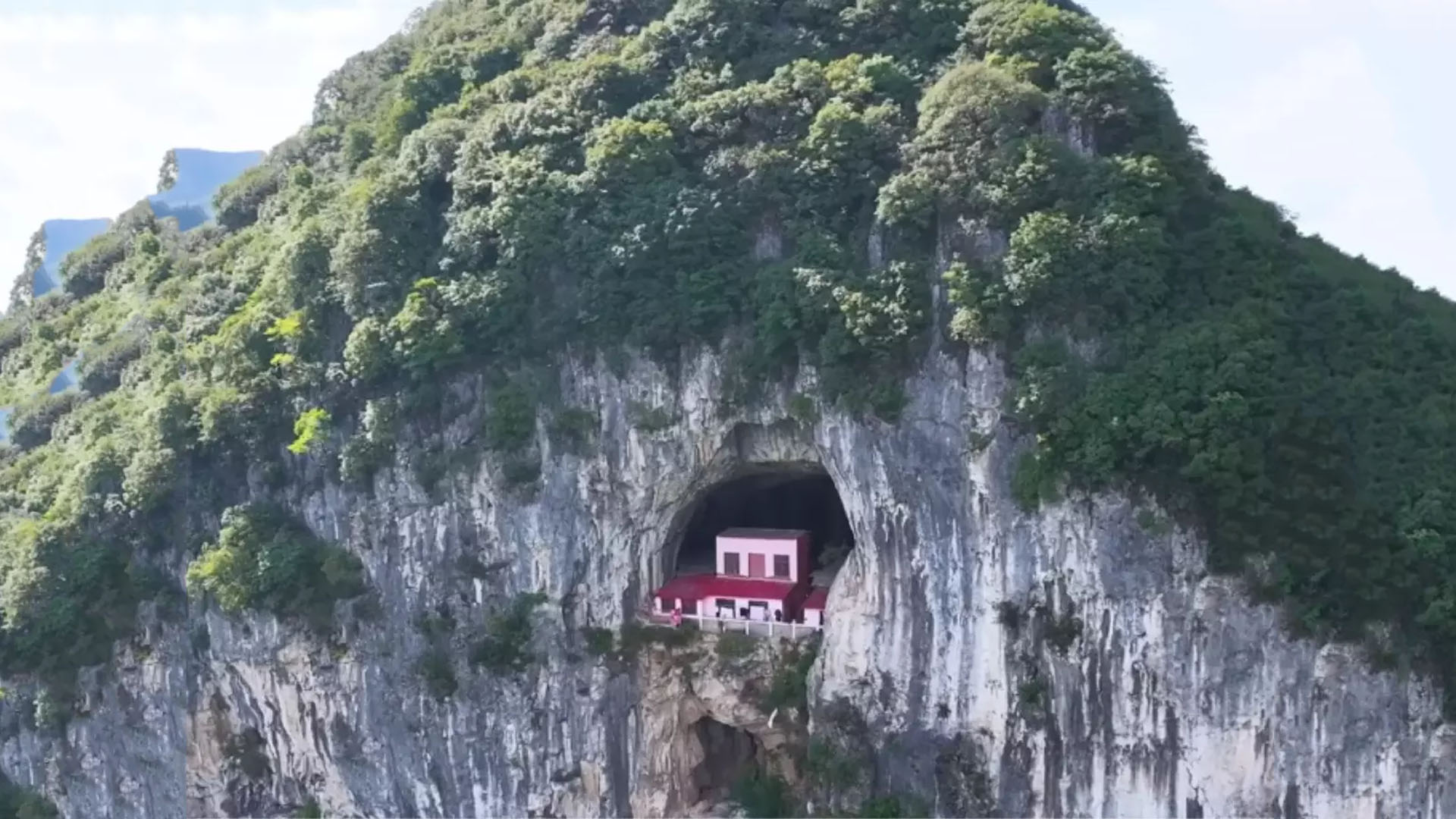
Video Shows a Monk Who Lives Alone in a Cave Temple in Internal Guizhou. The Site Integrates the Dragon Palace (Longgong) Tourist Complex and Houses Dozens of Sacred Images Carved in Natural Halls.
The image circulating on social media shows a nun living in seclusion in a cavity of the mountains of Anshun, Guizhou province, where there is a group of caves and temples that have become a national attraction.
Official materials from the Guizhou government describe the area as a 5A destination, with underground rivers, waterfalls, and the Guanyin Cave, a temple installed inside a huge karst hall.
In videos from the Chinese channel Qingyunji, a nun, identified in the subtitles as an ancient resident of the site, appears cleaning, cooking, and taking care of statues, stating she has lived there for over a decade.
-
He started running at 66 years old, broke records at 82, and is now a subject of study for having a metabolic age comparable to that of a 20-year-old, in a case that is intriguing scientists and inspiring the world.

-
Oldest tree on the planet reappears after 130 years of searches: Wattieza, 385 million years old, was 10 meters tall and had no leaves or seeds; Gilboa fossils in New York solved the mystery in 2007.

-
A 48-square-meter house assembled in hours with 4,000 bricks made of recycled plastic that does not absorb moisture, has natural thermal insulation, and costs less than 90,000 reais in a complete kit.

-
Luciano Hang revealed that Havan’s air fleet has already accumulated more than 20,000 landings, 10,000 flight hours, and 6 million kilometers traveled, and he says that without the planes, the company would never have grown so quickly.


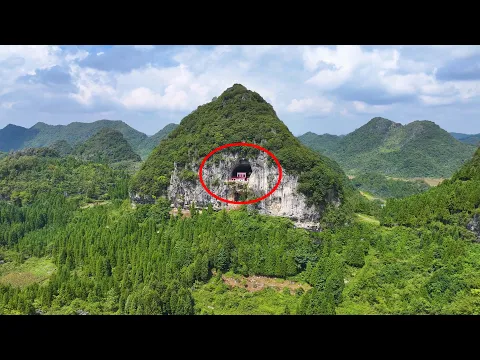

Besides human interest, the scenery draws attention for its geology: boat crossings on underground rivers, internal waterfalls, and halls up to dozens of meters high make up the route for visitors.
It is in this context that the story of the nun merges with the local imagination, a prolonged retreat in a living temple within the rock, next to tourist flows that demand ordering and respect.
Where Is the Cave Temple and What Is Inside
The Dragon Palace (Longgong) Scenic Area is located in Anshun Municipality, about 116 km from Guiyang, the capital of Guizhou. The complex features navigable caves, an underground lake, canyons, and waterfalls, forming one of the postcards of the karst in southwestern China.
Inside the park is the Guanyin Cave, a set of natural halls adapted for worship, with images of Buddha, bodhisattvas, and hymns gravitating around a stalagmite famous for resembling the figure of Guanyin.
Official documents cite 32 statues and emphasize the uniqueness of an active “cave church”.
Tourist accounts point to a mixed experience: passages through wet walkways, boat sections, and temples in caves with strong visual appeal, which explains the popularity of the theme on social media and vlogs.
Who Is the Monk Featured in the Videos and What Is Known
The videos from Qingyunji portray an elderly nun who claims to have lived for over 10 years in a cave hermitage, where she performs daily tasks and conducts devotional practices among statues of Buddhist and Taoist tradition.
According to the portal Xataka, the woman known only as Master Shi is 70 years old and takes care of the place alone. Her only visitors are a few pilgrims throughout the year.
The context, however, is plausible; long retreats in caves are part of Buddhist lineages. The classic case of Tenzin Palmo, a British woman who lived 12 years in a cave in the Himalayas, is frequently cited as a parallel and helps to gauge the practice.
The presence of pilgrims and tourists in the region requires mediation between spirituality and visitation. Local authorities classify the park as 5A, which implies rules for circulation, hours, and conduct within sacred areas.
History and Legends: The Thread That Links the Temple to the “Three Kingdoms”
On Brazilian and Chinese channels, there is a version that the cave was used to store supplies during the conflicts of the Three Kingdoms period and then gifted to monks — a narrative attributed to figures such as Meng Huo and descendants. As oral history, the line is captivating; as historiography, it lacks accessible documentary basis.
Official sources about the Guanyin Cave focus on geology and the current religious configuration of the space, not on the military chronology of the 3rd century.
In other words, the nun exists as a character in recent videos and the cave temple exists and is visitable, but the connection with the cycle of Meng Huo should be treated as local legend until primary sources appear.
Tourism, Preservation, and Ethics of the Retreat
For those wishing to explore the area, the itinerary often includes boat crossings through internal rivers, waterfalls, and illuminated caves, with walking sections and ticketing and transportation structures within the park. Guides and travel accounts help plan time and cost.
As it is a place of worship, discretion is recommended when photographing, respect for restricted areas, and attention to safety rules on wet floors and stairs. The park is included in the 5A list, a standard that implies flow management and environmental protection.
If the nun is in a recognized retreat, the principle is simple: do not invade, do not film closely without consent, and do not transform religious practice into “attraction”. The best way to preserve is to see without violating.
In the end, the story serves as an invitation to debate: should we prioritize the silence of a monastic retreat in a 5A park with thousands of visitors? To what extent do viral videos help protect or merely expose those who wish to remain on the margins? Share your opinion in the comments and let us know if you would visit the site knowing someone chose to make it their spiritual home.








-

-

-

-

8 pessoas reagiram a isso.