





 Portuguese
  English
  Spanish
  6 min of reading
  0 comments


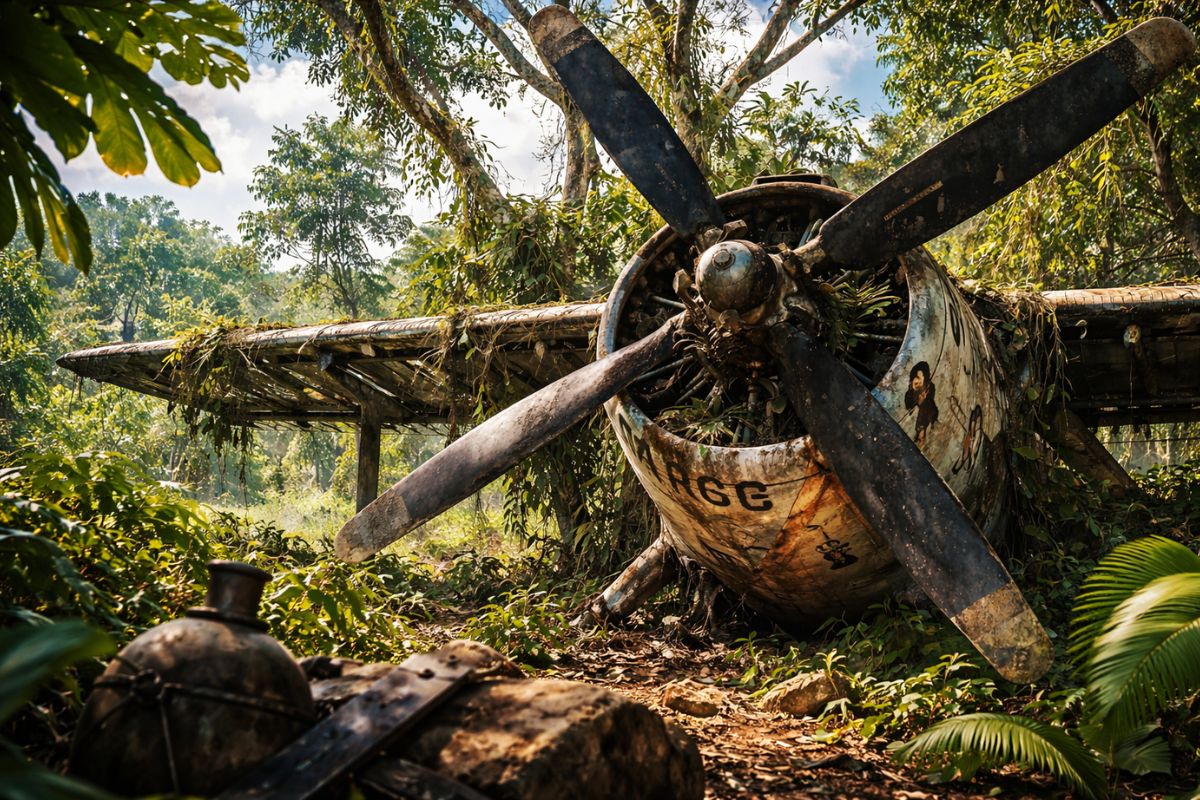
The P-38 Lightning aircraft nicknamed Marge, piloted by the greatest ace of American aviation in World War II, was located in the jungle of New Guinea with its original red paint still visible—a discovery that concludes eight decades of searches and rescues the memory of Richard Bong.
The airplane appeared as if time had decided to preserve it on purpose. After just two days of walking through the dense jungle of Madang province in New Guinea, a joint team formed by the Richard I. Bong Veterans Historical Center and the Pacific Wrecks organization found what historians and veterans had been searching for since 1944. Marge, a Lockheed P-38 Lightning with serial number 42-103993, still retained its characteristic red paint and the female portrait on the nose cone—the image of Marjorie Ann Vattendahl, the woman who named the most feared fighter in the Pacific.
The importance of this discovery far exceeds the location of a lost airplane in the jungle. Marge was the war machine with which Major Richard Bong accumulated 40 confirmed aerial victories against Japanese aircraft, the highest number ever recorded by an American pilot throughout World War II. Finding this specific P-38 Lightning, eight decades after its disappearance, is equivalent to recovering an entire chapter of the military history of the United States that was believed to be lost forever.
The pilot who became the greatest ace of American aviation

Richard Bong did not follow the script that the Army had laid out for him. When he arrived in the Pacific theater during World War II, his official role was artillery instructor—a position that did not require or expect him to engage in combat.
-
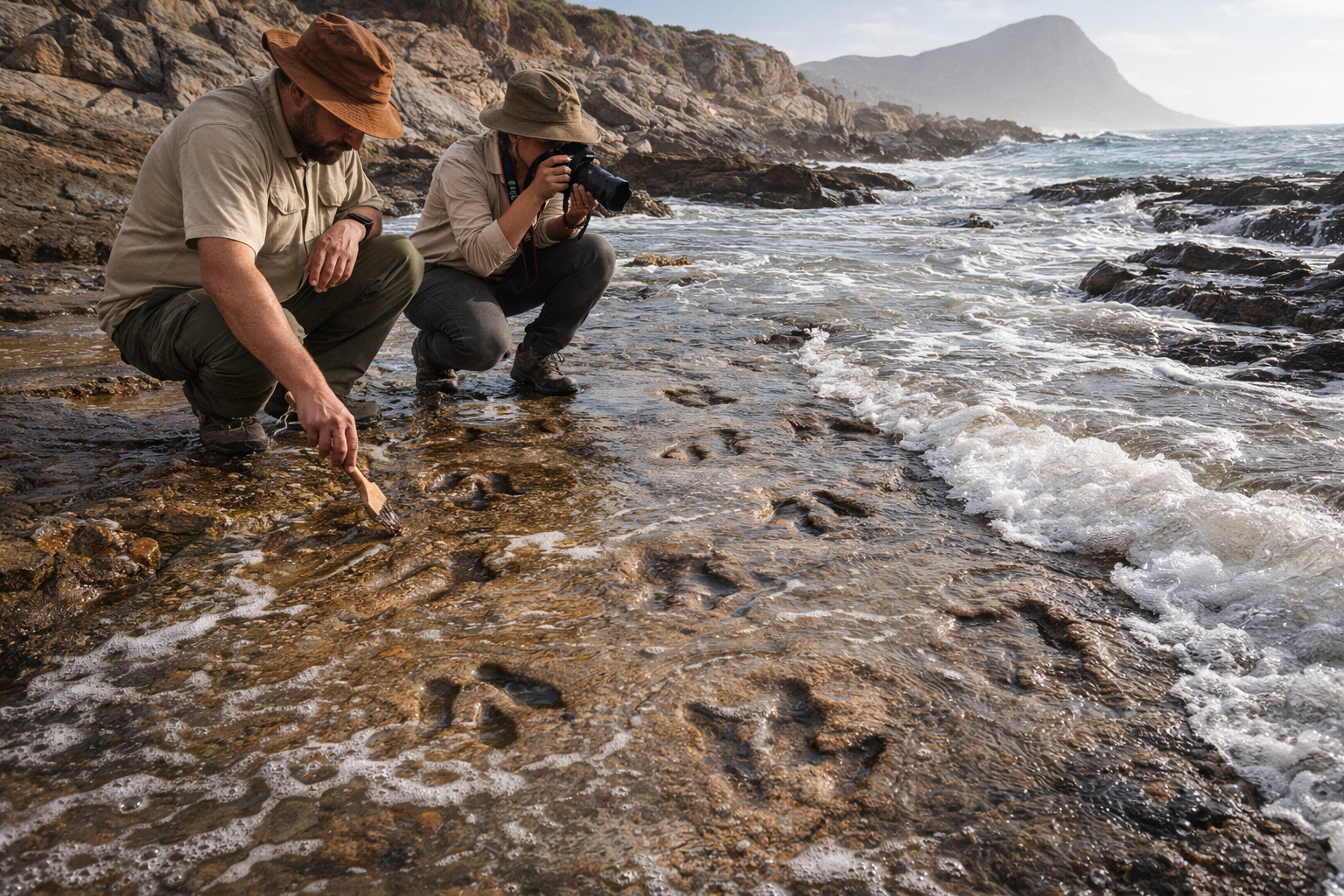
On a rocky stretch of just 40 meters in South Africa, scientists found dozens of footprints that are 132 million years old hidden beneath the tide, revealing the youngest record ever identified in the southern part of the African continent.
-
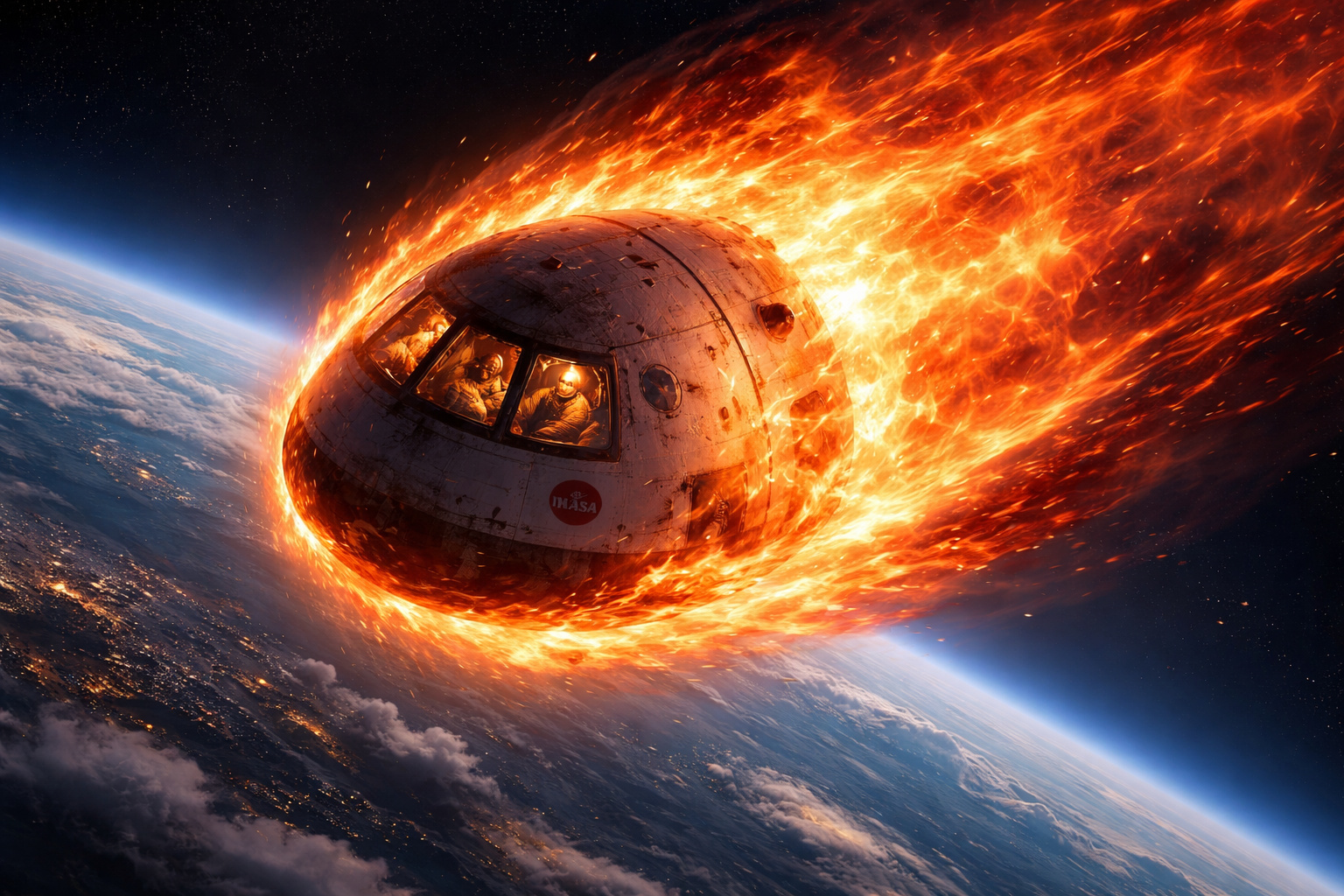
Artemis 2 makes history by bringing astronauts in a ‘fireball’ at over 40,000 km/h and 2,700 °C in an impressive reentry that challenges human limits.
-
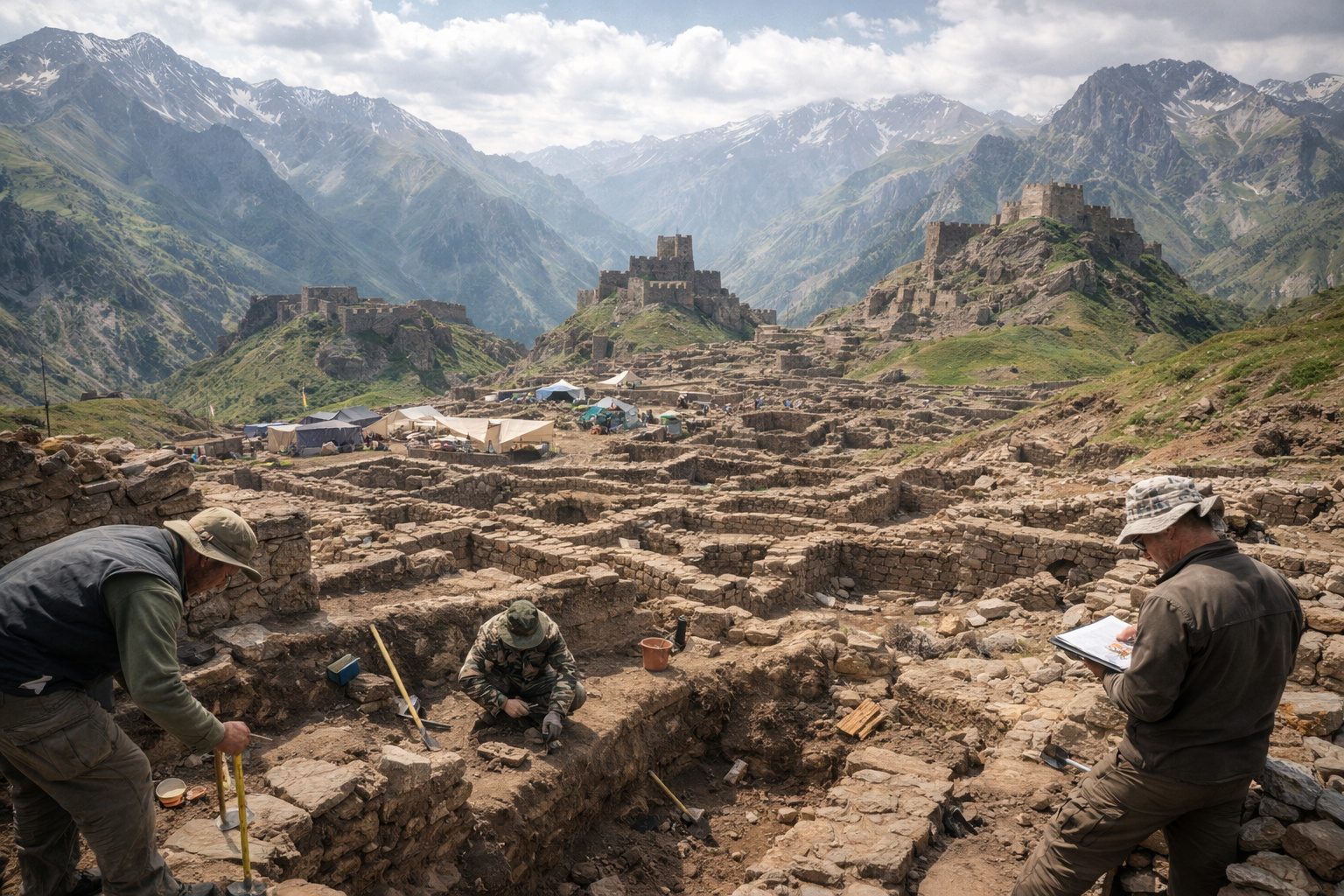
At over 2,000 meters above sea level, archaeologists have found a medieval city spanning 120 hectares with four citadels hidden in the mountains of Uzbekistan. This discovery dismantles the idea that the Silk Road was merely a passage and reveals a colossal urban center where no one imagined.
-
The humanoid robot from China that runs, does flips, and costs less than an economy car has just launched a global version, and the R1 from Unitree will be sold for $4,900 in the United States, Europe, and Asia, making a machine with 26 joints accessible to any small laboratory or enthusiast with the budget of a high-end iPhone.

Nevertheless, Bong disobeyed expectations and flew mission after mission aboard his aircraft, accumulating a number of aerial victories that no other American pilot could match.
His 40 confirmed victories earned him the title of “Ace of Aces” and a decoration that few military personnel receive in life: the Medal of Honor, personally awarded by General Douglas MacArthur in December 1944.
The recognition came precisely because Bong sought combat on his own initiative, pursuing and shooting down enemy aircraft even when it was not his obligation. The plane he piloted on all these missions—Marge—became as famous as the pilot himself. The P-38 Lightning with Marjorie’s face on the nose became a symbol of an era when men and machines were inseparable.
The airplane that carried the name of a woman and the soul of a pilot
According to information from the portal Heritage Daily, Marge was not just another combat aircraft among the thousands of P-38 Lightnings produced by Lockheed during World War II. For Richard Bong, that fighter was a personal symbol, named in honor of the woman he loved. Marjorie “Marge” Ann Vattendahl was Bong’s girlfriend, and her portrait was painted on the nose cone of the aircraft—a common practice among pilots of the time, but in this case transcended tradition and became legend.
Every victory of Bong was also a victory for Marge. The aircraft accumulated combat marks, repairs, and stories that transformed it into something greater than the sum of its mechanical parts. The P-38 Lightning was the most versatile twin-engine fighter in the American arsenal in the Pacific, capable of operating as an interceptor, bomber escort, and ground attack platform. In Bong’s hands, Marge became the ultimate expression of what this aircraft could do. When the plane disappeared in the jungle, it took with it a tangible part of history that would only reappear eight decades later.
The mechanical failure that sent Marge into the jungle
The story of Marge’s disappearance begins on March 24, 1944, when the aircraft was not under the command of Richard Bong. On that day, Second Lieutenant Thomas E. Malone was piloting the P-38 Lightning on a routine weather reconnaissance mission over New Guinea. What should have been an incident-free flight turned into an emergency when the aircraft’s propeller failed to feather, followed by an electrical failure that caused the aircraft to enter an uncontrollable spin.
Malone was able to parachute out and landed safely south of Madang. Marge, however, plunged into the jungle to the north and disappeared beneath the tropical vegetation. For 80 years, no one knew exactly where the plane had crashed. The jungle of New Guinea is one of the most hostile environments on the planet for searches—dense vegetation, rugged terrain, and virtually nonexistent access turned Marge into a ghost of World War II, present on lists of missing aircraft but invisible in the real world.
The premature death of Richard Bong at 24 years old
Fate reserved a cruel irony for Richard Bong. He survived dozens of aerial combats in the Pacific, shot down 40 enemy planes, and returned home as a national hero. But he died on American soil at 24 years old, testing an aircraft that was not Marge.
On August 6, 1945—the same day the atomic bomb was dropped on Hiroshima—Bong took off from California aboard a Lockheed P-80A Shooting Star for an acceptance flight.
Shortly after takeoff, a fuel pump failure forced Bong to abandon the aircraft. He parachuted out, but the altitude was too low for the equipment to open in time. The impact with the ground was fatal.
The greatest ace of American aviation died without knowing that his most famous aircraft, Marge, remained intact somewhere in the jungle of New Guinea, waiting to be found. The tragic coincidence—two P-38s and two parachute jumps, with opposite outcomes—forever marked the narrative surrounding Bong and his legendary aircraft.
Two days of searching to solve an eight-decade mystery
The rediscovery of Marge in 2024 was the result of a coordinated effort between the Richard I. Bong Veterans Historical Center, located in Superior, Wisconsin, and Pacific Wrecks, a nonprofit organization dedicated to locating military personnel missing in action and their equipment.
The team needed only two days of walking in the jungle of Madang province to locate the wreckage of the aircraft—a surprisingly short time for a search that had frustrated generations of researchers.
What they found exceeded expectations. Two engines of the P-38 Lightning still protruded above ground level. Marge’s red paint remained visible beneath decades of tropical weathering. And on the wingtip, a stencil of the U.S. Army bore the inscription “993”—the last three digits of Richard Bong’s aircraft serial number.
This marking was the definitive confirmation that Marge had been found. Briana Fiandt, collections curator at the Bong Center, summed up the significance of the moment: the discovery honors not only Bong’s memory but that of all who served during World War II.
What the discovery of Marge means for military history
Until 2024, the Richard I. Bong Veterans Historical Center displayed only a replica of the famous P-38 Lightning. The museum, which also houses a screening room and World War II collections, had always relied on reproductions to tell the story of the aircraft most associated with the greatest ace of American aviation. With the location of the original Marge, the institution no longer has to settle for a copy of the most iconic aircraft of its patron.
The recovery of the aircraft is being treated as much more than an archaeological event. It is an act of national memory, a concrete rescue of an artifact that symbolizes the sacrifice of an entire generation. Richard Bong was posthumously inducted into the National Aviation Hall of Fame in 1986, and Marge is the missing piece to complete that legacy.
Finding an airplane in the jungle after 80 years is not just a logistical feat—it is proof that some stories refuse to disappear, even when tropical vegetation tries to swallow them.
The story of Richard Bong and Marge was hidden in the jungle for 80 years but is now back. Did you know about this episode of World War II? Do you think relics like this should be rescued and displayed, or preserved at the site where they fell? Leave your opinion in the comments.









Seja o primeiro a reagir!