





 Portuguese
  English
  Spanish
  4 min of reading
  3 comments





Italy Eases Visa for Descendants: New Law Allows Entry Without Quotas, Accelerates Processes, and Includes Brazilians Among the Main Beneficiaries.
Italy has made one of the most significant decisions in its recent migratory policy. In light of the accelerated aging of the population, the depopulation of entire regions, and a chronic lack of labor to support essential sectors, the government published on November 24 a new rule that changes the fate of millions of descendants of Italians around the world — including Brazil.
For the first time, descendants from seven specific countries gain access to work visas outside the quota system of the Decreto Flussi, eliminating the biggest historical barrier that prevented even qualified professionals from obtaining authorization to work legally in Italian territory.
Brazil is among the benefited countries. This change is not symbolic. It is profound. It is structural. And it could open the largest window of mobility ever offered to Italian descendants in decades.
-
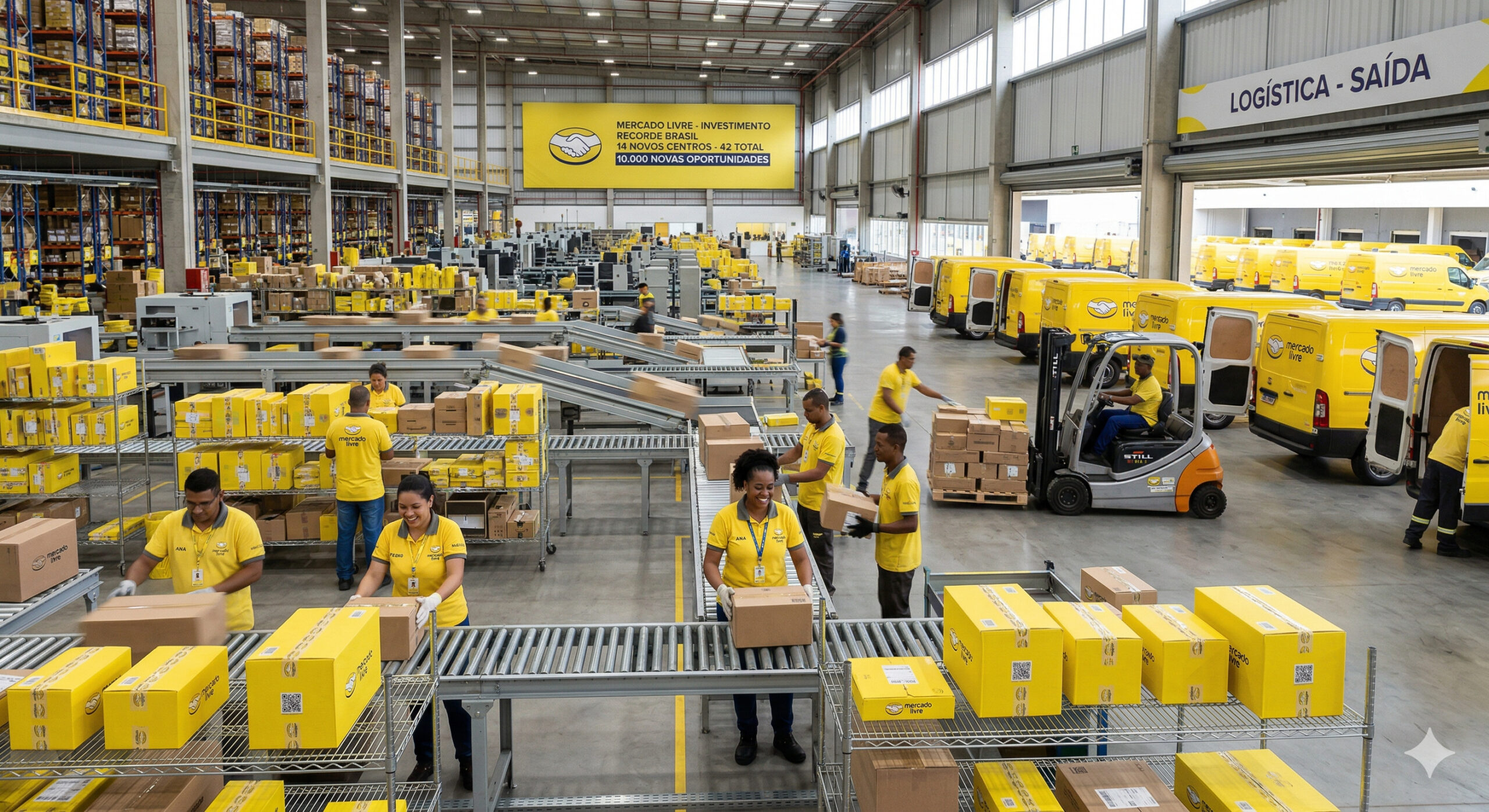
Mercado Livre “opens the vault” and announces a record investment of R$ 57 billion in Brazil in 2026, a value 50% higher than the previous year, with an expansion plan that includes 14 new logistics centers, totaling 42 units in the country and hiring an additional 10,000 employees.
-
How investment in technology can revolutionize the national economy and enhance industrial gains, according to a study that highlights the direct impact on productivity, innovation, and wealth retention within Brazil.

-
The largest food company on the planet, JBS, has just opened a 4,000 square meter laboratory in Florianópolis to develop customized proteins that modulate muscle mass gain, immune response, and metabolic performance.

-
After nearly 30 bids and competition among industry giants, a Spanish company purchases one of the largest airports in Brazil for almost R$ 3 billion and takes over the management of Galeão in a concession that will last until 2039.


The Labor Crisis That Led Italy to Reopen the Path for Descendants
The starting point is a problem that has silently worsened:
• Italy has one of the oldest populations in the world
• The birth rate is one of the lowest in Europe
• Young Italians continue to emigrate
• Agriculture, construction, logistics, health, and tourism face a permanent lack of workers
• Small towns are at risk of population collapse
The government spent years trying to adjust the immigration system, but reliance on the Decreto Flussi — which sets a strict number of spots for the entry of foreign workers by country — turned bureaucracy into the biggest obstacle.


Between 2023 and 2025, the Decreto Flussi authorized 452,000 foreign workers, with 151,000 alone in 2025. Sounds like a lot? It’s not.
For several countries with a strong presence of Italian descendants, the problem was simple: even those with Italian heritage, a work contract, and professional qualifications were blocked due to the lack of spots in the quota.
Venezuela was the most cited case: descendants with Italian surnames, verified documents, and formal job offers were rejected simply because the country had very few spots in the decree. The new law published on November 24 changes this scenario completely.
What the New Law Establishes and Why It Changes Everything
From the official publication, descendants of Italians from the seven included countries can:
- 1. Apply for a work visa without depending on the annual quota of the Decreto Flussi
- 2. Legally enter the country with a work contract
- 3. Apply for residency authorization
- 4. Register with the local municipality
- 5. Access Italian health and basic services
In other words:
- No more competition for spots.
- No more annual limitations.
- No more “blocked countries.”
It is enough to prove descent and present a valid work contract. This is extremely relevant for Brazilians.
Why Brazil Becomes One of the Most Benefited Countries
Brazil is one of the largest Italian-descendant nations in the world. It is estimated that between 25 and 30 million Brazilians have some degree of Italian ancestry.
With the new rule:
• Brazilian workers will be able to obtain visas much more easily
• Italian companies will be able to hire qualified Brazilians without bureaucracy
• Crisis-hit sectors — such as agriculture, tourism, and domestic services — will have immediate access to labor
• Descendants will have faster access to residency, health, benefits, and legal stability
In practice, Brazil becomes one of the largest pools of talent and available qualified labor for Italy.
Step by Step for a Brazilian Descendant to Take Advantage of the New Law
- Prove your ancestry – certificates, family records, Italian documents
- Obtain a work contract with an Italian company
- Apply for a visa at the Italian consulate in Brazil
- Travel and legally enter the country
- Convert the visa into a permesso di soggiorno (residency)
- Register with the comune (local municipality)
- Access health, services, and basic rights
This pathway, once nearly impossible, now becomes straightforward.
What Still Needs Attention
Despite the enormous progress, experts warn:
• The law exists, but its implementation depends on internal regulations
• Consulates need to update procedures
• The documentary proof of descent remains rigorous
• Italian companies will still play a crucial role in hiring
In other words: there is an open door, but it is not automatic. Still, it is the greatest opening that the Brazilian Italian-descendant community has had since the era of large migrations.
Historic Opportunity for Brazilian Descendants
The new Italian policy marks a turning point. It is the first concrete gesture from the government to reconnect Italy with its global diaspora, a huge population that helped build entire countries, such as Brazil.
In the face of demographic decline and the labor crisis, the country finally recognizes that the solution may lie precisely among those who carry Italian surnames, familial traditions, and deep cultural ties.
For millions of Brazilians, this could be the chance to change their lives.










Obrigado pela reportagem 😃🙂😃
Sou descendente de italiano já com identidade e passaporte, como faço?
Leia a matéria que explica amigo.