






 Portuguese
  Spanish


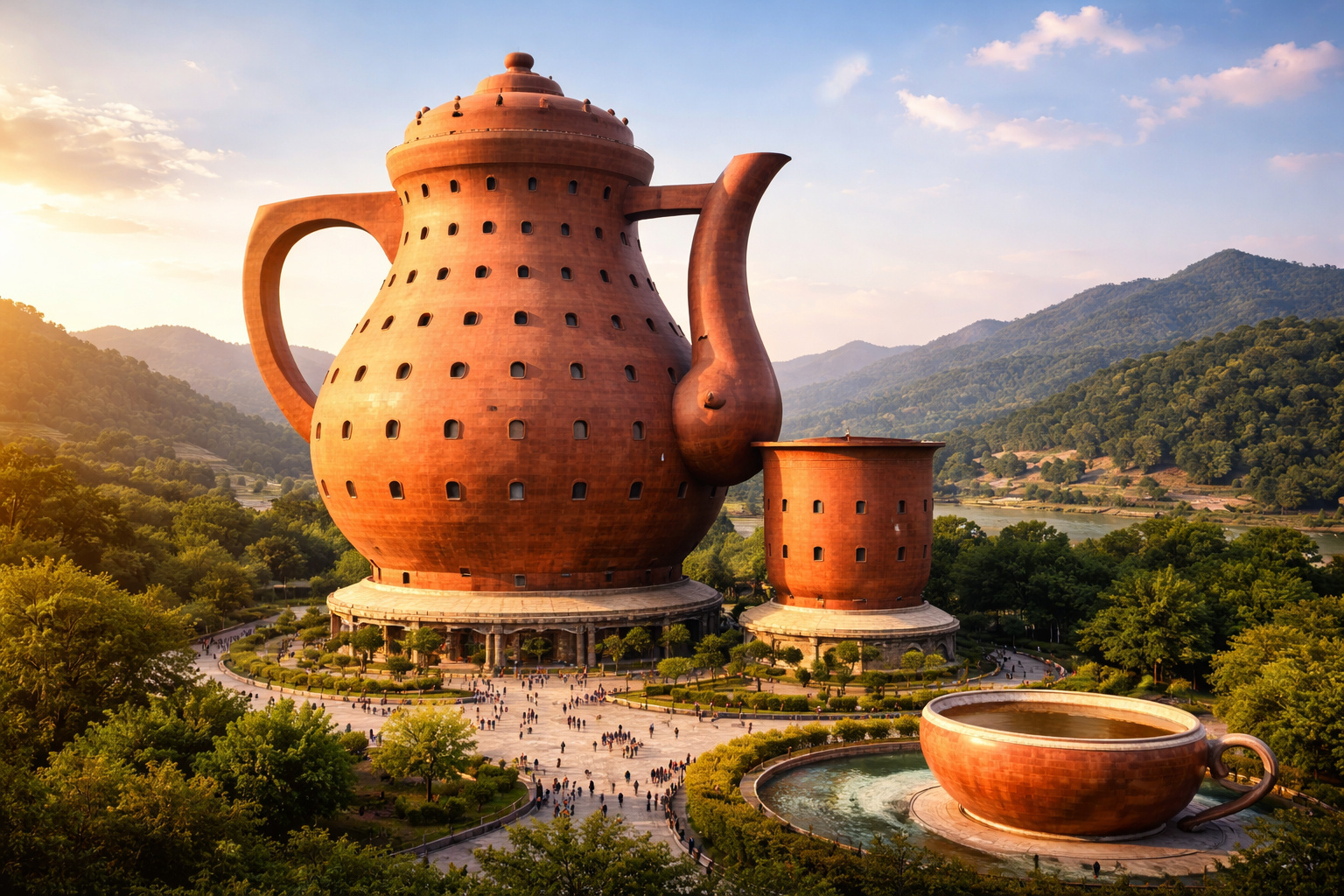

Meitan Tea Museum shows how mimetic architecture in China combines complex engineering and tourism in a building shaped like a teapot considered the largest in the whole world
Mimetic architecture in China draws attention with the Meitan Tea Museum, a gigantic building constructed in the shape of a teapot that mixes unusual design with real use. The structure is not just a visual symbol, but a complete building with various internal functions.
The project shows how engineering can adapt non-standard shapes, ensuring safety and functionality in a building that completely deviates from the traditional model.
Meitan Tea Museum is the largest building in the shape of a teapot in the world
Located in Guizhou province, the Meitan Tea Museum stands 73.8 meters tall and about 24 meters in diameter, dimensions that attract attention due to their scale.
-
Couple Transforms Abandoned Farm in São Paulo into Major Poultry Operation with 295,000 Birds and Plans for Expansion

-
U.S. Giants Oppose New 25% Tariff on Brazilian Imports, Warn of Impact on Electric Cars, Coffee, and Orange Products

-
Off-Duty Firefighter Rescues Three Children Trapped Under Overturned Boat in Brazilian Lake

-
Workers near the Vatican uncover lead pipe revealing Emperor Caligula’s name and site of his opulent garden from nearly 2,000 years ago




The assessment was published by Guinness World Records, an international organization that records world records, which recognizes the site as the largest teapot-shaped monument on the planet.
The internal volume exceeds 28,000 cubic meters, reinforcing the size of the structure and the complexity of the project.
Internal structure houses 15 floors with multiple functions
Unlike a common monument, the building is fully functional. The space features 15 internal floors, distributed for different uses.
Among the functions are a boutique hotel, event areas, an art gallery, and an observation deck at the top. This variety transforms the location into an active tourist spot, not just an architectural symbol.
The presence of various environments within the structure shows how the project was designed for continuous use, uniting tourism and functionality.
Engineering had to solve the challenge of narrow base and wide top
The teapot shape brought one of the greatest challenges of the construction. The lower part of the building is narrower, while the central part is wider, creating a natural weight imbalance.
To solve this, engineering utilized a structural system capable of redistributing loads throughout the building, ensuring stability. This type of solution requires detailed calculations and precision in execution.

The information was released by Guinness World Records, an international organization that records world records, which highlights the impact of this type of construction outside the traditional standard.
Project includes giant cup and attracts tourists from various regions
Next to the main building, there is a complementary structure in the shape of a giant teacup. The set creates a striking visual scene and reinforces the cultural identity of the location.
This type of composition increases tourist interest and transforms the space into a visitation point. The contrast between the playful shape and the robust structure catches the attention of visitors.
The approximate investment in the project reached 80 million yuan, showing the scale of the project and its importance to the region.
Rounded shape requires special calculations to ensure safety
Buildings with curved shapes present different challenges from traditional buildings. The action of the wind and the distribution of weight need careful analysis.

Therefore, the museum’s structure was planned to withstand these conditions, ensuring resistance and stability. The curvature of the building directly influences the behavior of external forces.
This type of project shows how modern engineering can transform unusual ideas into real and safe constructions.
Meitan Tea Museum unites culture, engineering, and tourism in a single project
The Meitan Tea Museum represents a clear example of how architecture can go beyond the conventional. The building combines cultural tradition, structural innovation, and practical use in a single space.
In addition to impressing visually, the construction reinforces the potential of engineering to create solutions for complex shapes. The result is a tourist spot that unites curiosity and technology.
If you found this project interesting, leave your opinion in the comments and share it with others who enjoy different engineering and architecture.





