





 Portuguese
  English
  Spanish
  6 min of reading
  0 comments


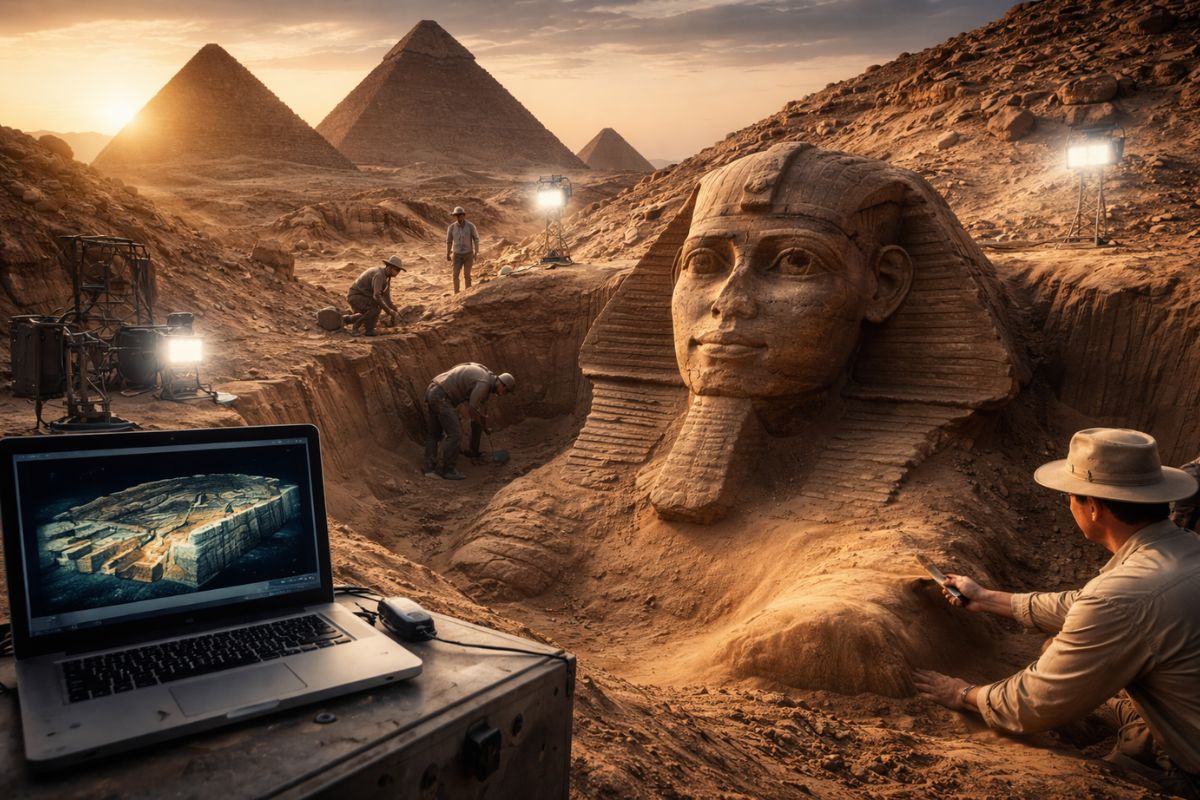
Filippo Biondi and his team of Italian researchers used satellite radar to detect what may be a second Sphinx buried under a mound of hardened sand 33 meters high on the Giza Plateau in Egypt, with wells and subterranean passages that reflect the structures already found beneath the original Great Sphinx and point to a mega-structure beneath the entire plateau
Italian researchers believe they have detected a second Sphinx buried beneath the sands of the Giza Plateau in Egypt. Filippo Biondi, who leads the team, revealed the discovery stating that satellite scans identified a structure beneath a mound of hardened sand 33 meters high that exhibits surprisingly similar characteristics to the original Great Sphinx. The location of the second Sphinx was identified by tracing geometric lines from the pyramids, and the mirrored point coincides exactly with the site where the scans detected the buried structure.
According to the Daily Mail, the possible second Sphinx is not the only discovery. The same scans suggest the existence of something even larger beneath the Giza Plateau: a subterranean mega-structure with vertical wells, chambers, and horizontal passages that extend beneath the entire area. Biondi stated that right beneath the Giza Plateau lies something gigantic that his team is measuring, and that the evidence points to an extensive subterranean complex hidden for over 3,000 years.
The 3,000-year-old clue that has always been in plain sight

The idea of a second Sphinx did not come out of nowhere. Between the paws of the Great Sphinx lies a stone monument called the Dream Stele, erected by Pharaoh Thutmose IV around 1401 BC.
-
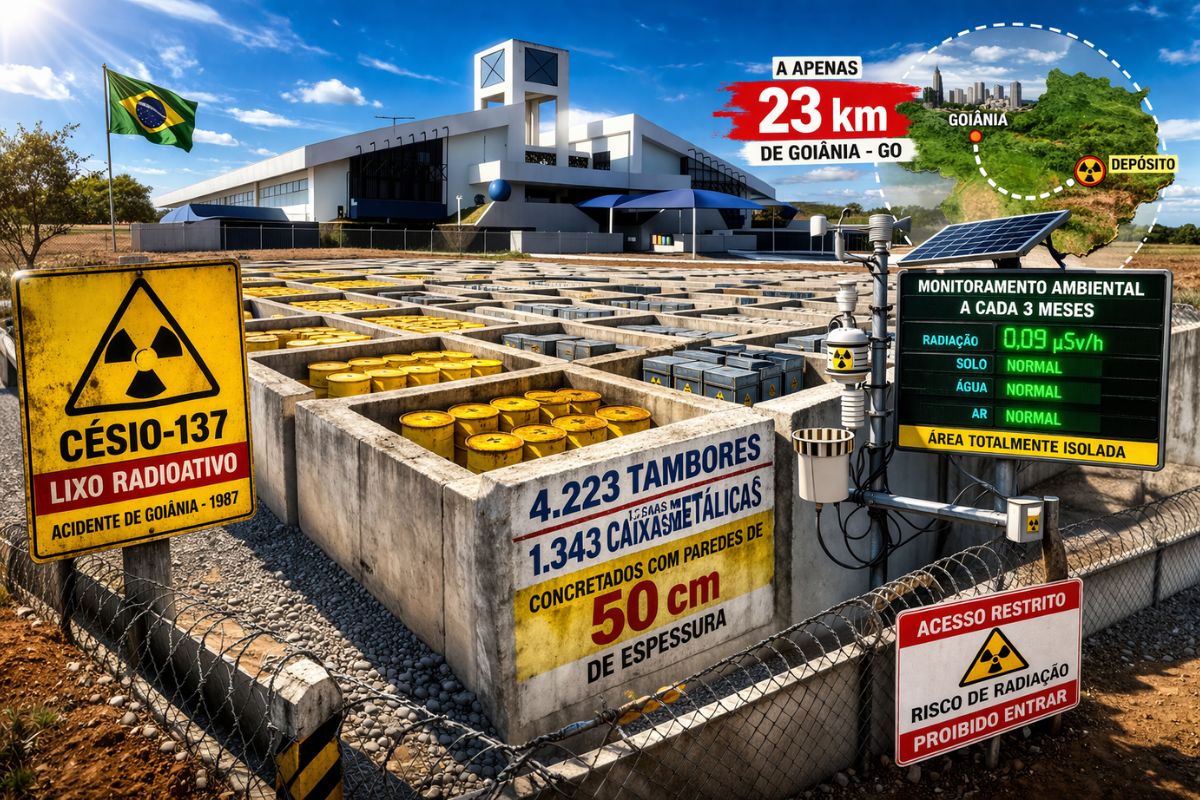
There are 4,223 drums and 1,343 metal boxes concreted with 50-centimeter walls that store the radioactive waste from Cesium-137 in the worst radiological accident in Brazil, just 23 kilometers from Goiânia, with environmental monitoring every three months.
-
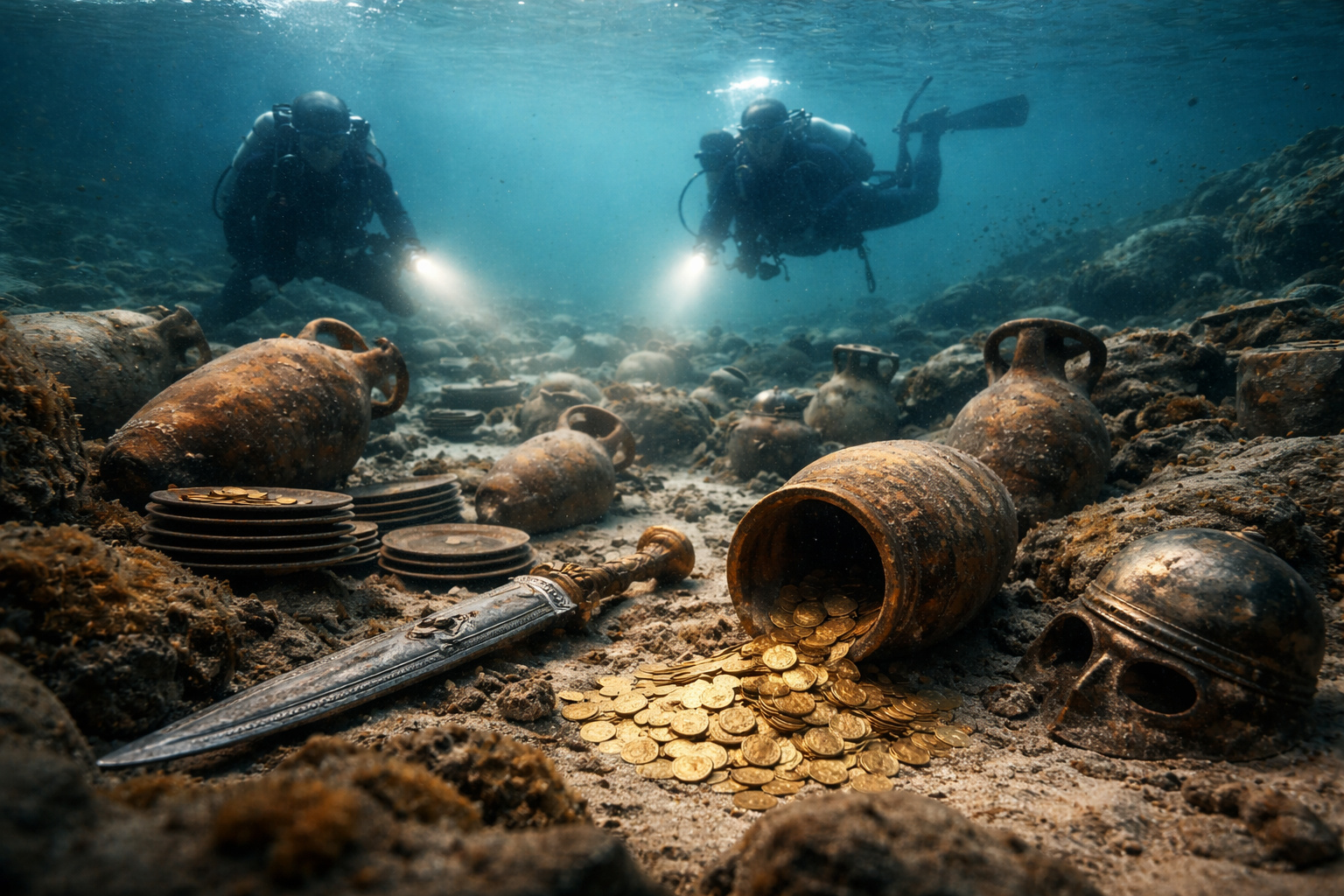
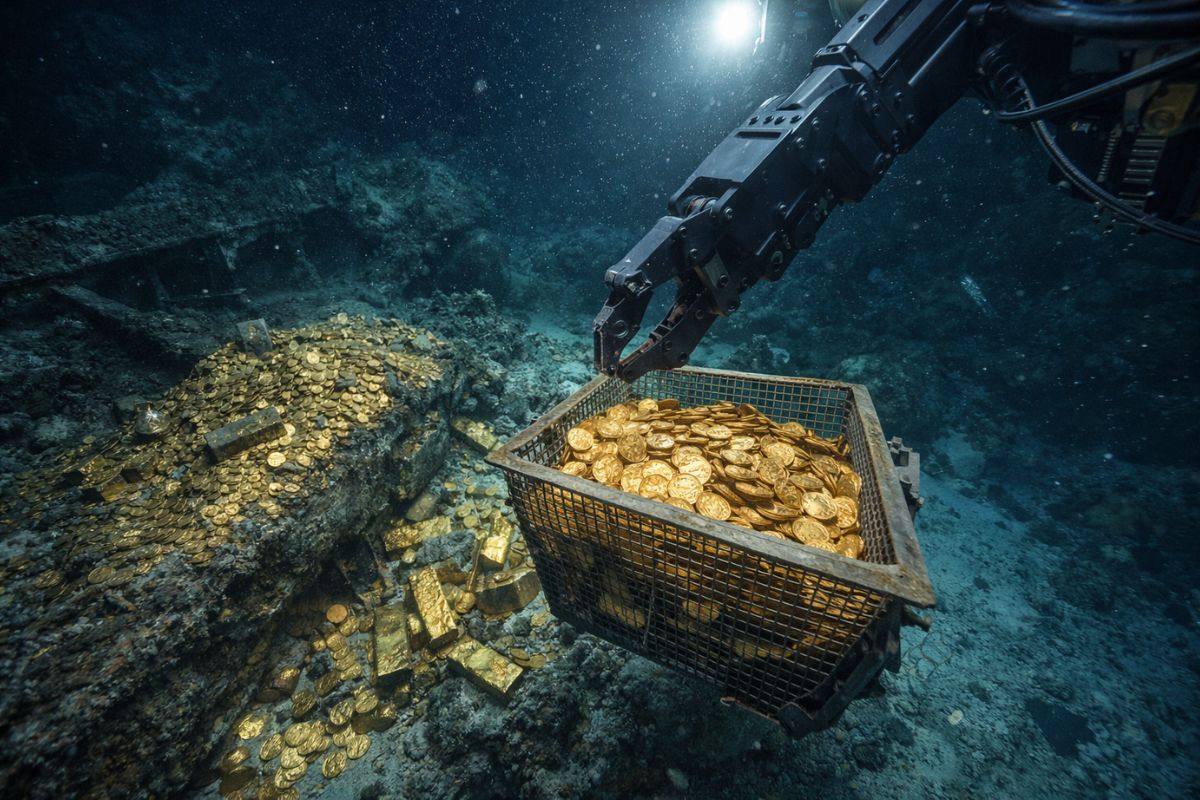
Giant Roman treasure found at the bottom of Lake Neuchâtel in Switzerland reveals an advanced trade system, circulation of goods, and armed escort in the Roman Empire about two thousand years ago.
-
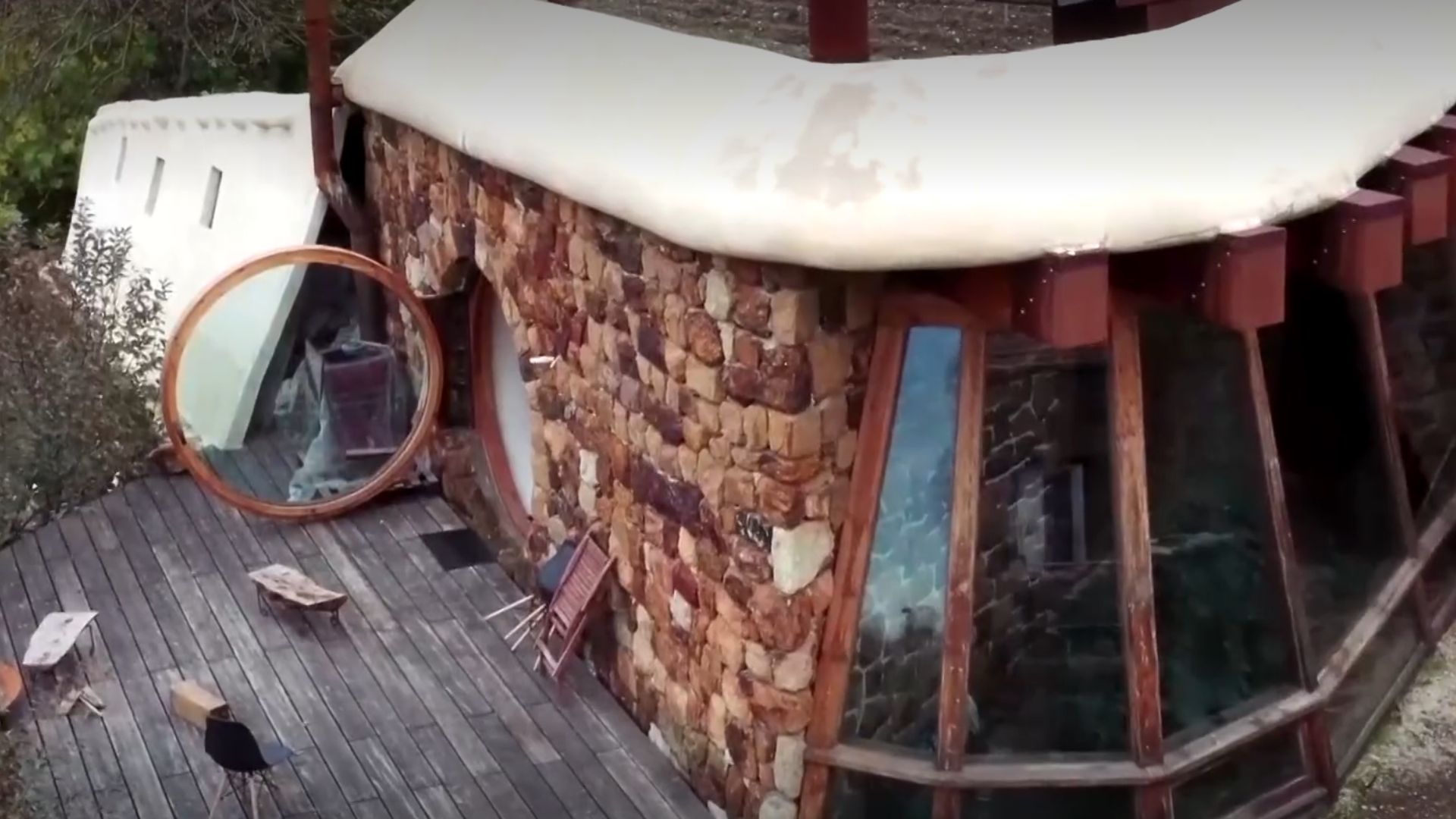
He buried 1,200 old tires in the walls to build his own self-sufficient house in the mountains with glass bottles, rainwater, and an integrated greenhouse.
-
The aircraft carrier HMS Prince of Wales is heading to the Arctic with F-35 fighters, helicopters, and warships in an operation that repositions the United Kingdom at the forefront of NATO in 2026.


The stele shows two figures of sphinxes, not one, which led researchers to suggest that the legendary monument may have had a twin from the beginning. For centuries, the image has been interpreted as symbolic representation. Biondi’s team believes it may be literal.
The theory of a second Sphinx had already been raised over a decade ago by Egyptologist Bassam El Shammaa, who cited records and mythology from ancient Egypt describing a lightning strike hitting one of the sphinxes, possibly referring to a second monument that may have been destroyed or buried.
The former Egyptian Minister of Antiquities, Zahi Hawass, rejected the theory in 2017, stating that the area had already been excavated by many archaeologists without anything being found. But Biondi argues that no one had used satellite radar to look beneath the surface with the resolution that his team now possesses.
How satellite radar found the second Sphinx beneath the sands

The technology used by Biondi’s team is a satellite radar capable of detecting subtle ground vibrations and mapping what lies beneath the surface without the need for excavation.
The scans identified a mound of hardened sand approximately 33 meters high on the Giza Plateau that, according to Biondi, is made of solidified sand rather than natural rock, which means something may be buried beneath.
The location of the second Sphinx was determined by geometry. The team drew a line from the center of the Pyramid of Khafre to the existing Great Sphinx, creating a reference line.
When that same line was mirrored from the center of the Great Pyramid, it pointed to the opposite side of the plateau, exactly where the mound of hardened sand is located.
Biondi stated that they found a 100% geometric correlation in this symmetry and that the team has about 80% confidence that the second Sphinx is there.
The wells and passages that reflect what exists beneath the Great Sphinx
The scans not only showed the outline of a possible second Sphinx. They revealed internal structures resembling what has already been documented beneath the original Sphinx.
Preliminary analyses show vertical wells and horizontal passages surprisingly similar to those already found beneath the Great Sphinx, with dense vertical lines representing the solid walls of subterranean chambers.
Biondi described what they found as an incredible symmetry between the first and second structures. The scans captured the channels beneath the original Sphinx and the channels beneath the hypothetical second Sphinx, and the similarities are becoming increasingly hard to ignore.
The preliminary images show not only vertical wells but also horizontal tunnels branching from deeper sections, mirroring routes already identified beneath the first Sphinx.
The subterranean mega-structure that could change everything we know about Giza
Beyond the possible second Sphinx, Biondi’s scans suggest the existence of something much larger hidden beneath the Giza Plateau.
The researcher stated that his team is measuring something gigantic beneath the plateau and used the term subterranean mega-structure to describe what the data indicates.
If confirmed, this structure would be an extensive subterranean complex hidden beneath the most famous site in world archaeology, unknown for over 3,000 years.
The team has already identified two or three wells in the area between the original Sphinx and the Pyramid of Khafre, including one particularly large well that appears to be blocked by debris. Biondi believes that removing these blockages may be the key to accessing the larger subterranean network.
The researchers have already prepared a project proposal to submit to the Egyptian authorities, indicating specific locations where wells are visible and where safe access to the subterranean structures would be possible.
The discovery, if confirmed in the field, would rewrite entire chapters of ancient Egyptian history.
What is needed to confirm if the second Sphinx really exists
Biondi is clear about the limitations: satellite radar can detect anomalies in the underground, but it cannot confirm with absolute certainty what is a second Sphinx and what is natural geological formation.
The researcher himself stated that it is necessary to go to the site with geologists and carefully study the mound before drawing definitive conclusions.
The team is still comparing elevations between the known Sphinx and the mound where the second Sphinx is supposedly located, measuring distances relative to the surface of the plateau and analyzing the soil composition.
The permission of the Egyptian authorities for fieldwork is the next step, and without it, the second Sphinx will remain an extraordinarily well-founded hypothesis, but still unproven.
The archaeological community is watching with interest and skepticism, as it does with any claim that challenges decades of research at the most studied site in Egypt.
The Giza Plateau may hold much more than humanity has already excavated
A second Sphinx buried under a mound of sand, wells and subterranean chambers that mirror the original structure, and a gigantic mega-structure beneath the Giza Plateau.
If Biondi’s scans are correct, the most famous site in world archaeology hides beneath the sand as much or more than it shows on the surface.
The Dream Stele, with its two sphinxes carved 3,000 years ago, may have been not a symbol, but a map that no one has known how to read until now.
Do you think there really is a second Sphinx buried in Egypt? Or are researchers seeing patterns where there is only sand? What would change in history if a subterranean mega-structure is confirmed beneath Giza? Leave your thoughts in the comments and share this article with anyone fascinated by ancient Egypt.







Seja o primeiro a reagir!