





 English
  Francês
  Alemão
  Italiano
  Japonês
  Norueguês
  Portuguese
  Spanish
 4 min of reading
  5 comments


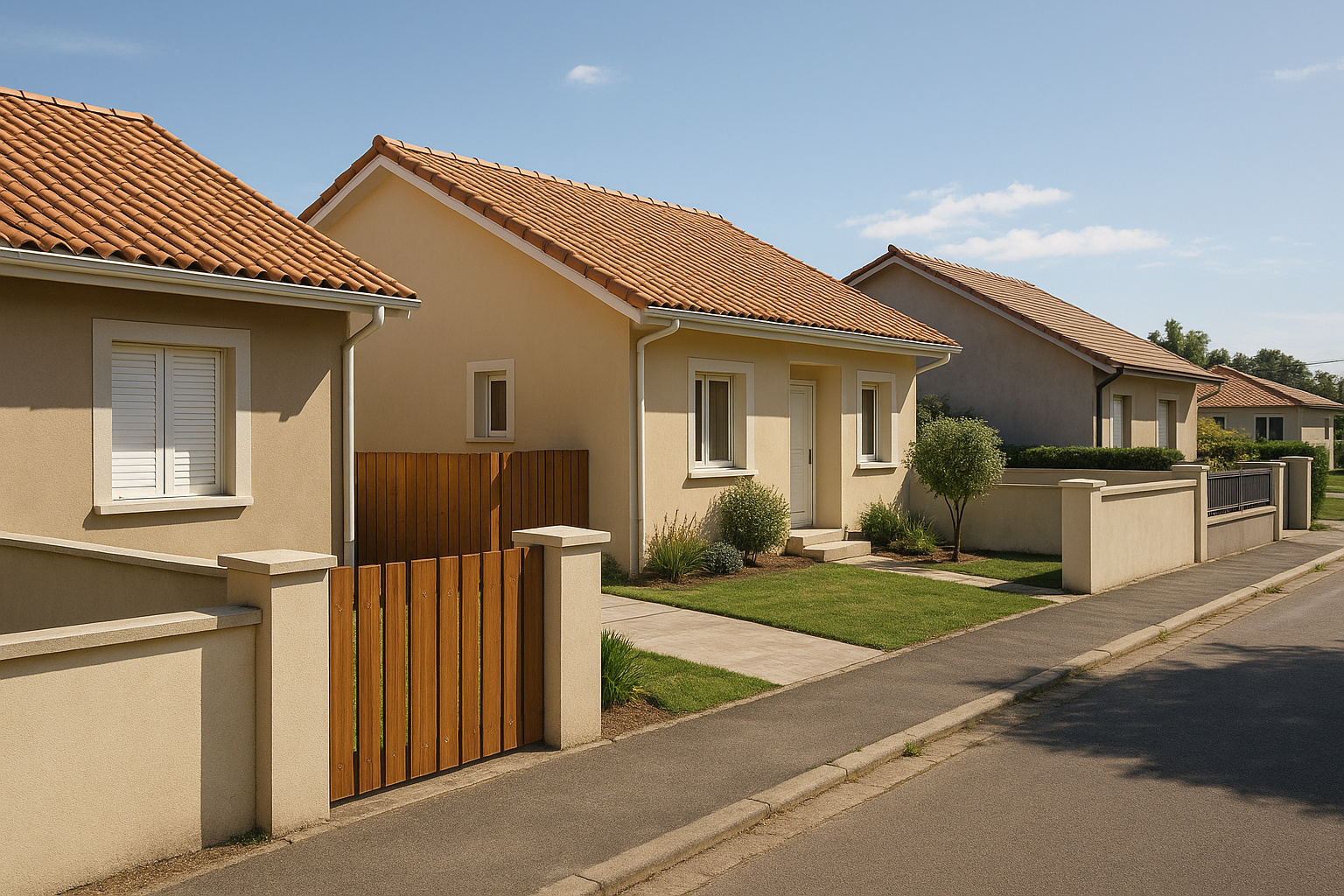


Coastal City Redefines Construction Rules and Creates a More Modern, Efficient, and Environmentally Responsible Urban Model
A historic update of urban legislation was carried out in July 2025 by the City Hall of Itanhaém, on the coast of São Paulo.
The changes, approved by the City Council and sanctioned by the mayor, directly affect residents, builders, and investors, redefining housing standards and increasing environmental requirements. Moreover, the changes represent an important milestone for urban planning in the region.
End of the Term “Geminada House” Inaugurates a New Urban Phase
The most notable change in the legislation was the replacement of the term “geminada house” with “single-family housing”.
According to the city hall, each residence will now have independent walls and fences, which ensures more privacy and fewer conflicts between neighbors. This way, a more organized and balanced urban environment is created.
Municipal authorities stated that the measure consolidates a model of urban development that enhances properties, organizes neighborhoods, and plans for orderly growth in the coming years. Therefore, the expectation is that the change will strengthen the local real estate sector.
-
The Senate approves a bill that criminalizes misogyny, hatred, or aversion towards women, and includes the crime in the Racism Law with a penalty of up to 5 years.

-
Chamber Approves Bill That Allows Pepper Spray for Women Over 16 and Imposes Strict Rules for Purchase, Possession, and Use as Self-Defense

-
Chamber Approves Law to Combat Leucaena, Fast-Growing Plant That Dominates Land and Threatens Native Species in Various Regions of the Country

-
Asset Division: Know What Cannot Be Divided in Case of Divorce


Sustainability as a Mandatory Guideline
In addition to the conceptual change, the new law brings significant environmental advances.
From now on, plots larger than 125 m² must reserve 10% of the total area for permeable surfaces, such as gardens or gravel areas. This ensures more natural drainage and fewer floods in the city.
The requirement, according to the Urbanism Department, aims to facilitate rainwater absorption, reduce flooding, and protect the environment.
Additionally, the measure follows the trend set by neighboring municipalities such as Santos and Praia Grande, which also adopted sustainable regulations in previous years.
Rules for Lot Splitting Gain Agility
Another highlight is the lot splitting process.
Before the update, dividing lots could only be done after the analysis and approval of specific projects. Thus, there was a delay for new developments.
With the legislation of 2025, it will be possible to carry out subdivisions in advance, speeding up works, increasing investments, and streamlining the procedures.
Furthermore, this simplification benefits small builders who rely on agility to start their projects.
However, country houses remain subject to the original subdivision rules, maintaining distinct criteria.
Official Statements Reinforce Positive Impact
For Emily Braga, the director of Private Works in the municipality, the measure is a milestone:
“The new legislation makes it easier, streamlines, and brings clarity to those who wish to build in Itanhaém. It’s an achievement for residents and professionals in the sector”, she stated during the official presentation of the changes.
The Secretary of Urbanism, Marcelo Gomes, emphasized in a press conference at the beginning of August 2025 that the city is preparing for the future:
“We are ensuring organized constructions, planned neighborhoods, and more comfortable properties. At the same time, we care for sustainability and the quality of life of residents”, he highlighted.
Thus, the municipality bets on a model that combines growth and environmental responsibility.
Expected Impacts for Residents and Investors
According to experts consulted by the City Hall, the main expected outcomes are:
- Property appreciation in areas governed by the new standards.
- Greater urban organization, with planned and sustainable neighborhoods.
- Speed in construction and investment processes, reducing bureaucracies.
- More privacy for residents, thanks to the new housing standard.
- Environmental preservation and flood mitigation, with lots mandatorily permeable.
Thus, the city gains regional competitiveness and stands out in the real estate market.
Itanhaém Follows National Trend of Sustainable Urbanization
With over 105,000 inhabitants, according to 2024 estimates from the Brazilian Institute of Geography and Statistics (IBGE), Itanhaém is one of the fastest-growing coastal cities in the Baixada Santista.
Furthermore, the municipality is approaching the best urban practices in Brazil, following a national movement of modernization.
The 2025 update brings the municipality closer to the sustainable urban planning practices already adopted in large Brazilian cities.
Consequently, Itanhaém positions itself as an example of balance between development and environmental preservation.
Thus, the new legislation consolidates a modern and responsible growth model, balancing real estate expansion, environmental preservation, and social well-being.
The changes have been in effect since July 2025 and promise to transform the way of building and living in the city.
And you, do you believe that the new rules will truly improve the quality of life for residents and attract more investments to Itanhaém?









Isso tem é um tom de deboche. Bairros planejados ?! Pura utopia !! Ruas sem calçamento, sem iluminação, com esgoto correndo a céu aberto, calçadas cobertas de mato e a bandidagem a solta sem qualquer repreensão. Noias que roubam qualquer coisa para satisfazer seus vícios. Essa é a realidade de alguns bairros da cidade.
Na teoria é tudo lindo e maravilhoso.
Na alta temporada o sistema de esgoto não comporta e existem vários pontos que vazam para o mar.
Estão construindo prédios e isso irá piorar a situação do saneamento.
Más terá mais arrecadação de IPTU, então, isso pode.
A Prefeitura precisa fazer um plano de abertura das ruas que hoje encontram-se fechadas(sem acesso), tendo em vista o crescimento do mato e a falta de manutenção por parte da prefeitura, mas o IPTU é cobrado anualmente, mesmo sabendo que os proprietários não tem acesso ao seu loteamento. Como é possível a cidade crescer sem a regularização(abertura dessas ruas), impossibilitando novas construções. Precisa atrair empresas, fábricas para investir no crescimento da cidade e fixar os trabalhadores no município. Hoje, boa parte da mão de obra é obrigada a se deslocar para as cidades vizinhas, tendo em vista a inexistência de oferta de emprego.