





 Portuguese
  English
  Spanish
  4 min of reading
  1 comment


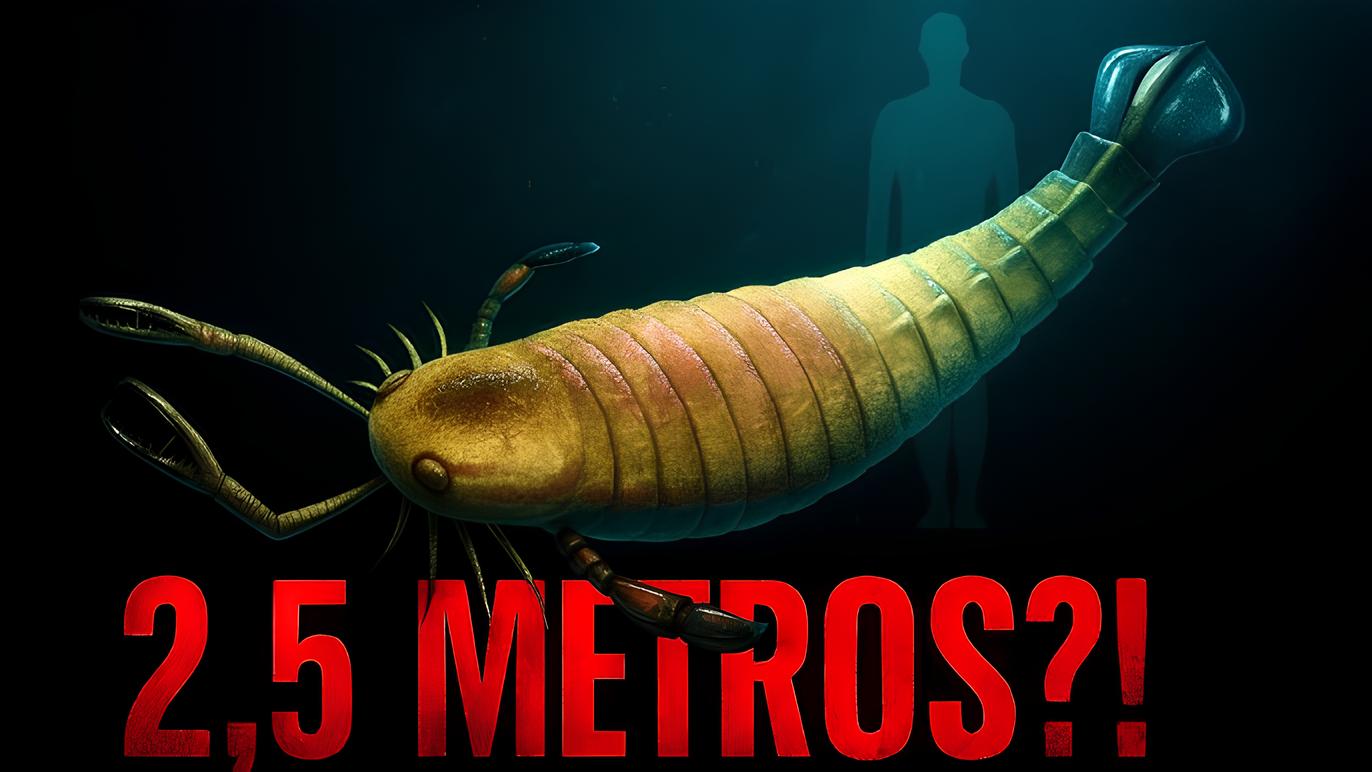


Studies Published In Scientific Journals Indicate That The Jaekelopterus Rhenaniae, Up To 2.5 Meters, Was The Largest Arthropod In History And An Absolute Predator Of Prehistoric Seas.
For decades, paleontology focused its major “record holders” on dinosaurs, whales, and giant mammals. However, articles published in high-impact scientific journals and reports from international portals revealed that the largest arthropod that ever existed was not an insect, nor a modern scorpion, but rather an extinct aquatic predator called Jaekelopterus rhenaniae. With estimates reaching 2.5 meters in length, this sea scorpion redefined the size limits for the entire group of arthropods and has been cited as one of the most impressive animals in the history of life on Earth.
The Discovery That Caught The Attention Of International Science
The Jaekelopterus gained worldwide prominence from studies led by paleontologist Mark McNamara from the Natural History Museum in London, in partnership with researchers from Germany. The results were published in prestigious scientific journals such as Biology Letters from the Royal Society, one of the oldest and most respected scientific institutions in the world.
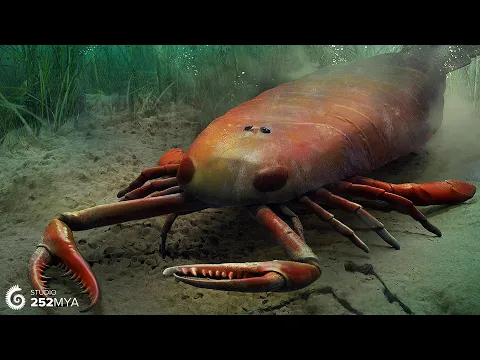

The study analyzed a fossilized chelicera about 46 centimeters long, found in Devonian period deposits in Germany. Through morphological comparisons with other eurypterids from the Pterygotidae family, scientists estimated that the complete animal could reach between 2.3 and 2.5 meters in length, officially becoming the largest arthropod ever described.
-
While the world looks at oil, the war with Iran is already disrupting helium supply from Qatar, affecting car and iPhone chips, threatening AI expansion, and putting pressure on aluminum packaging at the highest value in four years.

-
Global warming will expose a treasure hidden under the ice of Antarctica and may spark an international dispute over gold and valuable minerals.

-
A street vendor from Praia Grande built a robot made of scrap from scooters and washing machines that pulls his popcorn cart on the beach, emits sounds, and interacts with customers, becoming an attraction on the coast of São Paulo.
-
The specifications of the Xiaomi 18 Pro Max have been leaked, and the highlight is a dual 200 MP camera with a new 22-nanometer technology that promises to consume less energy and capture details in shadows and bright areas using LOFIC HDR.


These conclusions quickly resonated in highly authoritative vehicles such as BBC, National Geographic, Smithsonian Magazine, Live Science, and Scientific American, which began referring to the Jaekelopterus as the “largest sea scorpion in history” — even though, technically, it was not a true scorpion.
What Was The Jaekelopterus Rhenaniae
The Jaekelopterus belongs to an extinct group known as eurypterids, popularly called sea scorpions.
Despite its similar appearance, it was not part of the order of modern scorpions, but integrated the branch of chelicerates, which today includes spiders, scorpions, and horseshoe crabs.
It lived about 390 million years ago, during the Devonian period, known as the “Age of Fishes,” when aquatic environments were the main centers of biodiversity on the planet. In that context, the Jaekelopterus occupied the absolute top of the food chain.
A Size That No Modern Arthropod Comes Close To
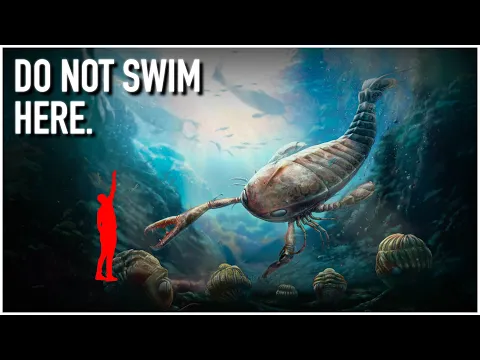
The numbers associated with the Jaekelopterus explain why it became a scientific icon:
– Estimated Length: Up To 2.5 Meters
– Chelicerae: Larger Than The Human Forearm
– Category: Largest Arthropod Ever Documented
– Environment: Rivers, Estuaries, And Shallow Seas
For comparison, the largest living scorpion today, the Heterometrus swammerdami, rarely exceeds 23 centimeters. Even the largest giant crabs or modern centipedes don’t come close to the estimated dimensions of the Jaekelopterus.
Predatory Anatomy Worthy Of A Superpredator
According to analyses published in Nature Ecology & Evolution and cited by researchers at the Senckenberg Museum in Germany, the Jaekelopterus had an elongated and heavily segmented body, protected by a rigid carapace.
Its chelicerae were not only large but also highly specialized for cutting and drilling, indicating an active hunting style.
Unlike many filter-feeding arthropods, it was an aggressive predator, capable of capturing primitive fish, trilobites, and other smaller eurypterids. Biomechanical studies suggest that its gripping strength was sufficient to pierce hard shells, placing it among the most efficient hunters of the Devonian.
Where It Lived And Why It Grew So Large
Fossils attributed to the Jaekelopterus have mainly been found in Central Europe, in areas that, in the past, were covered by shallow coastal environments and large rivers. These ecosystems offered abundant food and, above all, low competition from large predatory vertebrates.
Experts cited by BBC Earth explain that the gigantism of eurypterids is linked to three main factors:
- High Levels Of Oxygen In The Atmosphere;
- Absence Of Large Predatory Vertebrates;
- Vast Aquatic Environments That Were Little Explored.
With the emergence and diversification of large predatory fish and, later, aquatic reptiles, this ecological space was gradually closed, leading to the extinction of the giant sea scorpions.
Why It Should Not Be Called The “Largest Scorpion In The World”
Despite popular headlines using the expression “largest scorpion in history,” the researchers themselves warn that this is scientifically inaccurate. The Jaekelopterus does not belong to the order Scorpiones, but to a distantly related extinct group.
Therefore, the correct classification adopted in scientific articles and museums is:
– Largest Sea Scorpion Ever Known
– Largest Arthropod In The History Of The Earth
This distinction is reinforced by institutions such as the Natural History Museum of London and the Smithsonian National Museum of Natural History.
A Giant Recognized By Modern Science
Today, the Jaekelopterus rhenaniae is cited in academic books, scientific reviews, and museum exhibitions as an extreme example of prehistoric gigantism. Its importance goes beyond size: it helps scientists understand how environmental changes, oxygen, and competition shape the physical limits of life.
More than just a curiosity, it represents a fundamental chapter in animal evolution, when arthropods dominated entire ecosystems before being surpassed by vertebrates.
The Jaekelopterus proves that the largest monsters in Earth’s history did not always have bones or warm blood. In a planet very different from today’s, arthropods reached sizes comparable to those of large modern vertebrates.
Recognized by scientific journals, museums, and international portals, this aquatic colossus reminds us that life has explored limits that now seem impossible and that prehistory still harbors giants far beyond popular imagination.









C