





 Portuguese
  English
  Spanish
  3 min of reading
  0 comments


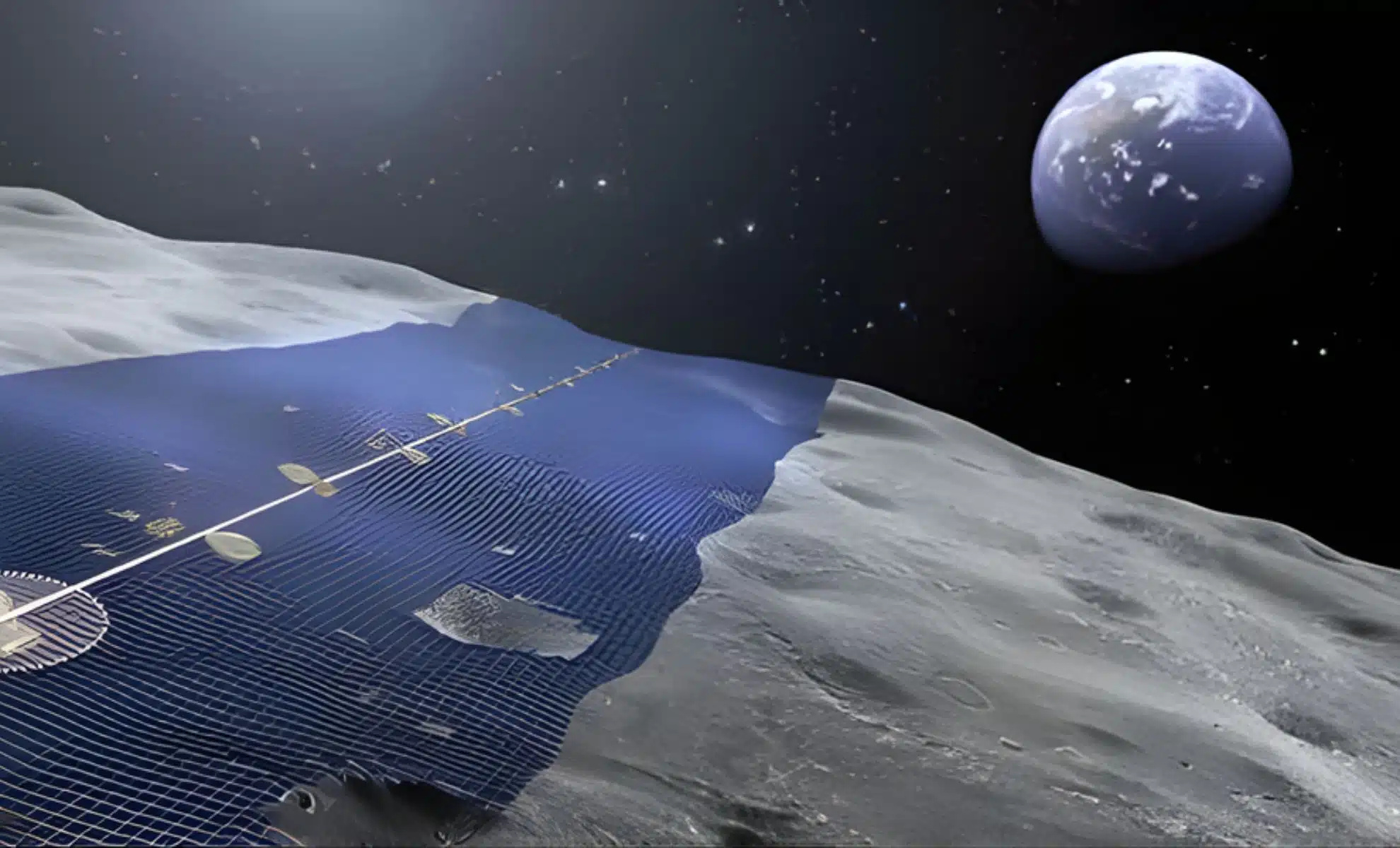
Japanese project proposes building a solar ring of 10,943 kilometers and 400 kilometers wide around the Moon to generate up to 13,000 terawatts and transmit energy to Earth via microwaves and lasers, in a bold bid for continuous supply
A Japanese team wants to transform the Moon into a continuous source of electricity with the creation of a solar ring 10,943 kilometers around the lunar equator. Named Luna Ring, the project by Shimizu Corporation was conceived to send energy back to Earth without interruptions, with operation planned 24 hours a day, seven days a week.
The proposal arose amid the energy challenges faced by Japan following the earthquake and tsunami of 2011. With the shutdown of many nuclear power plants, the company began advocating for new forms of electricity generation, turning its attention to space and the constant incidence of sunlight on the Moon.
Band of panels would stretch for almost 11 thousand kilometers
The plan calls for the construction of a band of solar panels 400 kilometers wide along the lunar equator. This structure would form a huge energy belt approximately 10,900 kilometers long, designed to take advantage of continuous solar illumination and maintain generation without relying on weather conditions.
-
Weighing almost 1 ton, with temperatures of up to 3,000°C, the ability to launch 10,000 fragments within a radius of 1 km, capable of penetrating concrete and melting steel, Turkey’s terrifying bomb emerges as one of the most destructive non-nuclear weapons ever presented.

-
After a submarine disappeared beneath the “Doomsday Glacier,” scientists announce a new monstrous machine capable of operating at 3,000 meters depth to return to the heart of the ice and investigate a threat that could raise sea levels worldwide.

-
NASA has set a date for the beginning of the end of Earth, and it won’t be an asteroid or an explosion: the planet will slowly lose its oxygen over the course of 1 billion years because the Sun is getting hotter every day.

-
Archaeologists have discovered a colossal submerged wall in the Atlantic, dating back 7,000 years and weighing 3,300 tons, regarded as the largest prehistoric submerged structure ever found in France.


The base of the solar ring would be made with lunar soil transformed into concrete. The execution of the work would be the responsibility of robots controlled from Earth, a choice linked both to the scale of the project and the difficulty of directly conducting such an operation on the Moon’s surface with human presence.
The use of materials already available in the lunar environment is part of the project’s logic. The company stated that lunar sand, being a compound of oxide, could allow the production of oxygen and water if hydrogen were brought from Earth, in addition to the manufacture of cement, concrete, blocks, and fiberglass using solar heat.
Solar ring on the Moon would have continuous energy production
Shimizu estimates that the solar ring could produce up to 13,000 terawatts of energy. The absence of clouds and climate systems on the Moon is considered one of the main factors to ensure the constant operation of the panels and uninterrupted electricity supply.
To bring this energy to Earth, the project envisions converting electricity into beams of microwaves and lasers. These beams would be sent to receiving stations installed on the planet, originating from the side of the Moon that remains facing Earth.
The proposal describes this process as an integrated chain of generation and transmission. First, the ring of solar cells would produce energy at the lunar equator; then, it would be converted into beams and directed for reception on terrestrial soil.
Technical obstacles and uncertainties remain at the center of the project
Despite the presented scale, the project still leaves several questions unanswered. The cost of an initiative of this size has not been detailed, although the very scale of the work and the distance between the Moon and Earth place the proposal at a level of high complexity.
Among the cited technical challenges are the treatment of lunar dust, which can interfere with machines and cover solar panels, and the need for international cooperation. These points appear as relevant obstacles for any attempt to take the solar ring from the conceptual field to execution.
Shimizu mentions the possibility of starting construction as early as 2035, but many details remain undefined. In this scenario, the solar ring remains presented as an ambitious proposal to rethink energy production, supported by a giant structure on the Moon and a continuous transmission system to Earth.








Seja o primeiro a reagir!