





 Portuguese
  English
  Spanish
  5 min of reading
  0 comments


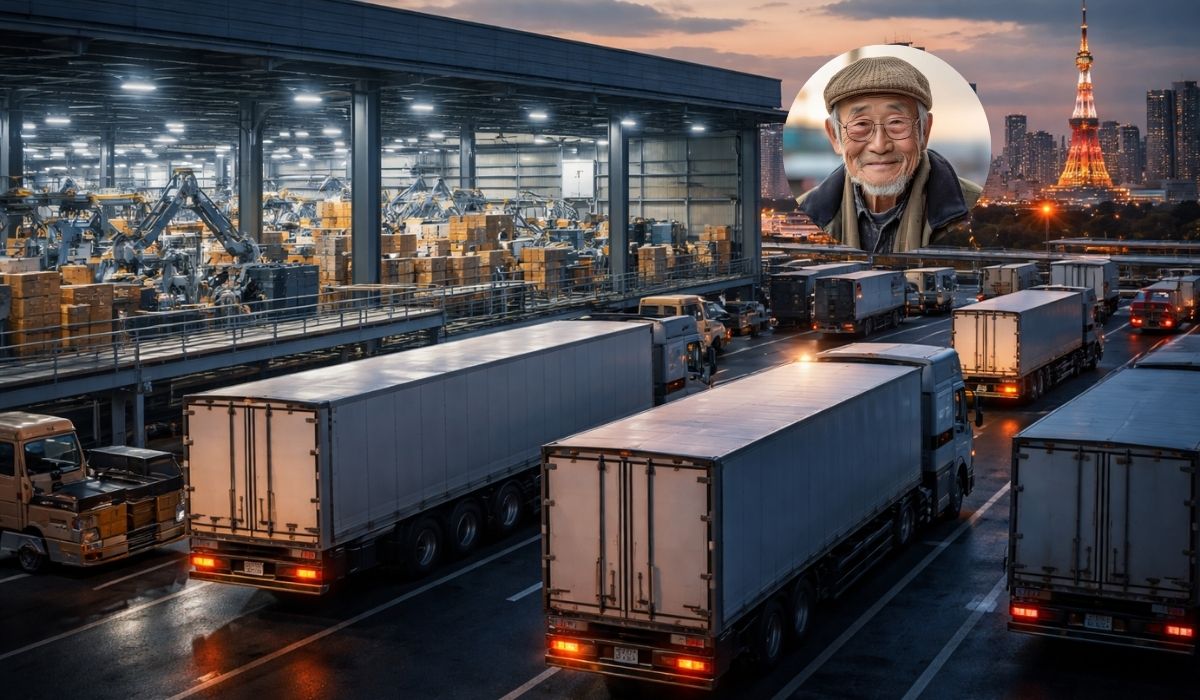
The Accelerated Aging of the Japanese Population Pressures Essential Sectors of the Economy, Especially Transportation and Logistics, as Companies Test Automation and Artificial Intelligence to Keep Supply Chains Active in a Country with Fewer Youth and More Elderly.
Japan has once again set a longevity record by registering 99,763 people aged 100 or older, according to official resident registration data.
Women account for about 88% of this group, reflecting a historical trend of higher female life expectancy in the country.
This figure reinforces Japan’s position as one of the world’s most aging societies.
-
American Airlines starts selling trips as if they were flights, with check-in and baggage check at the airport, but on short routes, passengers board luxury buses connecting cities to major hubs in the U.S.

-
Artificial intelligence is skyrocketing energy consumption, raising emissions from tech giants and pushing Google, Microsoft, and Meta closer to natural gas.

-
Mercor paid $1.5 million per day for doctors, lawyers, and former Goldman Sachs bankers to teach artificial intelligence to do their jobs, and in 17 months, it went from zero to $500 million in annual revenue while its own contractors accelerated the replacement of their own work.

-
São Paulo surprises the world with a colossal railway network project that promises over 1,000 km of tracks, R$ 194 billion in investments, and 40 projects connecting the capital to the interior with fast and sustainable trains.

This advancement, however, occurs alongside a profound transformation in the demographic structure.
With a persistently low birth rate and a continuous rise in the elderly population, the country faces challenges in maintaining the workforce needed in essential sectors, especially those that rely on in-person and labor-intensive activities, such as transportation and logistics.
Demographic estimates indicate that almost 30% of the Japanese population is already 65 years or older, a proportion that continues to rise.
The situation has led companies and policymakers to treat Japan as a laboratory to test how far automation and technology can compensate for the reduction in the working-age population.
Population Aging and Reduction of the Workforce
The accelerated aging is often associated with dietary habits, low obesity rates, and preventive health policies, according to recurring analyses by international organizations.
At the same time, the reduction in the number of young people pressures the labor market and compromises the replacement of professionals in strategic areas.
Data released by the Japanese press show that the number of people aged 18 has recently reached one of the lowest levels in history.
This movement limits the entry of new workers and increases dependence on older generations or alternatives such as immigration and automation.
Transportation and Logistics Concentrate the Biggest Bottleneck
While internal warehouse processes can be partially automated, the transportation of goods remains heavily dependent on professional drivers.
This stage requires constant adaptation to traffic conditions, tight deadlines, and variable routes, complicating immediate technological replacements.
Logistics sector projections indicate that Japan could lose about 30% of its truck drivers by 2030, largely due to retirements and the lack of new professionals.
The estimate is that the number of active drivers will drop to approximately 480,000, raising alarms about the capacity to transport goods in the country.
The situation has been intensified by the so-called “2024 Issue”, as the change in labor law that started limiting overtime for drivers is known.
This measure, created to reduce excessive working hours and improve working conditions, had the immediate side effect of decreasing the available transportation supply, according to assessments from the sector itself.
Automation in Distribution Centers Is Growing
In light of this scenario, large logistics and e-commerce companies have started to accelerate investments in automation.
One of the most cited examples is the logistics center of Amazon in Chiba, near Tokyo, often described as a testing environment for technologies applied to the supply chain.
Reports about the operation indicate the use of automated systems for sorting, packing, and screening orders, aimed at reducing repetitive tasks and increasing operational efficiency.
The company claims that these solutions enhance storage capacity and accelerate the internal flow of goods.


Among the tools adopted is DeepFleet, an artificial intelligence model developed to coordinate the movement of robots within warehouses.
According to Amazon, the system allows for performance gains by optimizing routes and avoiding internal congestion, although the company does not detail independent auditing methodologies of these results.
Still, automation encounters clear limits.
After orders leave the distribution centers, transportation to regional points and final addresses continues to depend on human drivers, a critical step for the functioning of national logistics.
The Reality of Robotization Outside Large Companies
Despite Japan’s international reputation as a reference in robotics, the adoption of these technologies in common warehouses remains relatively low outside large groups.
Market surveys cited by analysts indicate that, excluding Amazon operations, the average number of mobile robots per warehouse in the country is lower than that observed in the United States and China.
Experts attribute this difference to structural factors.
The Japanese urban geography, with little available space, has favored the construction of smaller and often vertical warehouses, complicating the implementation of systems designed for large horizontal spaces.
Additionally, the costs of installing and integrating advanced technologies are still considered high for many companies.
Another frequently mentioned element is the relatively smaller share of e-commerce in Japanese retail.
Official data indicate that online sales represent about 10% of the total, a percentage lower than that observed in markets such as the United Kingdom.
This reduced scale limits the expected return on heavy investments in automation.
Traditional companies in the sector, such as Nippon Express, have already tested solutions like autonomous forklifts, mobile shelves, and operator support equipment.
However, company executives have stated that there are still uncertainties about the time required to recoup these investments.
Japanese Logistics Between Viability and Continuity
More than a discussion about efficiency, the topic has come to be treated as a question of operational continuity.
In interviews with the Financial Times, representatives from the logistics sector warn that Japan is experiencing a moment where there is not enough generational renewal to sustain the current model of transportation and distribution.
Some companies are seeking immediate solutions, such as hiring foreign workers, while monitoring the advancement of autonomous driving, which remains in the testing phase and is not yet considered viable on a large scale for everyday deliveries.

The country, which has become one of the leading global examples of population aging, is trying to reconcile technology, labor legislation, and demographic limitations to keep supplies running.
With fewer young people entering the market, stricter working hour limits, and constant demand for deliveries, the question that remains is how Japan will sustain its logistics in the coming years.








Seja o primeiro a reagir!