






 Portuguese
  Spanish
  4 min of reading
  1 comment


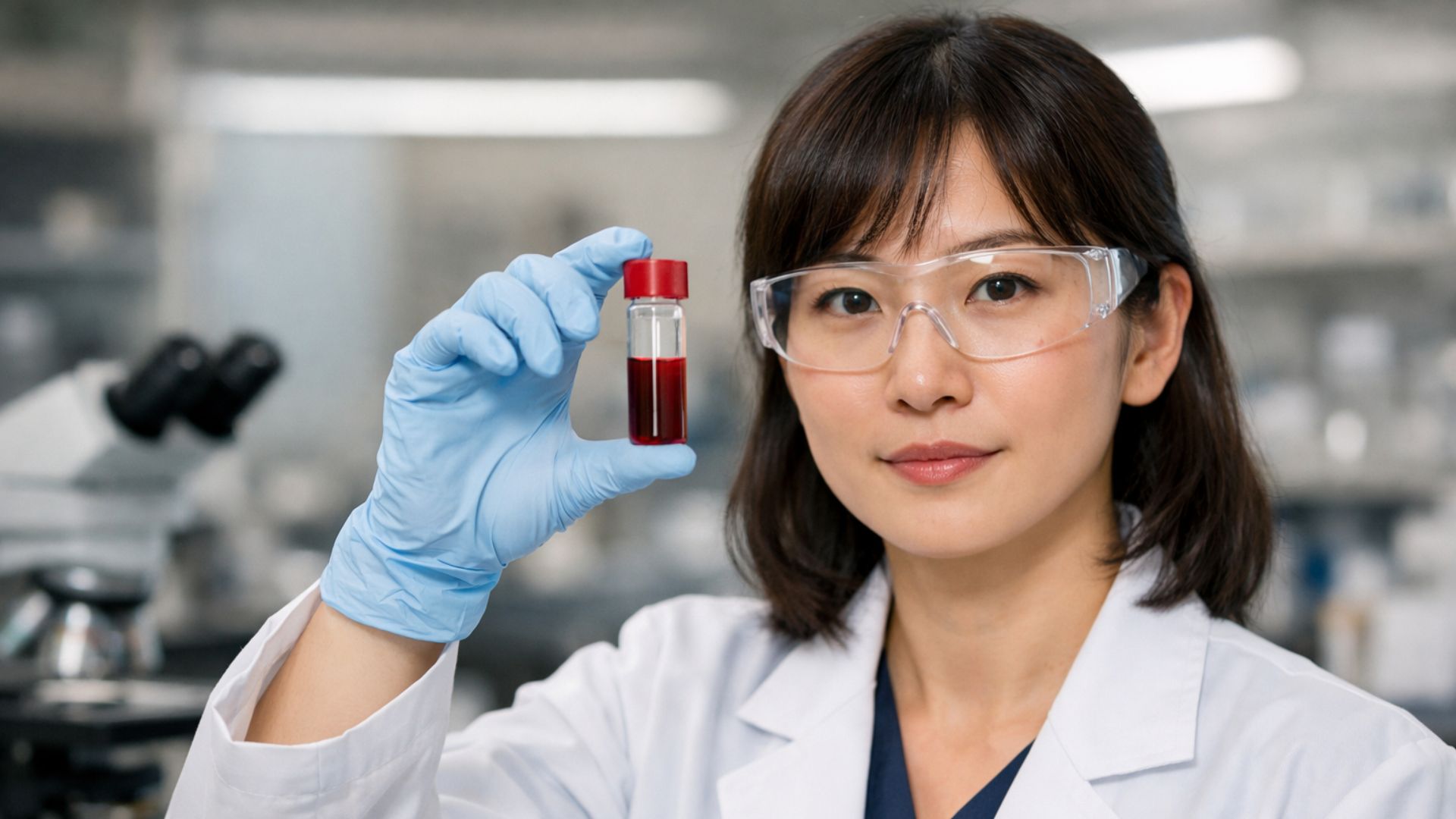


Japanese Technology Advances in Clinical Trials with Universal Artificial Blood, Prolonged Storage, and Promise of Hospital Use by 2030 Amid Global Challenges of Scarcity and Logistics in Blood Component Supply.
Japan has begun a new phase of trials for artificial blood developed to be compatible with all blood types, featuring prolonged storage and applications designed for emergencies, in research conducted by Nara Medical University.
The proposal is for the product to function as an alternative to traditional transfusions in critical situations, reducing reliance on limited stocks and frequent donations, with the declared goal of achieving broader hospital use by around 2030.
How Artificial Blood Developed in Japan Works
The technology under evaluation aims to create a substitute for red blood cells capable of transporting oxygen similarly to human blood, but without carrying the antigens that require compatibility between donor and recipient.
-
Europe unveils armored tank with remote turret, 1,500 horsepower, and 120-millimeter cannon

-
Old hard drives may hide neodymium, dysprosium, praseodymium, and terbium, and a United States company is expanding its network with a new 93,000-square-foot facility to recover rare earths used in electric cars, artificial intelligence, defense, and renewable energy.

-
Giant crane lifts up to 3,000 tons, requires special logistics to reach the site, and can transform 18-hour operations into just 3 hours, speeding up the hoisting of oil platforms, refineries, and plants in giant industrial projects.

-
A discarded microwave may contain 22-carat gold in internal components; study recovered a 450 mg nugget from electronic boards.


Along this path, researchers are working with hemoglobin vesicles, nanometer-scale structures that encapsulate purified hemoglobin and attempt to reproduce, within artificial capsules, a central function of natural red blood cells.
This line of research is not new.
Pre-clinical studies and previous evaluations, including animal testing and initial stages in humans described in scientific literature, support the expectation of safety and physiological performance similar to that of blood.
Universal Compatibility and Immunological Challenges
The decisive point of the project is the strategy to avoid incompatibility reactions through the encapsulation of hemoglobin, since the main markers that differentiate blood types are associated with cell membranes and not with the hemoglobin molecule.
By “hiding” hemoglobin in an artificial capsule, the product no longer exposes the patient’s body to the antigens responsible for incompatibilities, which opens the possibility for broader use without the same logic of typing and cross-matching.
Nevertheless, the advancement does not eliminate the need for clinical vigilance, as immunological reactions can occur through other mechanisms, and this is precisely why the stage with volunteers exists before any expansion of use in healthcare services.
Previous Results and Clinical Stages
Experiments in rabbits, in models of severe bleeding, helped map whether the vesicles can sustain oxygenation and assist in circulatory stabilization, comparing the response with other replacement approaches.
In parallel, a previously published phase 1 study in humans described the administration of hemoglobin vesicles as an alternative to transfusion, providing initial safety and tolerability data that guide protocols for new tests.
With this foundation, the transition to a more recent evaluation phase aims to measure, with greater precision, dosage, physiological response, and possible adverse effects, without anticipating conclusions about large-scale clinical efficacy.
Storage for More Than a Year and Use in Emergencies
Another aspect that draws attention is the stability of the material, presented as a logistical advantage compared to donated blood, which requires refrigeration and has a limited shelf life for use as a blood component.
Reports about the project indicate an intention to keep the product storable for more than a year at room temperature, which, if confirmed in regulatory standards, could facilitate care in remote areas, disasters, and conflict scenarios.
This feature, however, relies on rigorous quality control and stability over time, including verification of capsule integrity and the oxygen transport capacity after long storage periods.
Trials with Volunteers and Applied Volumes

The latest published trials involve volunteers and volumes between 100 and 400 milliliters for safety assessment, with monitoring to detect hemodynamic changes, laboratory signs, and possible reactions related to the product.
In research of this type, the priority is to establish tolerance and monitoring parameters so that any plan for expansion to hospital use only occurs after consistent results and analysis by regulatory agencies.
Blood Scarcity and Global Impact
The Japanese investment connects to a well-known challenge.
Maintaining sufficient blood stocks is difficult even in structured systems, as supply depends on donors, logistics, and demand that can surge, such as in major accidents.
In this context, the research in Nara describes the use of hemoglobin obtained from expired donations as raw material, seeking to leverage a resource that would not proceed to conventional transfusion and transform it into input for a standardized product.
There are still parallel approaches mentioned in studies, such as encapsulating hemoglobin with albumin for specific applications, a strategy tested in animal models and discussed as potential support in hemorrhages and vascular events, without the promise of total replacement.
The pressure for alternative solutions also appears in the international scenario, as the inequality of donations between countries affects access to safe blood and derived products, creating dependence on imports in parts of the world.
Data from health organizations and institutional documents indicate that many countries do not produce plasma-derived medications and need to purchase them abroad, a bottleneck that can impact continuous treatments in situations of restricted supply.
With the goal of reaching hospitals by around 2030, the Japanese project is now being monitored as an attempt to enhance emergency readiness.





Belo artigo, maravilhosa experiência