





 Portuguese
  English
  Spanish
  5 min of reading
  0 comments


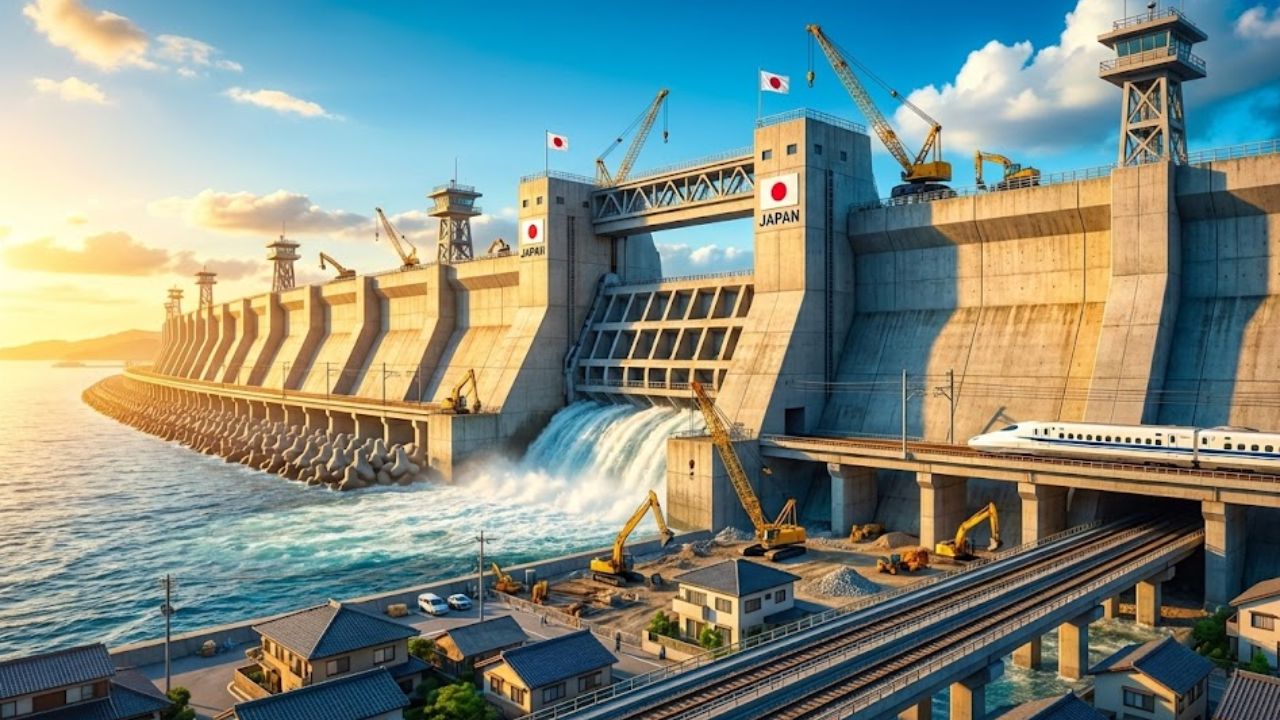
Japan Builds Giant Wall Up to 15 Meters High with Hydraulic Gates After the 2011 Tragedy, Betting on Extreme Engineering to Gain Vital Minutes
The Japan Builds Giant Wall because it lives with a risk that is not a distant hypothesis; it is geological routine. The country sits on the meeting point of four tectonic plates that move constantly, with over 500 earthquakes a year, making the coast a critical point when the ocean floor shifts abruptly.
After what happened on March 11, 2011, the logic changed. The earthquake was the trigger, but the tsunami was the real killer, and the response became a coastal defense that aims to buy evacuation time, knowing that no barrier is invincible.
A Country on Top of a Geological “Time Bomb”
Japan is literally positioned over the meeting of four gigantic tectonic plates, which never stop moving. There are over 500 earthquakes a year, an average that helps explain why alerts and evacuation routines are part of the culture in many coastal cities.
-
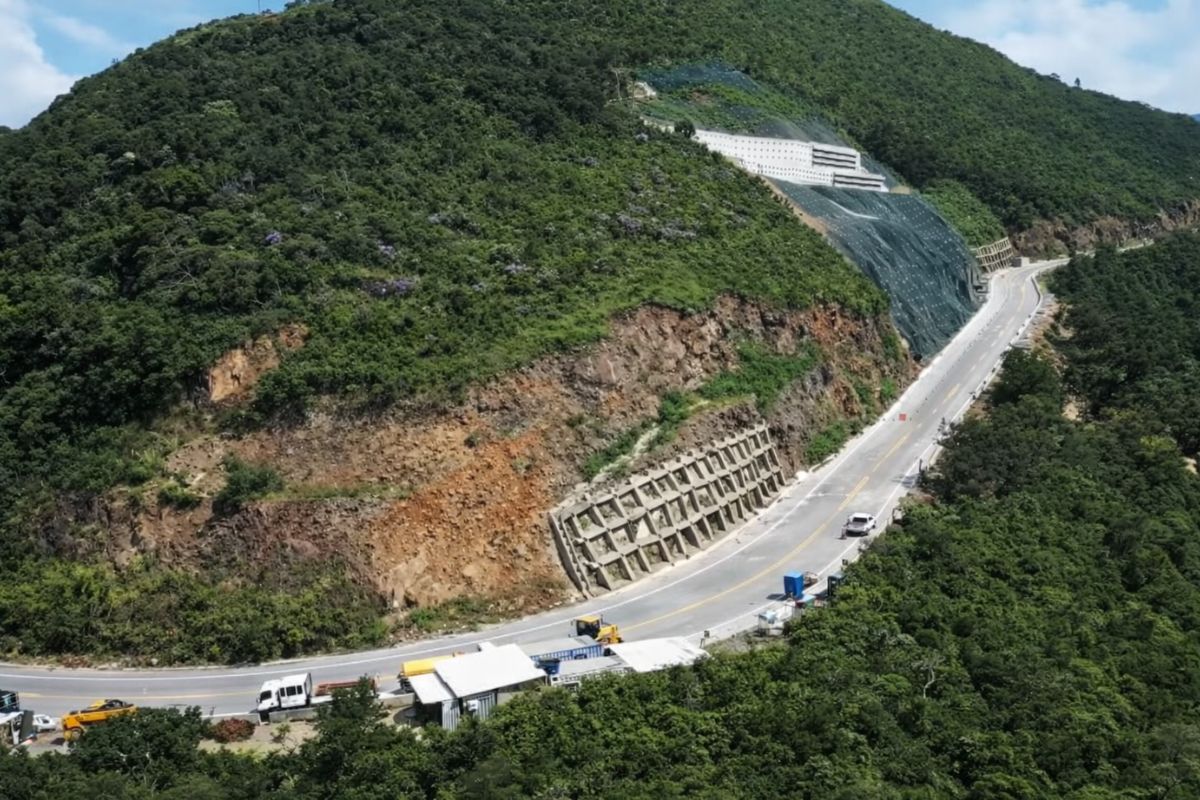
The section of Serra da Rocinha on BR-285 is now open in Timbé do Sul: 50 m tensioned curtains and top-down technique stabilize the slope, with a stairway duct controlling the water.
-
Scientists use sawdust mixed with clay to create a lighter brick, promising efficient thermal insulation and impressing by transforming waste into a solution for construction.

-
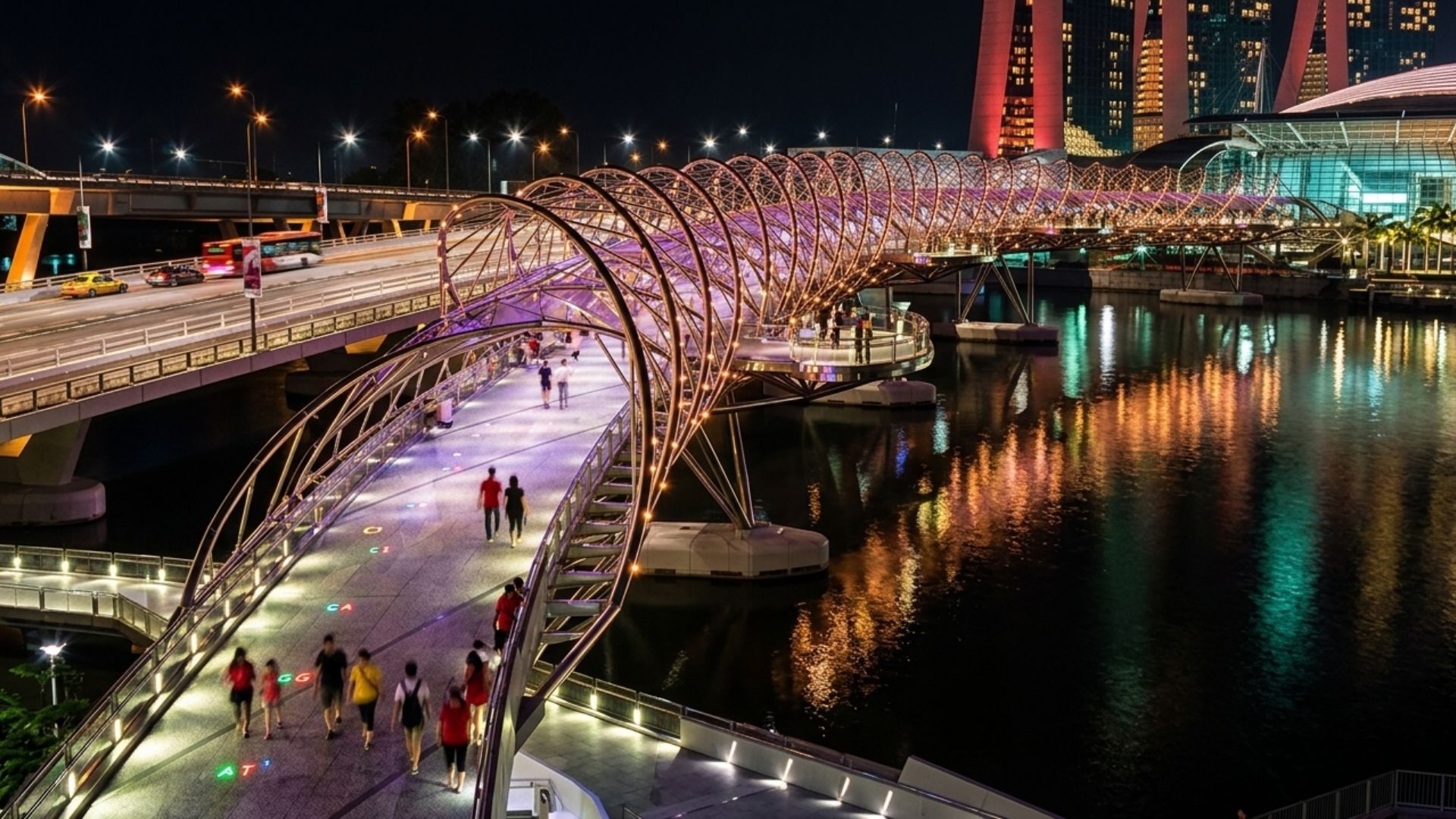
With a DNA shape, this bridge in Singapore draws attention in modern architecture and surprises tourists by transforming a simple crossing into an unforgettable visual experience in the urban heart.
-
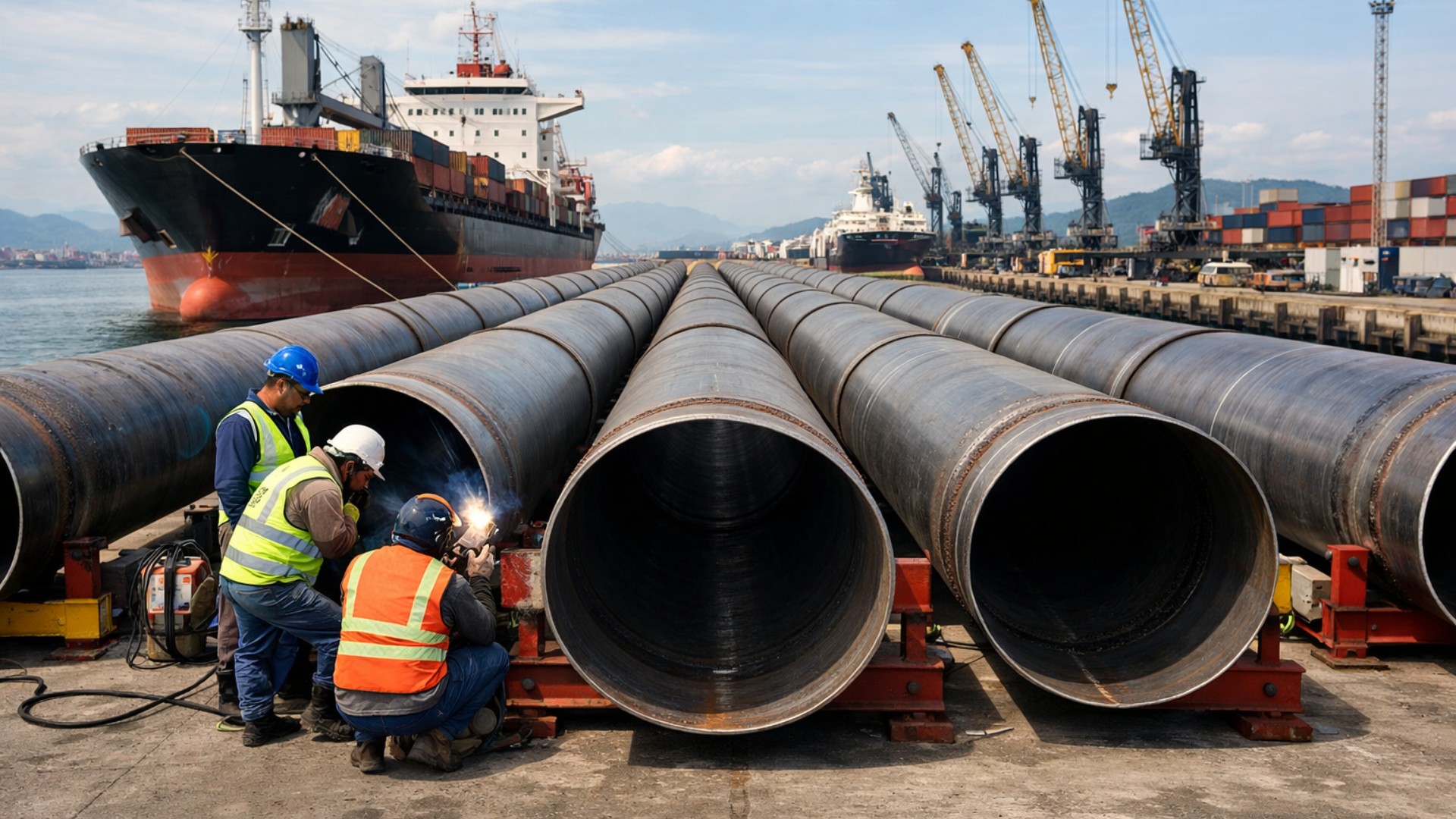
Giant underwater pipeline begins to take shape with a R$ 134.7 million project at the Port of Santos: the 1.7 km structure uses 12-meter and 700 mm pipes to supply water to 450,000 people in Guarujá.

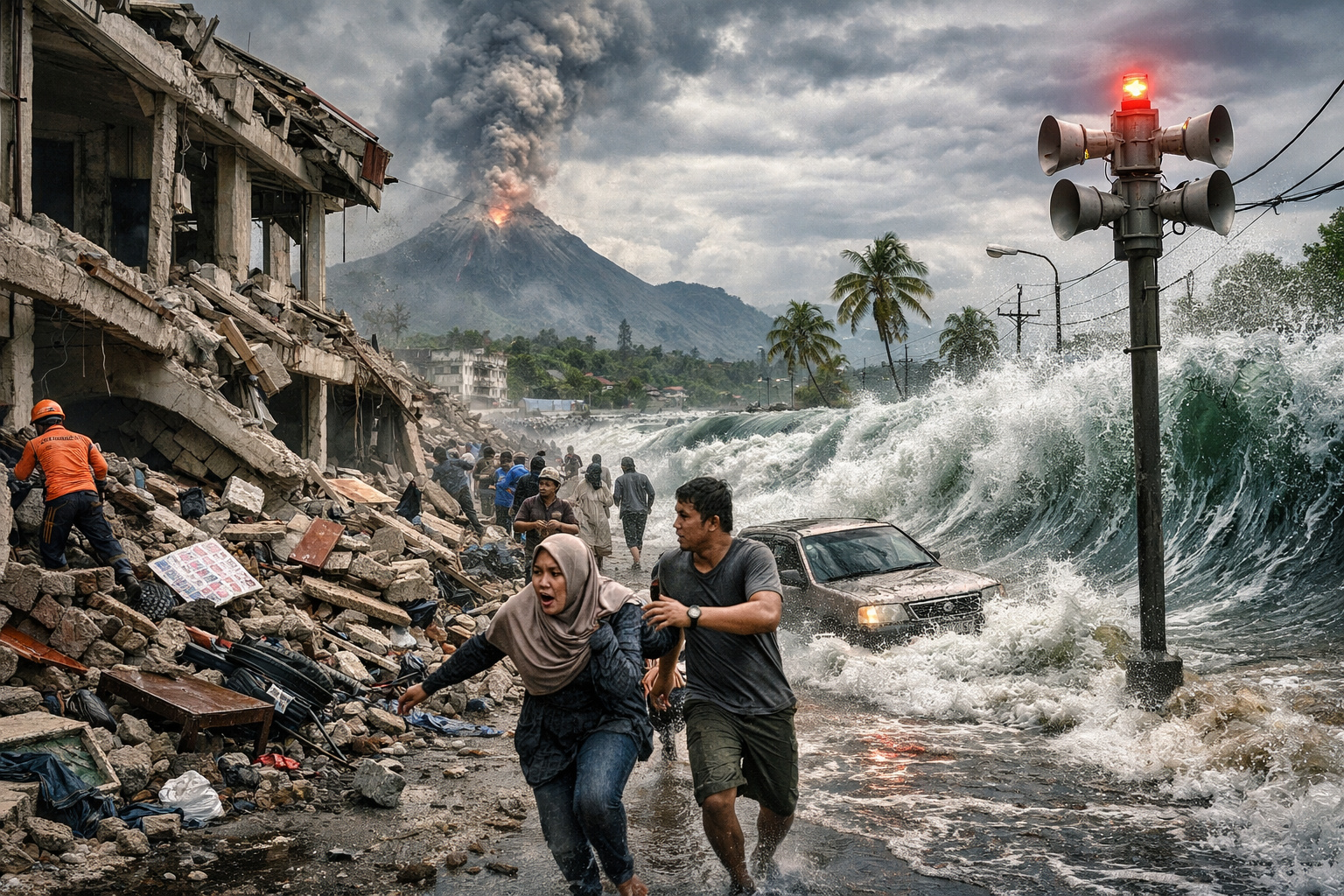
When these plates collide on the ocean floor, the seabed can rise or fall in seconds. This movement pushes millions of tons of water and generates waves that rush to the coast with destructive force. In such scenarios, seconds become kilometers, and minutes become lives.
The Breaking Point: What 2011 Taught in a Harsh Way
On March 11, 2011, a magnitude 9.0 earthquake ruptured over 480 km of a tectonic plate beneath the Pacific. The result was a tsunami wave about 15 m high, comparable to a five-story building, advancing toward the coast.
The old coastal walls were designed for waves of at most 8 m. They were destroyed as if they were made of paper. The toll described at the base is catastrophic: over 20,000 lives lost, 120,000 homes swept away, and the Fukushima nuclear disaster. It was there that the country solidified the conclusion: the tsunami is the threat that decides the outcome.
The Decision: Japan Builds Giant Wall to Gain Evacuation Time
The presented response was audacious: Japan Builds Giant Wall approximately 400 km long with sections up to 15 m high, supported by foundations buried up to 25 m deep. The cited investment is over 12 billion dollars.
The central objective is not to “stop the ocean.” It is to gain time. A few minutes that, during an evacuation, can separate life from death. The message is simple and harsh: tsunamis will return, but 2011 cannot repeat itself.
Where This Wall Comes In and Why Location Matters
The line of defense needs to protect the Torroku region in northeastern Japan, identified as one of the areas where the 2011 tsunami caused the most destruction. The base states that the defense spans four provinces referred to as Almore, Iwat, Miagu, and Fukushima.
Before erecting concrete, it was necessary to clear the way: removing old houses, damaged infrastructure, poles, and pipelines. In parallel, a “temporary construction city” emerged, with access roads, material yards, crane platforms, concrete plants, and drainage to allow work even during rainy seasons.
Laboratories Before the Concrete: Simulations to Avoid Repeating Mistakes
To build a structure that can withstand millions of tons of water, everything starts in the lab. Engineers gathered data from the 2011 tsunami and recreated waves in artificial tanks using scale models. They varied height, thickness, slope, and foundation depth in repeated tests until they understood how water behaves when encountering a barrier.
From these simulations, a design described as “perfect” was reached: a wall between 14 and 15 m high, foundations between 20 and 25 m deep, a wide trapezoidal base, and a reinforced steel core to withstand an extreme tsunami. Japan Builds Giant Wall with Applied Science, not by intuition.
The Most Brutal Technical Challenge: Building on Weak Ground
Part of the Torroku coast is described as sandy and weak, unsuitable for supporting a structure of this magnitude. The solution involves reinforcing from the beginning: drilling the soil, installing deep concrete and steel piles, and layers of crushed stone and compacted sand to stabilize the surface.
The goal is to prevent the wall from sinking, sliding, or cracking over time. Without a stable base, height becomes a risk.
Foundations of Dozens of Meters and Construction Near the Sea
With the soil stabilized, the most critical phase comes: the foundation. Deep excavations, some over 20 m, comparable to lowering a seven-story building. Near the coastline, temporary structures were used to prevent seawater from invading the construction sites.
The described process includes a base layer of concrete, assembly of dense reinforced steel cages, and placement of huge foundation blocks that form a heavy and wide “foot.” This foot is what prevents the wall from being pushed when the wave hits.
The Wall Rises in Sections with Energy Dissipators at the Base
The visible part rises above the foundation: tall structures of rebar, wooden forms, and pumped concrete section by section. Each block is poured, cured, inspected, and connected to the next, forming a continuous barrier.
On the ocean side, special concrete units, such as tetrapods, dolos, and other energy dissipation blocks are installed. Their function is to reduce the wave’s force before it hits the main structure. In some sections, there are stepped surfaces, slopes, and overhangs to lessen the height of water that rises along the wall. On the land side, there is soil, crushed stone, and drainage channels to prevent rainwater accumulation. Japan Builds Giant Wall also considering what happens after the impact.
Hydraulic Gates: How Ports Keep Functioning
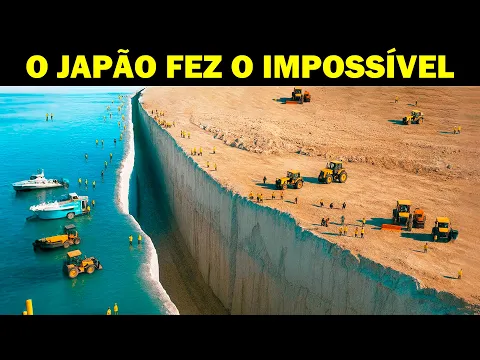

A practical question arises immediately: and the ports, how do ships come in and out? In busy port cities like Iwak, the base describes two types of gates.
The first is a “top-down” gate, a suspended steel panel between concrete towers that descends when an alert is issued, sealing the port’s entrance. The second is an ascending gate: it usually lies on the ocean floor and, when the tsunami approaches, a hydraulic system lifts it from the bottom up, locking it against the side walls. The promise is to allow maritime traffic 24 hours a day without permanent obstruction. It is extreme engineering applied to a real bottleneck.
What the Numbers Promise and What the Wall Cannot Do
After years of work, the base describes the outcome as the largest continuous coastal defense system in Japan over 400 km. The cited numbers are gigantic: a cost of 12 billion dollars, over 30,000 professionals involved, and thousands of machines operating for 5 to 7 years.
Simulations indicate that the system can reduce tsunami impact forces by 30 to 50% and offer a few extra minutes for evacuation, potentially saving tens of thousands of people in a “level one” tsunami, as described. Still, the very logic of the project assumes a limit: there is no barrier capable of stopping all types of tsunamis, but there is a barrier capable of reducing damage and buying time.
Quick Question for You to Comment: Do you think that Japan building a giant wall is the best response to the tsunami risk, or would it make more sense to invest heavily in evacuation and even faster escape routes?





-

Uma pessoa reagiu a isso.