





 Portuguese
  English
  Spanish
  5 min of reading
  0 comments


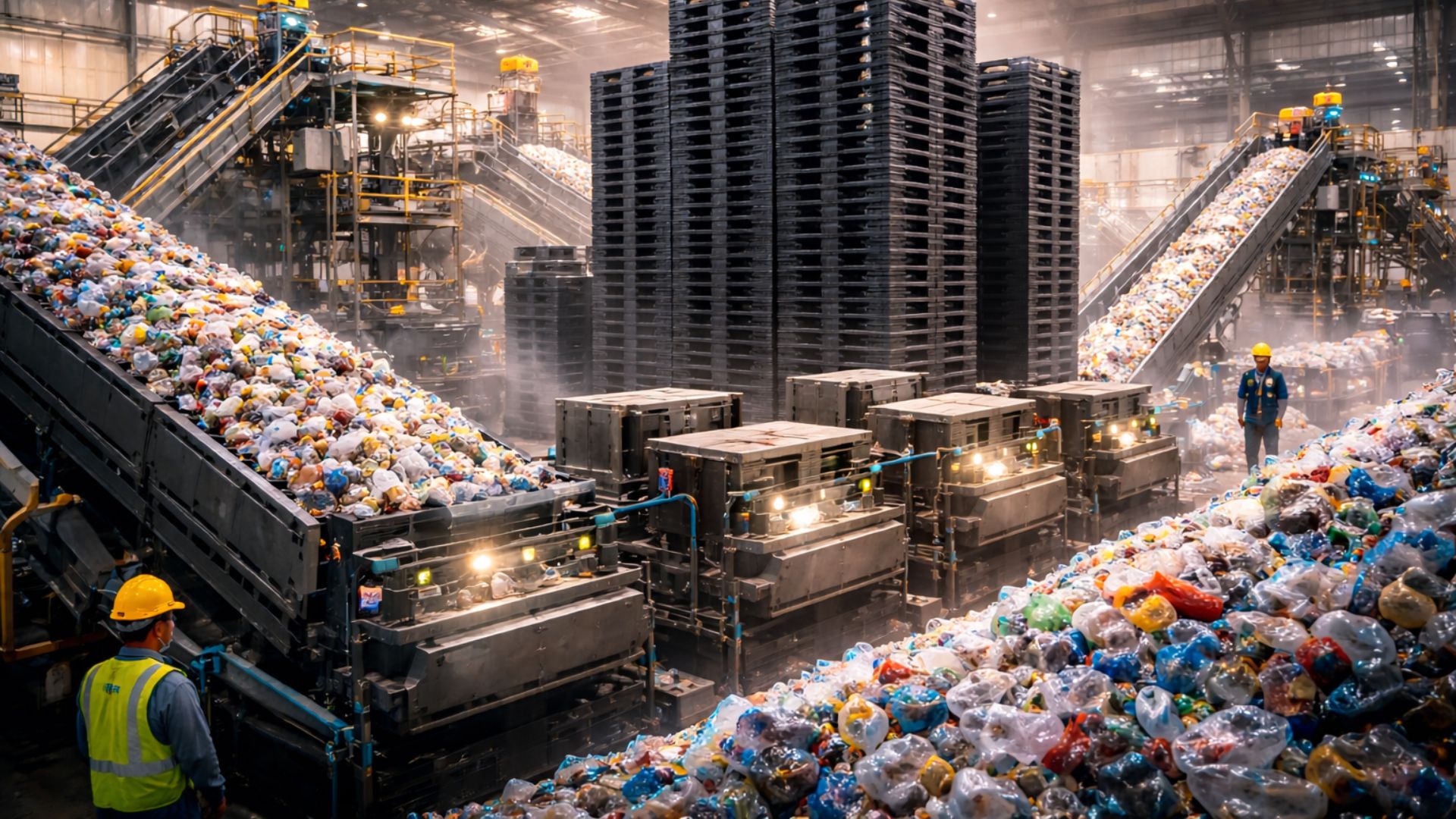
Japanese Recycling Model Combines Sorting, Industrial Cleaning, and Plastic Reuse to Manufacture Pallets Used in Logistics, Within a Chain That Depends on Selective Collection, Removal of Contaminants, and Separation by Type of Resin.
Nagoya, in Japan, has consolidated a model for sorting and reusing plastics that combines municipal selective collection, intermediate processing for the removal of contaminants, and industrial recycling aimed at manufacturing pallets.
The system integrates the separation done by residents, the preparation of the material by the public authorities, and the work of registered recyclers to transform post-consumption plastic packaging into new logistic products.
In practice, the flow starts with the collection of plastics discarded by the population and moves to units that perform the first cleaning of the material.
-
Something is happening around the Earth: Inside the huge explosion of fireballs in 2026

-
A hot air bubble coming from Argentina expands over Brazil, causing thermometers to exceed 38 degrees with a thermal sensation of 40 degrees in late March, affecting 6 states at once.

-
The radish leaf that almost everyone throws away has more polyphenols, flavonoids, and fiber than the consumed root, and a 2025 study showed that the leaf contains compounds that protect the intestine, combat inflammation, and may inhibit the growth of cancer cells.

-
A planet that seemed to defy the laws of physics has intrigued scientists for decades, until the James Webb revealed what is really affecting Saturn’s rotation.


At this stage, residues incompatible with recycling, such as metals, small electronics, batteries, and other improperly mixed items, need to be removed before the plastic is compacted and sent to recyclers.
The logic is simple: the less contamination, the higher the chance of industrial reuse.
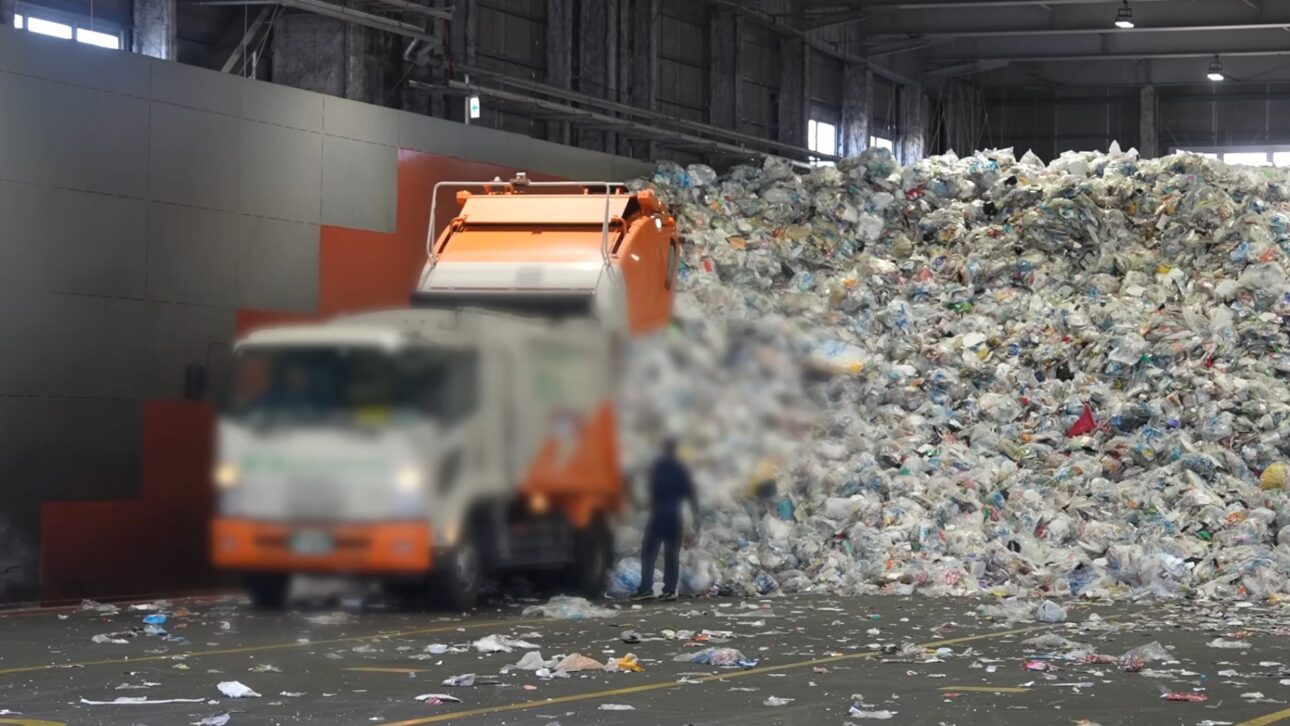
This design helps explain why Nagoya is often cited in discussions about the circular economy.
The city experienced a waste crisis in the late 1990s, when pressure on landfills led to the so-called “garbage emergency declaration.”
Since then, it has expanded selective collection and structured policies to reduce disposal and increase material recovery, including plastics.
The latest numbers from the city hall show that, in the fiscal year 2024, households in the city generated 36.7 thousand tons of trash and 10.0 thousand tons of recyclable resources, but the municipality itself acknowledges that more than half of recyclable plastic is still mixed with regular waste.
This indicates that the performance of the system depends not only on industrial technology but also on the quality of the separation done at the source.
Selective Collection and Plastic Sorting in Nagoya
After being collected, the material goes through an initial sorting to remove what shouldn’t be there.
Rotary equipment, conveyor belts, and manual inspection help separate objects that can damage the line or compromise the quality of the final product.
Then, the plastic is pressed to gain density, which improves transportation between the intermediate unit and the recycling plant.
At the recycler, the compacted waste is undone and sent for further classification.
The company Eco Pallet Shiga, registered in the Japanese packaging recycling system, reports that it receives separated and pressed plastics from municipalities and performs selection, shredding, washing, and thermal compression to convert them into raw material and then into plastic pallets.
Optical Sensors, Separation of PP and PE, and Industrial Washing
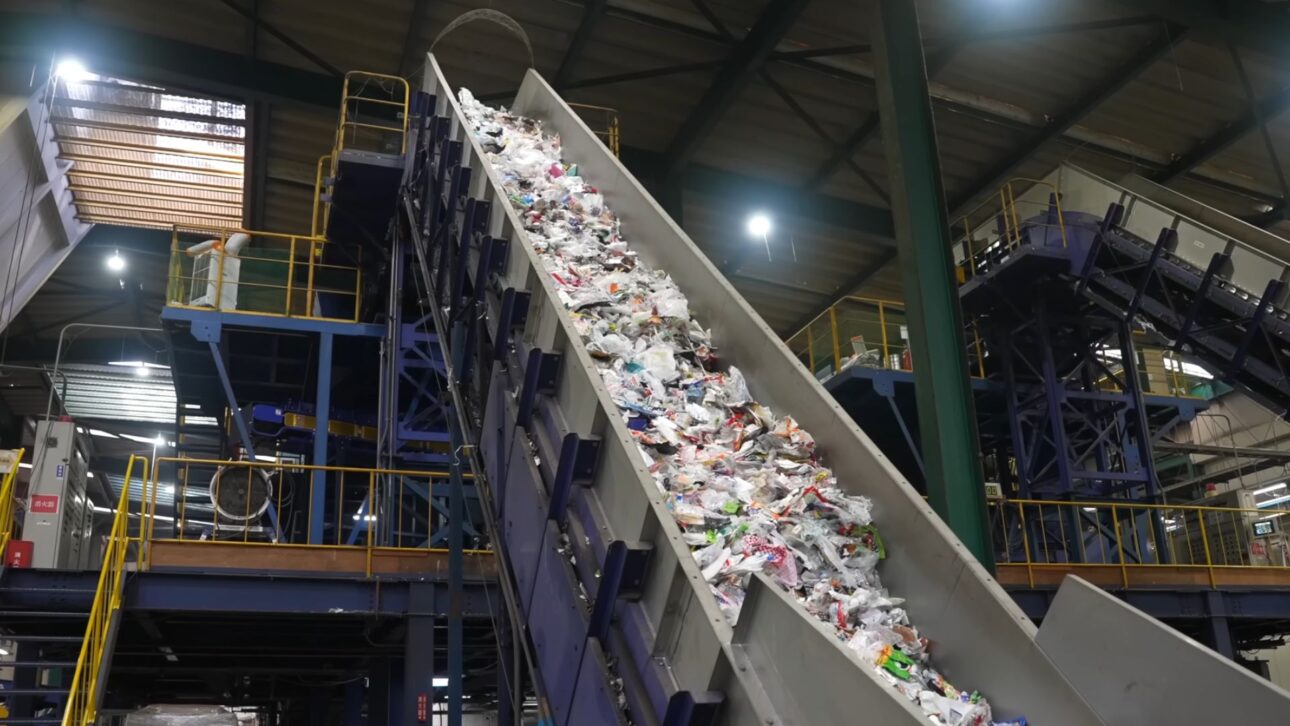
The industrial process depends on separating polymers with different characteristics, especially polyethylene, PE, and polypropylene, PP, two of the most common materials in household packaging.
Records from the Japanese association responsible for packaging recycling show that recyclers like Eco Pallet Shiga operate with specific outputs for PE, PP, and PE/PP mixtures, highlighting the importance of classification by resin type to ensure quality and consistency in the final product.
While the material released about this type of operation mentions optical sensors in the separation, the consulted public documents safely confirm the existence of sorting and industrial processing stages, but they do not detail, with the same level of precision, the exact time of separation “in seconds” nor the technical configuration of each line.
What is clearly documented is that mechanical recycling requires the removal of impurities, classification of polymers, and washing of the fragments before transformation into new artifacts.
Recycled Pallets Gain Space in Logistics
After classification, the plastic goes to grinding, washing, and preparation of the recycled mass.
This stage is decisive because it reduces adhered residues, improves the homogeneity of the material, and increases the consistency of the piece produced at the end of the line.
In institutional reports and presentations, the company informs that it uses the recycled material to manufacture pallets for logistics, replacing part of the demand for virgin raw material.
Pallets are strategic items for transportation and storage chains.
Therefore, the market demands mechanical resistance, stability, and repeatability in production.
Eco Pallet Hanbai, a company in the same business group, states that its recycled pallets have resistance compatible with the equivalent JIS standard, feature a finish to reduce slipping, and are applied as a logistics solution on a national scale.
There is also a piece of data that helps gauge the scale of this activity.
In corporate content published about the operation, Eco Pallet Shiga reports processing about 13 thousand tons per year of domestic plastic waste and converting it into somewhere between 300 thousand and 320 thousand pallets.
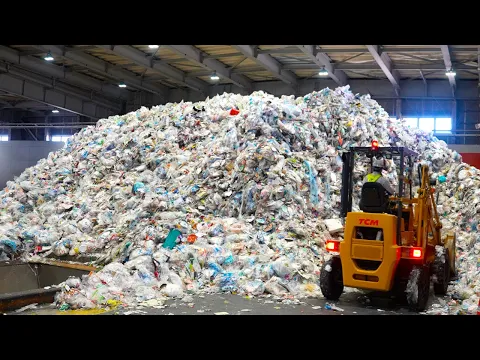

In another recent document, related to support for equipment expansion, the company appears with a plan to recycle 18,642 tons per year of packaging plastics and plastics collected in an expanded system, with final use in recycled pallets.
This industrial chain shows why the Japanese model draws attention.
It is not limited to an isolated machine or a one-time innovation, but a well-organized sequence of collection, sorting, compacting, transportation, separation by resin, washing, and manufacturing.
When this chain works in an integrated manner, waste ceases to be just an environmental passive and meets a concrete demand of the economy, such as providing pallets for storage and distribution.
Circular Economy and the Challenge of Correct Separation
For this reason, the Nagoya case is often observed as an example of continued management, and not of a magic solution.
The city has strengthened household separation over decades, while accredited recyclers have structured capacity to receive, process, and transform the material.
Still, municipal data indicate room for progress, as a significant portion of recyclable plastic continues to flow into the regular waste stream instead of returning to the industry.





-

-

-

-

-

49 pessoas reagiram a isso.