





 Portuguese
  English
  Spanish
  6 min of reading
  1 comment


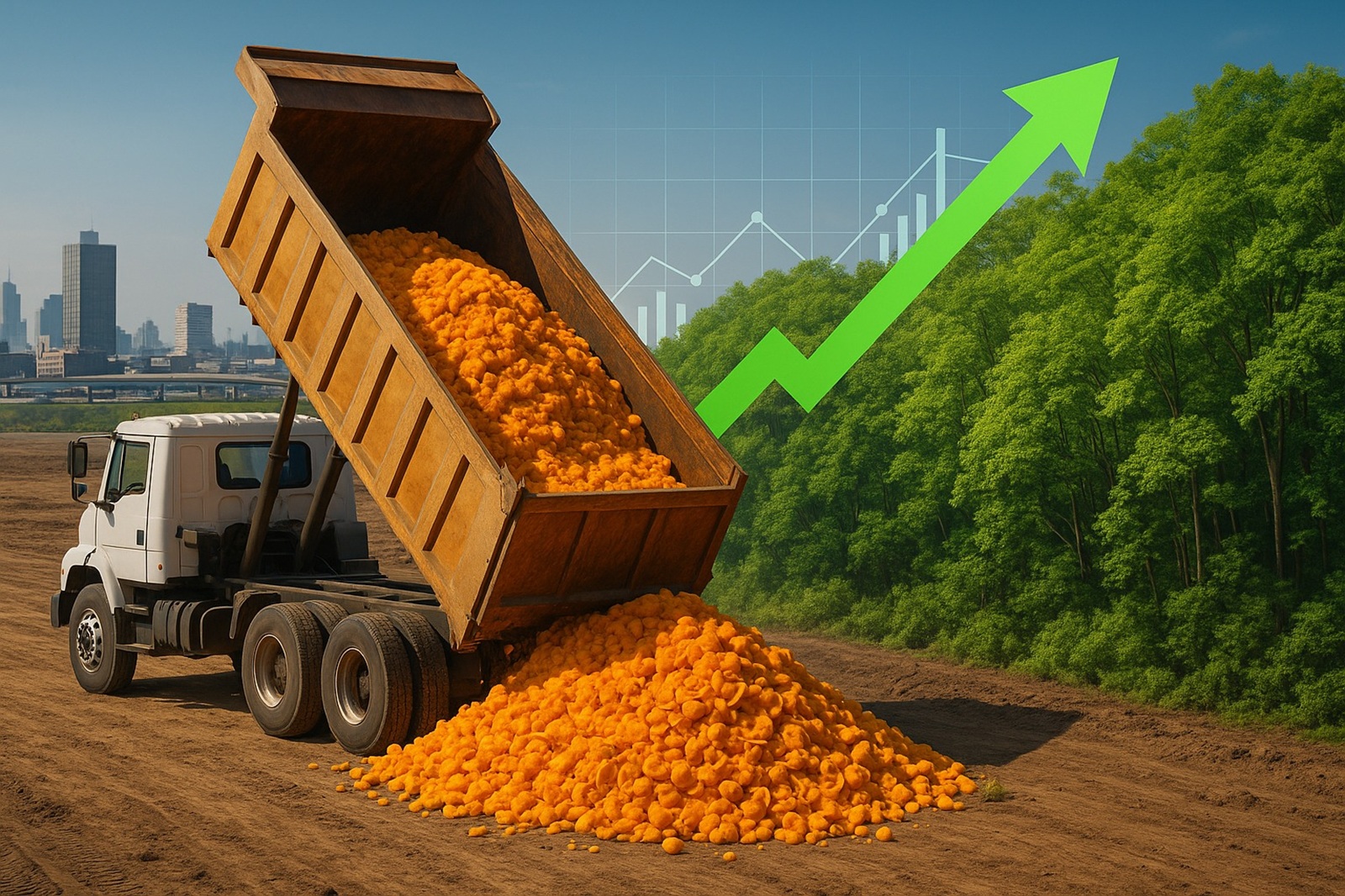


At The End Of The 1990s, A Bold Experiment Tried To Reclaim Degraded Lands Using Tons Of Citrus Waste. The Project Was Halted By Court Decision And Fell Into Oblivion — Until Decades Later, Scientists Returned And Found Something Nobody Imagined
At the end of the 1990s, a bold experiment tried to transform a forgotten corner of Costa Rica.
Thousands of tons of orange peels were dumped over an arid pasture, with the promise of regenerating a destroyed ecosystem.
The plan faced protests, lawsuits, and soon after, abandonment. For more than a decade, no one returned there. When the scientists returned, what they found seemed impossible.
An Abandoned Deposit In The Heart Of Guanacaste
The scene of this experiment was in the Guanacaste Conservation Area (ACG), in northwestern Costa Rica.
-
Sea Giants: The new floating wind turbine technology installed in deep waters that provides renewable energy directly to oil platforms.

-
After a devastating fire that left 3 injured and 200 intoxicated by smoke in the Red Sea, the most expensive warship ever built — $13.3 billion — returns to the front in Iran after quick repairs in Croatia.

-
It shouldn’t exist — but it’s there: James Webb telescope captures impossible atmosphere on giant exoplanet that challenges all known astrophysics.

-
Seen from space, an image taken by an astronaut shows in Argentine Patagonia the exact point where a colossal glacier, a turquoise-blue lake, and a greenish arm of water meet, creating one of the rarest and most impressive landscapes in the region.

For decades, vast areas had been deforested for cattle ranching, burned, and trampled until the soil compacted and lost its fertility.
The landscape became a hard and cracked field, where even grass struggled to grow.
Recovering such land typically required planting thousands of seedlings, constant irrigation, and costly maintenance for years.
This was unfeasible for a developing country that needed to protect large natural reserves.
Two experienced ecologists, Daniel Janzen and Winnie Hallwachs, from the University of Pennsylvania, were well aware of this challenge.
And they started to think radically.
The Unlikely Idea Of Turning Waste Into Forest
In the same region, the juice company Del Oro S.A. was starting operations and faced an opposite problem.
Every day, it processed trucks of oranges and accumulated mountains of waste — peels, pulp, and seeds — that piled up faster than they could be disposed of.
To Janzen and Hallwachs, this seemed like an opportunity.
They proposed an agreement: instead of burying or burning the waste, the company could spread it over the degraded pastures of the ACG.
The peels would smother the invasive grasses, decompose, and release nutrients, helping the forest to return on its own.
The proposal seemed bold but simple. And almost without cost.
Thousands Of Tons And A Wave Of Criticism
In 1997, the plan came to fruition. More than 1,000 trucks dumped about 12,000 metric tons of citrus waste over three hectares of barren pasture — roughly the weight of 2,000 adult elephants.
But what seemed elegant in theory sounded disastrous in practice.
The citrus smell became overwhelming. Flies clustered in clouds. From afar, the piles of rotting fruit resembled a dump.
Residents protested out of fear of water contamination, disease, and visual degradation of the reserve.
Local newspapers reported on the controversy, and a direct rival of Del Oro, TicoFruit, filed lawsuits.
In 1998, the Supreme Court of Costa Rica decided to halt the experiment immediately. No new loads could be dumped. The project was abruptly stopped.
Years Of Silence And Oblivion
The field remained abandoned. The waste was left to rot under the tropical sun.
For critics, that outcome proved that the project had always been reckless. For the ecologists, it was a devastating blow.
The public lost interest. Reporters stopped writing. Residents forgot the sour smell that lingered in the air.
Without signs, fences, or monitoring, the land disappeared from the map. For 16 years, it remained untouched, a silent graveyard of decomposing fruits.
The Unexpected Rediscovery
In 2013, PhD student Timothy Treuer from Princeton University came across a forgotten mention of the experiment in an old ecological article.
The text noted that no one had ever returned to the site to check the results.
Treuer was intrigued. If the experiment still existed, what could have happened there?
He reached out to Janzen and Hallwachs, who still worked in the region, and together they went to search for the “forgotten deposit.”
The search was difficult. The landmarks had disappeared, and the open pasture of before seemed to have vanished.
When they finally located the site, they stopped in shock.
Where There Once Was A Dead Pasture, There Was Now A Forest
In front of them was a young, dense, vibrant forest. Tall trees cast shadows over a thick understory.
Vines wrapped around the trunks, birds flew through the air, and insects buzzed through beams of filtered light. The land that once stank of rot now pulsed with life.
Treuer expected at most a greener grass or some scattered shrubs.
Instead, he found a whole ecosystem that seemed centuries older than the degraded pastures surrounding it.
The transformation was so drastic that the scientists needed to confirm they were in the right place.
Measuring The Ecological Miracle
To prove what they were seeing, Treuer and his team conducted a formal ecological study.
They compared the area that had received the waste with a nearby control area of degraded pasture that had never received peels.
The results were published in 2017 in the scientific journal Restoration Ecology.
The contrast was dramatic: the treated area had 176% more aboveground woody biomass.
The vegetation cover was much denser, and the diversity of tree and shrub species had significantly increased.
The soil also told another story. The analyses revealed much higher levels of carbon, nitrogen, and phosphorus, essential nutrients for plant growth.
The soil microbial community was thriving, recycling nutrients and sustaining the new ecosystem.
All this happened without irrigation, without fertilizers, and without human maintenance.
How The Peels Created A Forest
The mechanism behind the transformation was simple and ingenious. The thick layer of peels smothered the invading African grasses that dominated the area.
With the competition eliminated, native seeds brought by birds, mammals, or already present in the soil could germinate and grow.
Meanwhile, the decomposing peels gradually released nutrients, accelerating natural ecological succession.
In just over a decade, hard, barren soil turned into a living forest. A dead field was reborn on its own.
Lessons And Limits Of The Experiment
Despite the impressive result, the scientists themselves were the first to call for caution.
They warned that not all types of agricultural waste would have the same effect — some could even poison the soil or make it too acidic.
Even citrus, in excess, could suffocate microbial life instead of stimulating it.
Critics reminded that in the first months, the experiment looked more like a dump than environmental conservation.
For part of the population, Del Oro benefited from a free disposal of waste on public land.
The case exposed a dilemma: was this a visionary, low-cost solution or just a gamble that worked by chance?
Without replication in other regions, no one could assert this with certainty.
Inspiring New Tests With Organic Waste
The unexpected success did not go unnoticed.
Researchers began to question whether other agricultural waste could help restore degraded lands.
In 2021, a team from the University of Hawaii tested the idea with coffee pulp in a degraded pasture also in the ACG.
In just two years, tree cover in treated areas jumped to 80%, compared to 20% in control areas.
The seedlings grew over 4.5 meters, and the invasive grasses disappeared.
Other scientists are evaluating experiments with sugarcane bagasse, banana leaves, and other local organic waste.
The potential is huge: millions of tons of agricultural waste are discarded every year.
If a fraction could be redirected to regenerate ecosystems, the environmental gains would be immense.
But researchers emphasize that each landscape is unique, shaped by climate, soil, and local species.
What worked with oranges and coffee in Costa Rica may not work elsewhere.
When Nature Receives A Push
The orange peel experiment showed something powerful: nature can regenerate when it receives the right conditions.
A barren soil turned into a forest without irrigation, without fertilizers, and without constant intervention.
The forest that sprang from waste stands as a silent reminder.
Even what we discard can bring life back.
If fruit scraps created an entire ecosystem, what else are we overlooking?
Nature has proven that it can — it just needs a push.







Que maravilha! Vamos lutar pela regeneração do meio ambiente!