





 Portuguese
  English
  Spanish
  6 min of reading
  4 comments





Hassan Azteca Went Viral After Saying He Won’t Look for a Job and That His Parents Should Support Him, Sparking Criticism and Discussions About Responsibility, Expectations, and Frustration. At the Same Time, Data Indicates High Youth Unemployment in the U.S., Almost 1 Million “Neither-Nor” Youths in the U.K., and Record Apprenticeships in Brazil.
In a video less than a minute long, influencer Hassan Azteca, 21, became a topic of discussion after stating that he does not intend to look for a job because he “was born without his consent” and, therefore, his parents should support him. The statement, short and direct, was enough to trigger an avalanche of reactions from indignation to attempts to understand what lies behind this type of positioning.
The repercussions do not happen in a vacuum. While the case circulates as a viral provocation, recent numbers indicate that the entry and permanence of young people in the job market continue to be complex: in the United States, the youth unemployment rate cited for July 2025 is 10.8%; in the United Kingdom, nearly 1 million youths aged 16 to 24 years were out of work, education, or training at the end of 2025; in Brazil, apprenticeships appear as a formal gateway, with over 715,000 hires of young apprentices between January and November 2025.
A Short Video, An Explosive Phrase, and the “Character” Behind the Viral
Hassan Azteca is presented as a 21-year-old Argentine tiktoker who went viral after saying he does not feel obligated to look for work. He summarizes his own logic with a question that plays perfectly on the internet: “If I didn’t ask to be born, why do I have to work now?”. He then places the financial responsibility for his existence on his parents, arguing that they should “support him, and that’s it.”
-
Inside an active volcano in Africa, residents use volcanic rocks to build houses in an impressive setting.

-
After 14 years of waiting, a rammed earth mansion built in 1702 in the North Zone of São Paulo will become a park with leisure facilities and green areas, with a million-dollar investment.

-
With 2 unfinished nuclear reactors, up to 25 billion in costs, and proven fraud, the Nukegate case has left 800,000 consumers still paying today for energy that will never be produced.

-
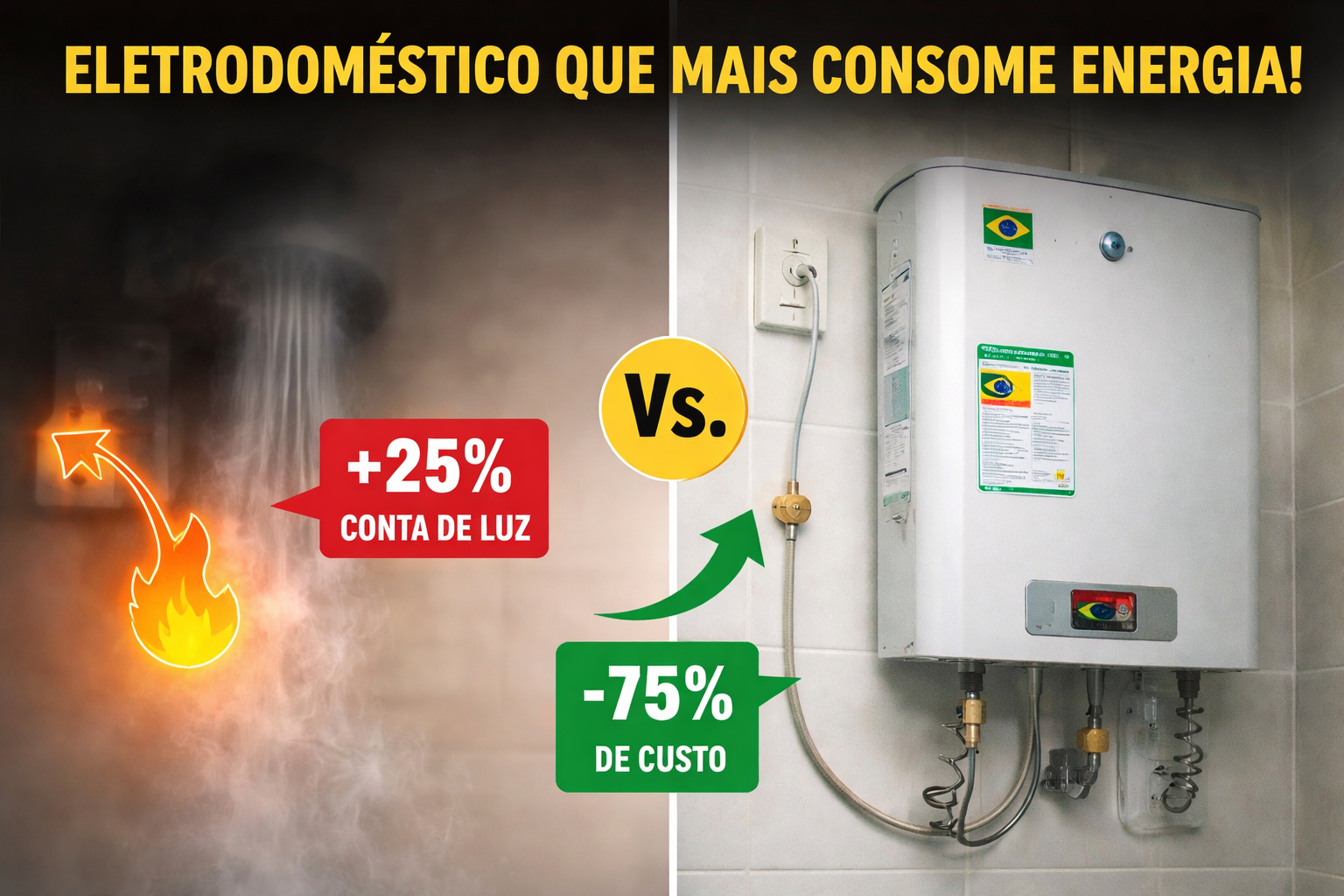
The household appliance that consumes the most energy in Brazilian homes is not the air conditioner; it is located in the smallest room of the house, is used daily, and can account for up to 25% of the electricity bill, while an alternative in the same outlet can reduce this cost by up to 75%.

The virality transforms opinion into a symbol, and symbols always attract extreme interpretations. Many viewed the statement as laziness or irresponsibility; others saw it as a shortcut to discuss a larger malaise: the gap between expectations and reality.
What appears on screen as mere provocation touches on difficult themes off-screen, such as cost of living, insecurity, mental health, access to opportunities, and the feeling that “the rules of the game” have changed.
What Numbers Say About Youth Employment in the United States
When the discussion shifts from the individual to the scenario, the cited data helps to measure the challenge. In the United States, the information mentioned for July 2025 indicates that about 53.1% of youths aged 16 to 24 were employed. At the same time, the youth unemployment rate is 10.8%, higher than recorded in 2024, signaling that finding a job is far from being an automatic task even in large economies with many sectors hiring.
These percentages often reflect a market that fluctuates rapidly with seasonality, services, temporary jobs, and turnover.
For some youths, the first contact with the world of work occurs in unstable positions, with fragmented hours and slow advancement. The result is an ambiguous feeling: there is demand in some niches, but the stability that transforms work into a life project may seem distant.
United Kingdom and the Weight of Almost 1 Million Youths Out of Work, Education, or Training
In the United Kingdom, by the end of 2025, the cited number of almost 1 million youths (16 to 24 years) outside the labor market, education, or training brings the conversation to another level.
This is not just about “not wanting” to work: it involves a large segment that, for various reasons, is disconnected from the traditional paths that lead to qualification, experience, and ultimately, employment.
Experts point to factors such as the cost of labor for employers, wage changes, and technological advancements as causes that help explain the increase.
In practical terms, this may mean companies being more cautious about hiring, greater requirements for entry-level positions, and a funnel that narrows right where youth try to begin. When the entryway gets tighter, discouragement fuels radical discourses either of revolt or resignation.
Brazil: Apprenticeship as a Gateway, but Not a Magical Solution
In Brazil, the presented data shows a different movement: between January and November 2025, more than 715,000 young people were hired as apprentices, which is noted as a historic record for the category.
Apprenticeships typically combine training and practical experience, involving sectors like industry, services, and retail, alongside rules that structure working hours and training.
This does not mean that the issue is resolved. Apprenticeship opens doors, but does not guarantee a trajectory: a young person can enter, learn, and still face barriers to effective hiring, especially when the economy slows down or when the sector that hired reduces openings.
Nevertheless, the logic is relevant because it creates a formal bridge between school, training, and employment, and bridges matter when the public debate seems stuck between “work at all costs” and “I owe nothing to anyone.”
AI and the Fear of Professional Future: Real Anxiety in a Transforming Market
The debate about employment today almost always clashes with technology, and artificial intelligence has become the focal point of this anxiety. A study cited as conducted at the end of 2025 by Harvard University indicates that 59% of the 2,040 youths aged 18 to 19 interviewed believe that AI poses a threat to their job prospects.
Fear is not proof of destiny, but it is a powerful social signal. When a generation believes it could lose ground even before entering the market, it tends to recalibrate expectations: some seek areas seen as “less automatable,” others try to generate income on digital platforms, and there are those who begin to question the value of traditional effort.
Hassan Azteca’s statement, in this context, can be interpreted not as a statistic, but as a symptom: an aggressive way of saying “I don’t trust the social contract of work.”
Why a Viral Video About “Not Working” Resonates So Strongly Right Now
The strength of this type of video comes from the contrast: it seems absurd to those who grew up with the idea that work is a moral obligation, but sounds familiar to those who feel that the market demands a lot and gives little in return. The internet rewards simple phrases for complex problems, and “I didn’t ask to be born” becomes a slogan because it condenses feelings of helplessness, anger, and frustration in a few seconds.
There is also a performance element. Social networks create incentives for exaggeration, shock, and polarization because it generates comments, responses, and shares.
So, even when the starting point is personal, the outcome becomes collective: the public discusses education, salaries, cost of living, technology, and mental health without anyone having total control over the direction.
In this whirlwind, the difference between legitimate market criticism and romanticizing total refusal of employment becomes harder to see, and that is where the debate tends to spiral downward.
The case of Hassan Azteca exposes a clash between discourse and reality: on one side, the provocation that rejects employment as an obligation; on the other, numbers showing youths trying to enter the market under harsh conditions, whether due to the cited youth unemployment rate in the U.S., the nearly 1 million “neither-nor” youths in the U.K., or the record apprenticeships in Brazil, with a growing shadow of insecurity related to AI.
The useful discussion is not about “defending” or “canceling” a viral, but about understanding why so many young people view the professional future as unstable terrain.
And you: when you see someone saying they won’t look for a job because they “didn’t ask to be born,” does it seem like just social media provocation, or a sign that the market is failing to offer real pathways to entry and stability for those who are starting out?







Por pensar como ele na minha juventude, hoje me sacrifico pra me encaixar no ritmo árduo e pesado do setor onde atuo. Não acumulei experiência nem conhecimento enquanto pude.Hoje toda hora aparece um mais capacitado que a gente . E a gente temendo ser o descarte…..Ainda bem que os pais dele não vão morrer !
Sim, ele não lembra, mas ele pediu para nascer. Na verdade, ele correu para chegar na frente de outros milhões de espermatozoides que deixou para trás para ser o PRIMEIRO a entrar no óvulo… Então, ele quis nascer… Agora, é só ir trabalhar para se sustentar e deixar de ser vadio.
Na verdade já foi comprovado cientificamente que os ovulos da mulher libera uma substância que atraí o espermatozóide até ela rsrs
Então ele realmente não pediu pra nascer, na verdade nem escolha tinha.
E ainda tem gente que quer proibir o aborto rsrs
Seus pais deveriam ter feito isso neh?