





 Portuguese
  English
  Spanish
  5 min of reading
  0 comments



During the Summer in San Francisco, a Group of Young People Led by Engineer Riley Walz Caused a Congestion of Waymo’s Self-Driving Cars in a Prank That Simulated a “Denial of Service” Cyberattack
During the American summer, 23-year-old software engineer Riley Walz decided to turn his vacation into an unusual experience. Alongside some friends, he crafted a prank he called “Waymo DDoS,” inspired by the term used to describe denial of service cyberattacks.
The plan, according to Walz, was simple: gather 50 people on a dead-end street in San Francisco and have them all request rides from Waymo, a company that operates self-driving cars similar to Uber.
Unusual Congestion of Driverless Cars
The result was a momentary chaos. None of the participants entered the vehicles, and after about ten minutes, the cars left on their own, charging each requester a no-show fee of US$ 5.
-
The secret to having a fruit-laden tree all year round is not luck or a green thumb, but rather a combination of three nutrients that most people do not know how to apply correctly.

-
A village with only 40 inhabitants in the interior of Spain is offering a renovated house for free, guaranteed employment, and school transportation for those willing to exchange the big city for the lavender fields of the mountains of Soria.

-
Mansion with a guitar-shaped pool facing the sea in Santos had 2 floors, suites with panoramic views, a lit fountain inspired by New York, architecture linked to Niemeyer, and was demolished in the 1990s to make way for a McDonald’s.

-
A magnitude 2.4 earthquake hits the coast of Paraná between Ilha do Mel and Paranaguá, becoming the strongest of 2026 and revealing a little-known seismic phenomenon that can occur silently in various regions of Brazil.
Waymo, for its part, needed to call in human drivers to remove the vehicles from the area and even temporarily blocked the service in the region due to the congestion caused by the action.
What Does DDoS Mean
The term DDoS, short for “Distributed Denial of Service,” describes attacks that overload servers to the point of taking them offline.
Walz compared his prank to this type of attack, as the simultaneous requests briefly congested Waymo’s network.
Reactions and Limits of Technology Pranks
The feat quickly went viral on the internet, generating divergent opinions. While some laughed at the creativity, others warned of possible risks to safety and urban mobility.
Walz, co-founder of the data company Numerous.ai, stated that his pranks are curious, not malicious — although they walk the line between satire and testing technological systems.
With information from AutoPapo.
You May Also Like: Man Erects “Island” and Declares Himself President — But Sees Creation Destroyed by Government; Story Even Became a Movie on Netflix
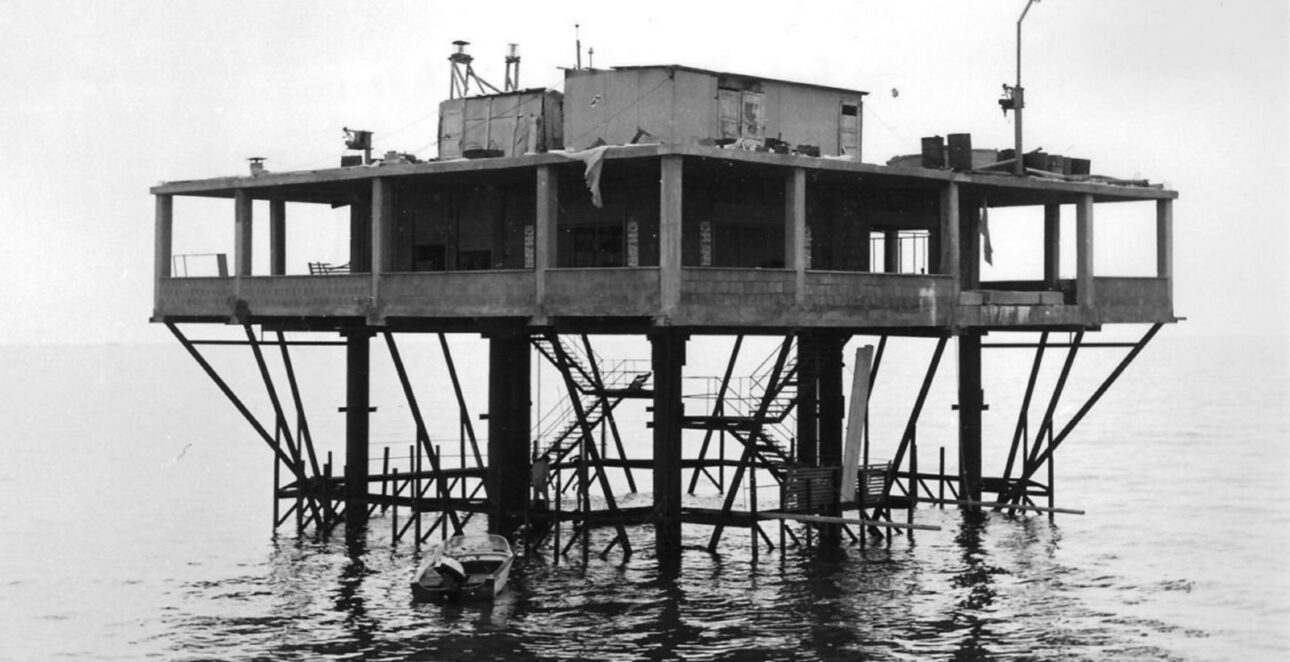
In 1968, Italian engineer Giorgio Rosa decided to put into practice a dream that seemed impossible: to create an island in international waters and turn it into a nation free from bureaucracies.
His plan was simple but bold. He wanted to build a platform in the Adriatic Sea, beyond the limits of Italian territory, and declare his independence.
The project began ten years earlier, in 1958, funded with his own resources. Even facing resistance from maritime authorities in Italy, Giorgio persisted.
He believed he could prove that an ordinary man was capable of founding a country from scratch.
The structure was erected with concrete and steel, on pillars firmly embedded in the seabed. When he finally completed the work, Giorgio proclaimed the place as a new nation: the Republic of the Island of Roses.
A Symbol of Freedom in the Midst of Counterculture
The initiative emerged during a turbulent moment in history. The world was still feeling the effects of World War II, while the 1960s brought winds of change.
Youths protested, women fought for rights, and counterculture spread.
In this context, the small island became a symbol of freedom. Young people began to visit it frequently, drawn by the idea of living without rules.
The location turned into a sort of alternative refuge, with a bar, restaurant, souvenir shop, and even a small post office.
Letters and citizenship requests arrived from various parts of the world. For many, Giorgio was a visionary who had created a free paradise. For the Italian government, however, he was a threat.
Storms, Resistance, and the Beginning of the End of the Island
On the first night he slept on the island, Giorgio faced a violent storm. The wind nearly threw him into the sea.
Any other person would have given up, but he did not. Believing so much in his project, he drilled the seabed with a probe to capture fresh water — and succeeded.
The courage was impressive but also irritated the authorities. The increasing movement of visitors and the independence rhetoric began to disturb the Italian government, which started to monitor the platform.
Despite this, Giorgio remained steadfast. The original project envisioned five floors, but only half of the first was completed. Still, the island lasted for 55 days after its inauguration.
The Explosion That Ended a Dream
In 1969, the Italian government decided to end the experiment. The Navy took control of the structure and began its destruction.
Contrary to what the movie inspired by the story shows, the Island of Roses was not exploded all at once.
Two rounds of explosives were needed, applied on different days, to cause significant damage to the structure.
Even so, the platform partially resisted — a testament to the engineer’s skill. The final collapse came with another storm, which sank what remained of the construction.
For months, parts of the island could still be seen on the surface of the Adriatic.
The final blow was cruel: in addition to losing the island, Giorgio Rosa had to pay for the military operation that destroyed it.
He gradually settled the debt with his salary as a teacher, a profession he began to pursue after the incident.
Island of Roses: From Destruction to Renewal on Screens
Decades later, Rosa’s story inspired the movie “The Incredible Story of the Island of Roses”, released by Netflix.
Director Sydney Sibilia reconstructed the platform to life size — about 400 square meters — in a massive pool of reservoir water on the island of Malta.
The filming encountered difficulties similar to those faced by the engineer himself, reinforcing how ambitious his project had been.
Even with the tragic end, the Island of Roses continued to spark curiosity. Forty years later, divers found remnants of the platform on the seabed and brought fragments to the surface.
One of them, a simple brick, was presented to Giorgio with a symbolic dedication: “A little piece of a dream for a great dreamer.”
Giorgio Rosa passed away in 2017 at the age of 92. He died without his island, but with the recognition of having turned an improbable dream into one of the most extraordinary episodes of engineering and human freedom.
With information from Portal Litoral Sul.






-

-

-

-

-

-

152 pessoas reagiram a isso.