





 Portuguese
  English
  Spanish
  3 min of reading
  0 comments


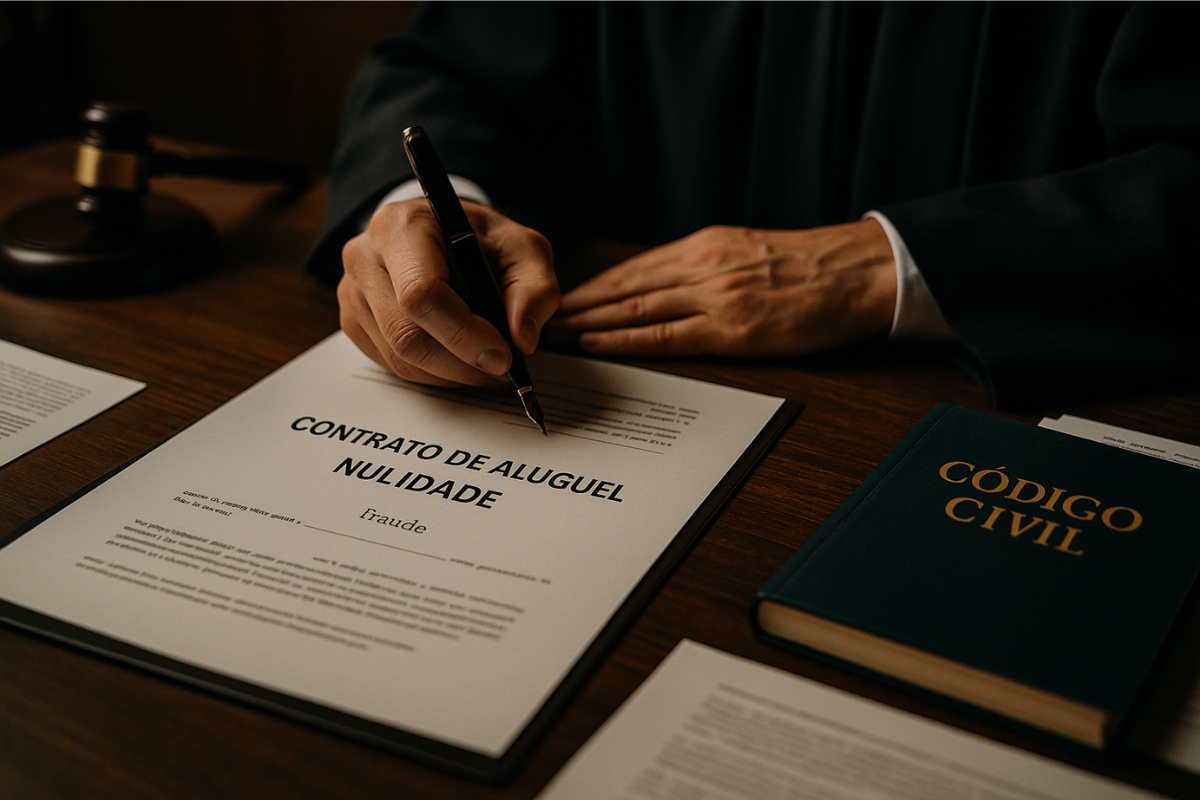
The Court Recognized That a Lease Contract Was Created with False Data and Determined Its Nullity. The Decision Cancelled Charges, Overturned the Arbitral Sentence, and Guaranteed Compensation to the Victim for the Fraud Suffered
The São Paulo Court of Justice has once again debated the responsibility of digital platforms in the real estate market. A recent decision by the 1st Business Court and Arbitration Conflicts of the capital annulled an arbitral sentence and recognized that QuintoAndar failed to verify the authenticity of a fraudulently signed lease contract. The platform and the author of the fraud were ordered to pay compensation for moral damages.
The discussion began when a woman called on the Court stating that she had been involved in a scam perpetrated by a former coworker. According to her, the coworker asked her to be a guarantor on a rental agreement. Trusting the request, the victim provided her personal data, imagining that she would only be consulted later to formalize the signing.
What happened was the opposite. The woman never received messages, links, emails, or any formal notice of signing. Nevertheless, her name appeared as the main tenant in the contract signed by her coworker. Months later, bills and notices of default began to arrive that were completely alien to the victim’s reality.
-
The Chamber opens a debate on driver’s licenses at 16 years old as part of a reform that includes around 270 proposals to change the Brazilian Traffic Code and may redesign rules for licensing, enforcement, and circulation in the country.

-
The new Civil Code could revolutionize marriages in Brazil with “express divorce” and changes that could exclude spouses from inheritance.

-
Banco do Brasil sues famous influencer for million-dollar debt and intensifies debate on delinquency, risks of seizure, and direct impact on Gkay’s credibility.

-
The Senate approves a bill that criminalizes misogyny, hatred, or aversion towards women, and includes the crime in the Racism Law with a penalty of up to 5 years.


The situation only began to be clarified when she contacted the QuintoAndar platform to report the scam. At the same time, she approached the former coworker, who confessed to having used her data to create the contract and promised to vacate the property and settle the debt. The promise was not fulfilled. The victim filed a police report and had another surprise: an arbitral sentence had been published against her, supported by a contractual clause that referred conflicts to private mediation.
Dissatisfied, she filed a lawsuit requesting the annulment of the arbitral sentence, the forged contract, and all associated charges. She also requested that both the scammer and QuintoAndar be held liable for moral damages, arguing that the platform did not adopt minimum mechanisms for verifying identity and authenticity of the electronic signature.
To justify its conduct, QuintoAndar claimed that the fault was solely the victim’s for having provided her personal data. However, Judge André Salomon Tudisco did not accept this theory. He applied the Tenant Law to the case and noted that the contract had been validated in a system without digital certification, which prevents the presumption of authenticity of the signature.
Another determining point was the finding that the identification document presented was not from the true owner of the action. According to the magistrate, the platform could not even present new evidence to sustain the legitimacy of the contract. The same prints of photos sent by the victim were attached as a defense, reinforcing the perception of failure in the verification process.
The judge concluded that there were sufficient elements to recognize the contractual simulation resulting from the fraud committed by the coworker, coupled with the platform’s negligence in providing the service. Based on Article 167 of the Civil Code, which nullifies any simulated legal transaction, the Court annulled the contract, cancelled the generated debts, and overturned the arbitral sentence.
The decision also set compensation for moral damages in the amount of 10 thousand reais for each defendant, both the fraudster and QuintoAndar. The case expands the debate about the security of digital platforms and the need for robust data verification mechanisms to prevent scams that increasingly involve electronic signatures and entirely online leasing processes.










-

-

2 pessoas reagiram a isso.