





 Portuguese
  English
  Spanish
  3 min of reading
  8 comments


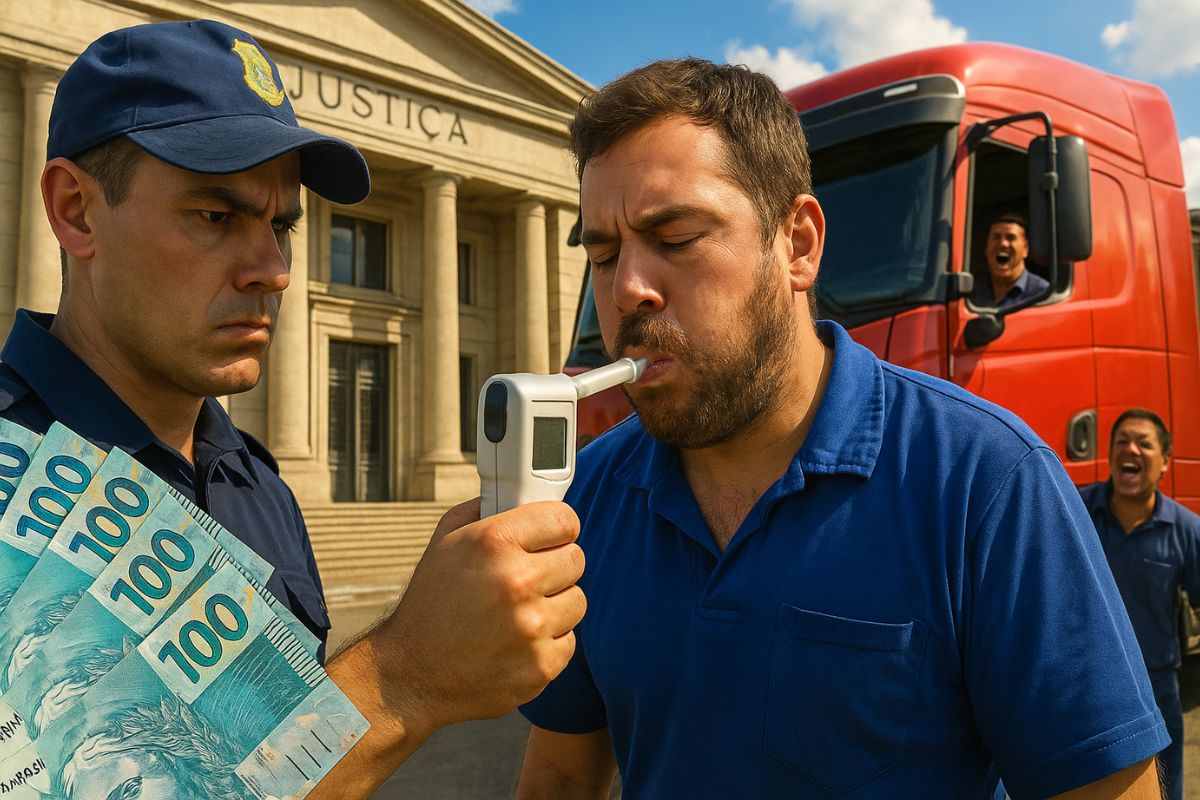


TRT-3 Decision Recognized That Administering Breathalyzer Tests in Front of Colleagues Caused Embarrassment and Ridicule, Constituting Moral Damages
The Labor Court of Minas Gerais ordered a road freight transport company to pay R$ 9 thousand in compensation to a driver who was subjected daily to a breathalyzer test in public. The procedure, conducted at the company entrance in Arcos (MG), exposed the worker to ridicule from colleagues and was deemed offensive to his dignity.
According to the case, the driver, a heavy machinery operator, was also required to operate vehicles without proper maintenance, which worsened the working conditions and put his safety at risk. The decision was upheld by the 7th Panel of the Regional Labor Court of the 3rd Region (TRT-3), based on witness evidence and technical reports, according to ConJur.
Unnecessary Exposure and Violation of Rights
Witnesses reported that about 40 workers formed a line every day to take the breathalyzer test in front of colleagues, without any privacy.
-
The noise law will no longer be in effect at 10 PM starting in June with a new rule valid during the 2026 World Cup.

-
The Chamber opens a debate on driver’s licenses at 16 years old as part of a reform that includes around 270 proposals to change the Brazilian Traffic Code and may redesign rules for licensing, enforcement, and circulation in the country.

-
The new Civil Code could revolutionize marriages in Brazil with “express divorce” and changes that could exclude spouses from inheritance.
-
Banco do Brasil sues famous influencer for million-dollar debt and intensifies debate on delinquency, risks of seizure, and direct impact on Gkay’s credibility.


In case of a positive result, the employee was detained and then sent for a new test in a private room.
For the judges, the manner in which the test was conducted violated the dignity and honor of the worker, as it exposed situations that could have been handled confidentially.
The decision emphasized that the company could adopt more discreet procedures without compromising safety.
Precedent and Legal Foundation
The first-instance ruling, issued by Judge Marco Antônio da Silveira, cited a precedent from the Superior Labor Court (TST) recognizing the practice of administering breathalyzer tests in public as causing moral damage.
The understanding is based on Articles 186 and 927 of the Civil Code, which address unlawful acts and the obligation to make reparations.
The TRT-3 stressed that moral damage does not require material proof of harm, as demonstrating humiliating exposure and the embarrassment suffered by the worker is sufficient.
Thus, the amount of R$ 9 thousand was deemed proportional to the damage, in a reparative and pedagogical capacity.
Vehicles Without Maintenance and Risk to Safety
In addition to the breathalyzer issue, the case pointed out that the company allowed the operation of vehicles without the maintenance recommended by manufacturers.
A technical report confirmed that the driver was forced to operate machines under precarious conditions, which posed a risk to his health and safety.
This aspect was also maintained in the second-instance decision, reinforcing that the employer’s responsibility goes beyond controlling alcohol consumption, also encompassing ensuring safe working conditions.
Impacts and Reflections in the Corporate Environment
Cases like this highlight the importance of companies adopting procedures that balance safety and respect for fundamental rights of employees.
The mandatory breathalyzer test may be legitimate in certain roles, but the manner of application needs to preserve the worker’s privacy.
The ruling serves as a warning for employers to rethink supervisory practices that, although preventive, can result in embarrassment, loss of trust, and lawsuits for harassment or moral damages.
The recognition that administering the breathalyzer in public constituted humiliation shows that safety and dignity must go hand in hand in the workplace.
Companies have a duty to supervise, but also to respect their employees.
And what do you think, should breathalyzer testing be done privately? Have you witnessed unnecessary exposure in the workplace? Share your opinion in the comments and join this debate.










Quer dizer que se o polícia fizer o **** na via pública será constrangimento e vou poder processar a justiça depois…..
O que realmente eles tem que condenar não fazem agora aplicar danos moral por fazer **** de bafometro e de mais então posso processar a polícia que me constrangeu a partir do momento que me parou e me pediu p fazer o **** no meio da rua com todos passando e me olhando
A mesma justiça q autoriza o bafometro em público durante abordagem policial