





 Portuguese
  English
  Spanish
  3 min of reading
  0 comments



The Federal Court Recognized the Right to Accident Aid from INSS for a Worker with a Knee Injury, Reaffirming that the Benefit is Due Even in Cases of Mild Sequelae.
The Federal Court, through the 10th Panel of the Federal Regional Court of the 3rd Region (TRF3), recognized the right of a worker to receive accident aid from INSS after suffering a knee injury during a soccer game. The decision, published in October 2025, reinforces that the benefit must be granted even in cases of injuries considered mild, as long as there is a permanent reduction in the ability to work.
The court applied the understanding established by the Superior Court of Justice (STJ) in Theme 416, which states that the degree of injury does not prevent the granting of assistance, provided there are sequelae that limit the insured’s usual activities.
Report Confirmed Permanent Sequelae in the Knee
During the process, a judicial medical examination confirmed that the worker had permanent limitations of movement in the knee and that his daily activities require greater physical effort after the accident. The report indicated that the insured underwent three surgeries and presented patellar chondropathy, a painful and degenerative condition in the cartilage of the patella.
-
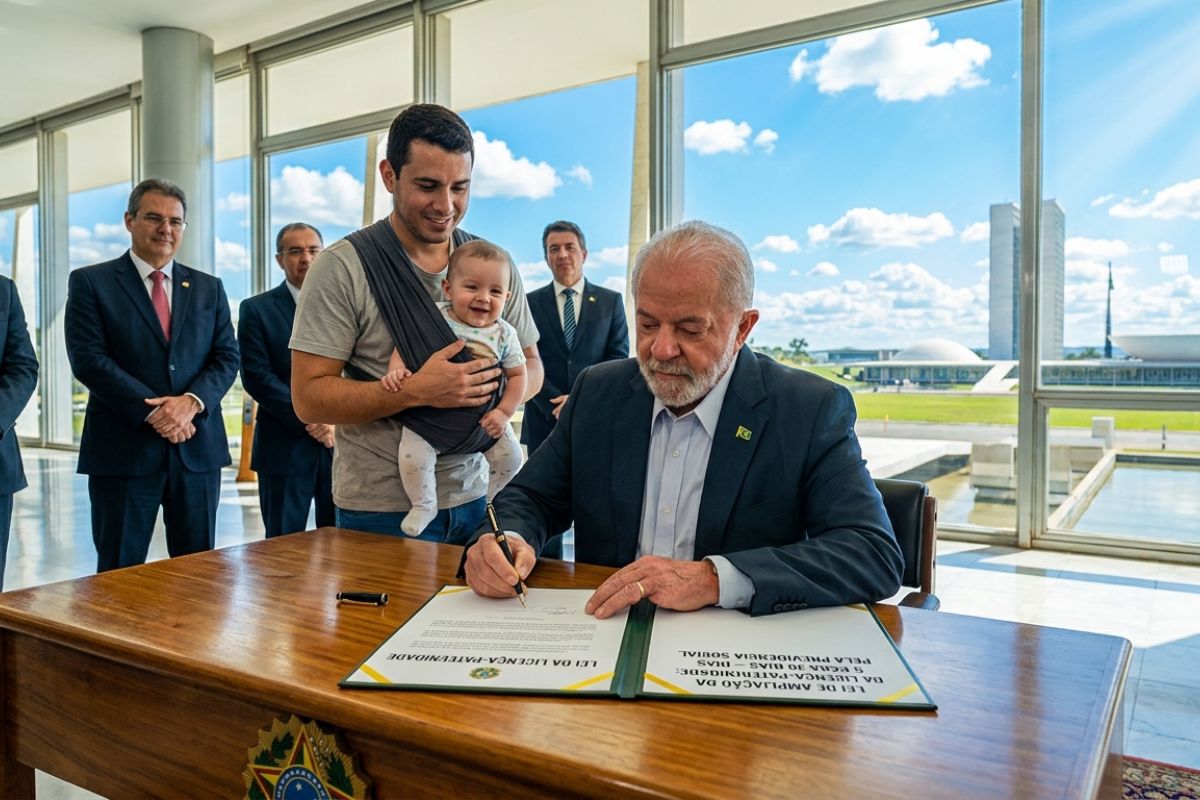
Government enacts new law: paternity leave increases from 5 to 20 days with gradual increases until 2029, and Social Security pays the paternity salary; companies no longer bear the absence cost, estimated at R$ 5.4 billion.
-
End of the 1-hour lunch break in the CLT? Current labor law maintains the break, allows for negotiated reductions, and defines rules for working hours and home office in Brazil.

-
Employee Fired After Accumulating 114 Days of Medical Leave in One Year, Labor Court Upholds Company’s Decision

-
Employee Fired While Treating Depression Wins in Court and Vale Is Required to Rehire Him Following Decision Based on the CLT and INSS Benefits


Based on this data, TRF3 determined the immediate implementation of the benefit, recognizing the partial and permanent incapacity of the worker to carry out his usual functions.
Accident Aid: Right Even with Minimal Injury
The case reinforces an important principle: it is not the size of the injury that defines the right to the benefit, but the impact it has on the ability to work.
According to Article 86 of Law No. 8,213/1991, accident aid is due to the insured when, after the consolidation of injuries resulting from an accident of any nature, there is a reduction in the capacity for habitual work, even if minimal.
In other words, even a seemingly simple injury — such as a mild limitation in the knee, shoulder, or hand — can give rise to the right to the benefit if there is proof of permanent sequelae.
Importance of the TRF3 Decision
The TRF3 decision enhances the legal security of workers who suffer accidents outside the workplace, but who end up affecting their productivity at work. The understanding also serves as a warning for insured individuals who face difficulties obtaining the benefit due to the claim of “mild injury” by INSS.
Based on Theme 416 of the STJ, the court reaffirmed that the decisive criterion is the reduction of labor capacity, and not the apparent severity of the sequela.
An Important Precedent for Similar Cases
The judgment creates a significant precedent for other cases of insured individuals who sustained sequelae from domestic, sports, or traffic accidents. Accident aid, in these cases, has an indemnity and lifelong nature, being paid until the beneficiary’s retirement.
The understanding of the Federal Court consolidates the role of the benefit as a mechanism of social protection, ensuring financial support to those who, even being able to continue working, lose part of their productive capacity.
The decision of the 10th Panel of TRF3 reaffirms the importance of accident aid as an instrument of social justice. By recognizing the right of an injured insured in a soccer game, the court establishes that all loss of labor capacity must be compensated, regardless of the severity of the injury.
The case serves as an example for thousands of workers facing permanent limitations and who do not know that they can request the benefit from INSS.










Seja o primeiro a reagir!