





 Portuguese
  English
  Spanish
  3 min of reading
  0 comments



Regional Labor Court of Minas Gerais Confirmed the Dismissal for Just Cause of an Employee Who Sent a Photo Taken from the Internet During an Online Consultation to Simulate Conjunctivitis and Obtain a Fake Medical Certificate to Miss Work
The Labor Court confirmed the dismissal for just cause of an employee of a hospital network with a unit in Betim, in the Metropolitan Region of Belo Horizonte, after she lied during an online medical consultation to obtain a certificate and be absent from work.
The unanimous decision is from the Seventh Panel of the Regional Labor Court of Minas Gerais (TRT-MG), which upheld the ruling of the 2nd Labor Court of Betim.
Online Consultation and Suspicious Image
According to the company, on June 4, 2024, the worker conducted a virtual consultation through the “Maria Saúde” system, claiming to have eye problems.
-
The end of the 6×1 shift becomes a hot topic in Congress! Lula makes the decision, confirms the submission of a project to eliminate the 6×1 shift and reduce the workweek to 40 hours, with two days off and maintenance of salaries.

-
In Spain, a law has created paid menstrual leave funded by the state, turning debilitating cramps into legal leave and placing the country among the most advanced in Europe in terms of women’s health rights.

-
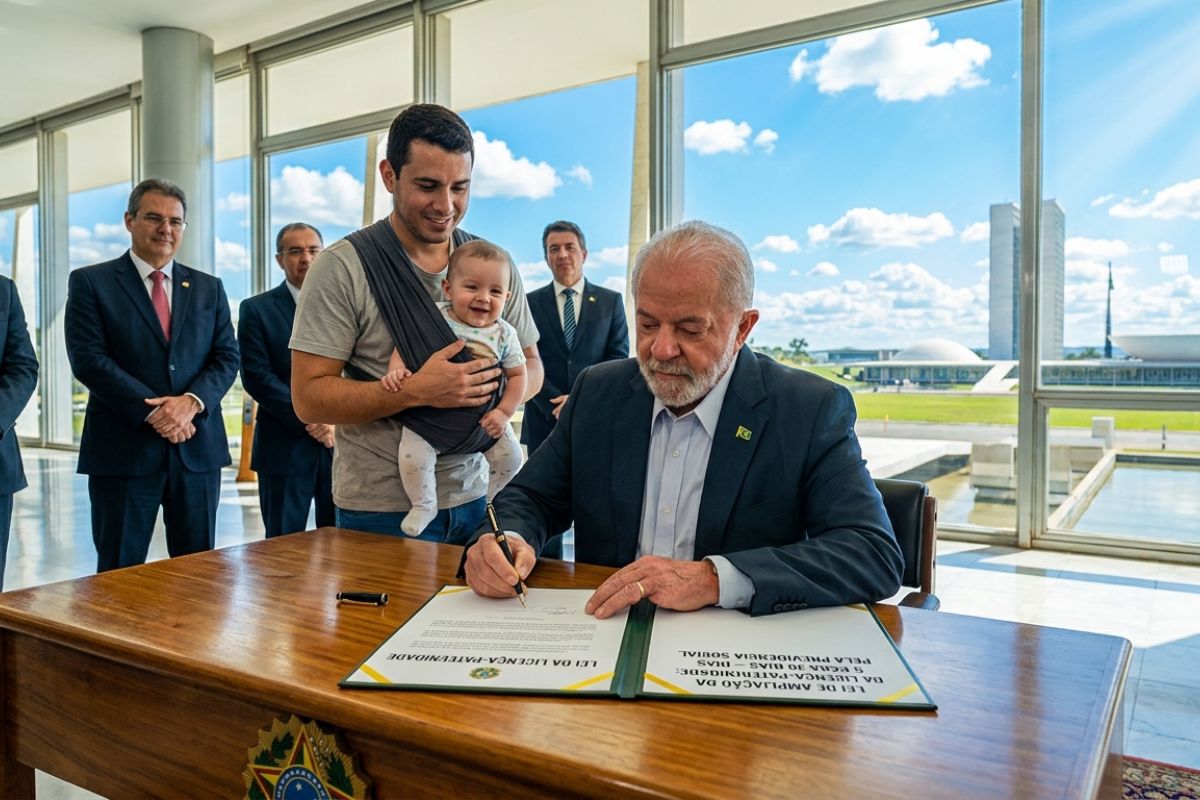
Government enacts new law: paternity leave increases from 5 to 20 days with gradual increases until 2029, and Social Security pays the paternity salary; companies no longer bear the absence cost, estimated at R$ 5.4 billion.
-
End of the 1-hour lunch break in the CLT? Current labor law maintains the break, allows for negotiated reductions, and defines rules for working hours and home office in Brazil.

During the consultation, the doctor requested a photo to assess the situation, and the employee sent an image that appeared to show symptoms of conjunctivitis.
Believing it was a photo of the patient herself, the doctor issued a medical certificate.
Days later, those responsible for the system suspected the authenticity of the image.
An internal investigation was opened and found that the submitted photo had a high similarity to images publicly available on the internet, raising suspicions of fraud.
Defense and Attempt to Reverse the Punishment
The worker denied having committed any serious act that justified the dismissal for just cause.
In her defense, she claimed that she never stated that the submitted image was of her own eye and made it clear that the photo represented only a situation similar to hers.
She also argued that there was disproportion in the punishment and a lack of immediacy in the application of the penalty, in addition to the absence of intent.
Thus, she requested the reversal of the just cause and the company’s condemnation to pay damages for moral and material damages.
Evidence and Testimonies Confirm Fraud
The rapporteur concluded that the testimonial evidence confirmed the fraudulent intent of the employee.
Witnesses reported that the employee had informed in advance that she would need to miss work to deal with personal matters. To justify her absence and avoid a negative hour deduction, she sought to obtain the certificate.
According to one witness’s testimony, the employee mentioned that she would take her dog to the veterinarian and would use a certificate to avoid having to make up the hours.
The same witness stated that the worker admitted to not having conjunctivitis and that she had fabricated the condition.
Decision Confirms Impropriety and Breach of Trust
The rapporteur considered the application of the maximum penalty legitimate, emphasizing that the employee committed an act of impropriety, characterized by dishonesty, abuse of trust, fraud, and bad faith with the aim of obtaining personal benefit.
For him, the conduct of the former employee compromised the essential trust for maintaining the employment relationship.
Marcelo Oliveira da Silva also emphasized that it was not up to the company to apply milder disciplinary measures and that the absence of immediacy was not sustained, as the dismissal occurred less than 30 days after the issuance of the certificate.
As a result, the Seventh Panel of TRT-MG upheld the ruling of the 2nd Labor Court of Betim, recognizing the just cause and denying the worker the right to payment of severance differences, as well as compensation for moral and material damages.










Seja o primeiro a reagir!