





 Portuguese
  English
  Spanish
  7 min of reading
  0 comments


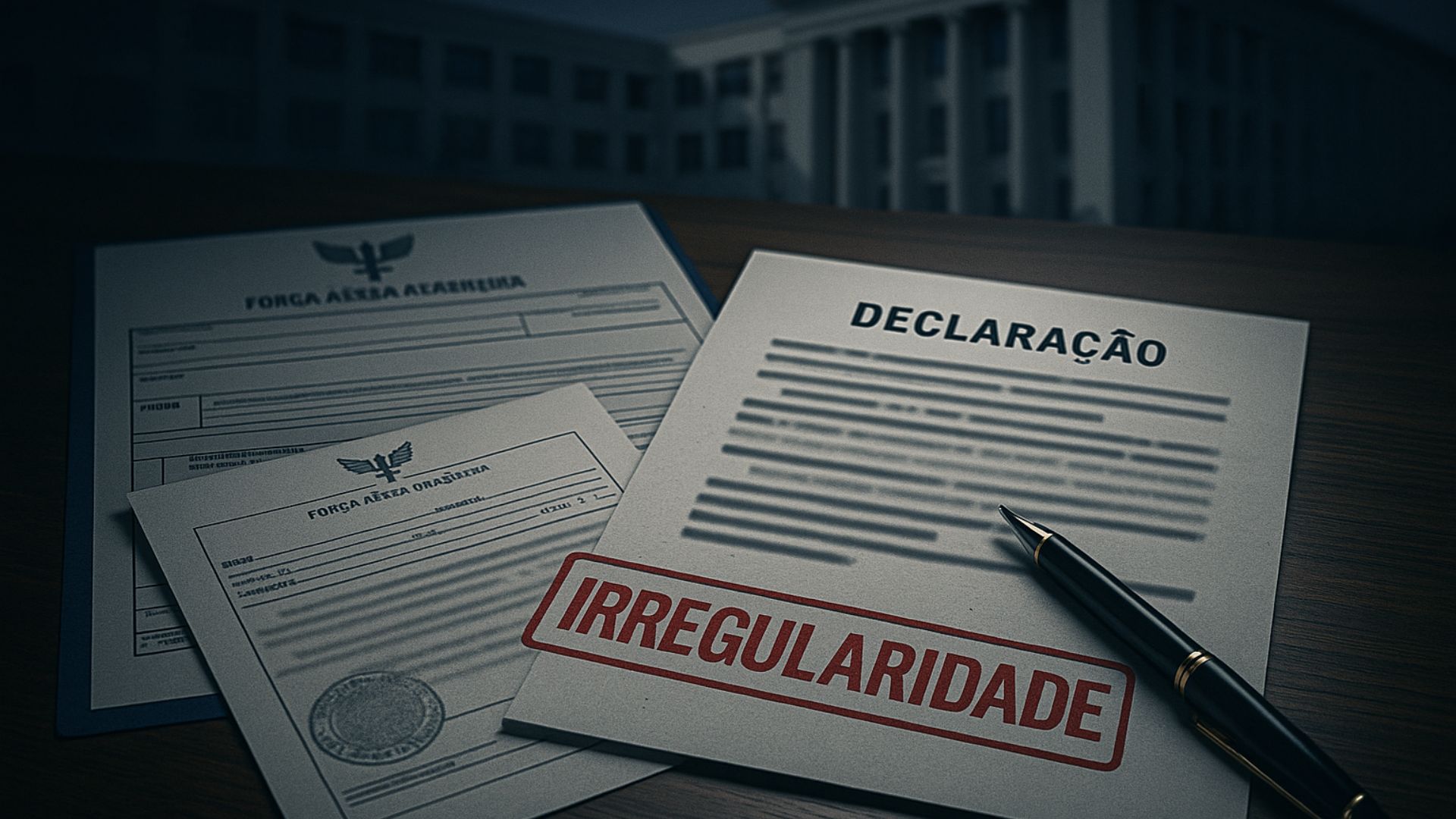
Case of Retired Aeronautics Doctor Reformed Due to Disability Exposes How Disability Assistance Works, When the Soldier Loses the Right to the Benefit and Why Military Justice Understands That Continuing to Work Can Characterize Fraud Against the Administration.
Being declared disabled for military service does not necessarily mean incapacity for any and all professional activities.
Many military personnel removed due to health issues continue their civil life in other positions, especially in areas with less risk or effort.
However, when there is a specific benefit tied to the idea of permanent disability, this boundary between what is permitted and what is prohibited is strictly controlled by legislation.
-
Furnas Airport is handed over to the Navy and becomes a strategic base with complete military operations, attack drones, and international mobilization at Furnas Lake.

-
Few people know, but “mega burst” attacks from the A-10 in the Middle East are intriguing analysts and even experienced former pilots of the U.S. Air Force.

-
Manufactured in Brazil and exported to Saudi Arabia and Malaysia, the ASTROS system is renamed as Fogos in 2026, gaining AI, cruise missiles with a range of 300 km, and air defense costing R$ 3.4 billion, transforming a launcher from the 1980s into the most ambitious multidomain platform in Latin America.
-
The largest military aircraft ever produced in Brazil, the KC-390 Millennium can carry up to 26 tons, refuel fighter jets in flight, and has already been exported to Europe and Asia, placing the country in the select group that designs and sells large military aircraft worldwide.


In the case of the Armed Forces, disability assistance is precisely one of those special allowances, aimed at those who have been reformed due to incapacity and require continuous care or specialized assistance.
From the moment the State pays an additional amount with this justification, it requires, in return, that the beneficiary does not engage in paid activity, whether in the public or private sector.
It was in this context that the Military Justice of the Union analyzed the conduct of a medical officer of the Aeronautics who, despite being reformed due to disability and receiving the corresponding assistance, continued to treat patients in civil life.
The case ended in a conviction for fraud against the Military Administration, a conviction reaffirmed by the Superior Military Court (STM) when judging the defense’s appeal and unanimously maintaining the lower court’s sentence based on Article 251 of the Military Penal Code.
How Disability Assistance Works for Military Personnel
The starting point for understanding these decisions lies in the regulatory framework of the benefit itself.
The Decree No. 4,307/2002, which regulates the remuneration of military personnel in the Armed Forces, provides that those receiving disability assistance must periodically present a declaration affirming that they do not engage in any paid activity, whether public or private.
This condition is essential for the continuation of payment.
Additionally, Law No. 11,421/2006 addresses disability assistance owed to military personnel in inactivity.
The regulation describes the allowance as intended for those, in addition to being reformed due to disability, who require permanent care or specialized assistance, reinforcing the exceptional nature of the benefit.
This is not a general advantage, but an increase justified by serious limitations to the ability to sustain oneself.
Therefore, the logic governing the institution is clear: the Administration pays more to those who, in theory, cannot work and need continuous help.
If the military returns to a regular professional routine, receiving remuneration for this work, the basis supporting the payment of the assistance ceases to exist.
It is precisely this contradiction that led the STM to classify certain conducts as the crime of fraud against the Military Administration.

The Case of the Aeronautics Doctor Who Continued Treating Patients
In the case reviewed by the STM, the medical officer had been reformed due to disability, with the right to disability assistance, after being considered unable to continue working in the health field within the Brazilian Air Force.
The formal condition of disability was the basis for granting the benefit.
However, while inactive, the same military personnel began practicing medicine in various locations in the civil sector, treating patients and receiving private pay.
At the same time, he continued to receive the disability assistance paid by the Aeronautics, accumulating the benefit with earnings from medical activity outside the barracks.
The appeal considered by the STM, registered under No. 7000320-74.2019.7.00.0000, specifically dealt with this accumulation.
The Court made it clear that the military was not judged merely for having been reformed, but for the acts committed after the reform, when he returned to work and, nonetheless, continued to receive the assistance as if he remained disabled for exercising paid activity.
False Declarations and Characterization of Military Fraud
The process revealed that the officer signed, on different occasions, declarations sent to the Military Administration in which he claimed not to engage in any paid activity.
These documents were required for the maintenance of the disability assistance and were presented even when the military was already regularly practicing in civil medicine.
For the STM, these declarations acted as deceptive means used to keep the Administration in error and ensure the continued payment of the benefit.
In practice, the documents aimed to reinforce the idea that the beneficiary continued without their own income, a situation incompatible with the reality established in the process.
Based on these elements, the Court classified the conduct under the criminal type of fraud against the Military Administration, as provided in Article 251 of the Military Penal Code.
The advantage obtained consisted of maintaining amounts that the military, in light of the resumption of medical activity, was no longer entitled to receive.
The decision emphasized that the core of the crime lies in the illegal accumulation of disability assistance with civilian remuneration, sustained by false information provided in official documents.
Another point highlighted by the ministers was that any defects in administrative control do not absolve criminal liability.
Even if internal oversight was insufficient, the Court understood that the decisive factor is the conscious behavior of the defendant, who, by signing the declarations, would have omitted the existence of income, unduly prolonging the receipt of the benefit.
Prohibition of Working While Receiving Disability Assistance
In examining the case, the STM also referred to the regulation of disability assistance itself, which explicitly prohibits engaging in remunerated activities for those receiving the benefit.
The Court noted that the prohibition is neither implicit nor a result of broad interpretation: it is stated directly in the regulations applicable to military personnel in the Armed Forces.
In this scenario, the Court concluded that the officer never truly met the requirements to maintain the benefit, as he maintained a regular work routine as a doctor in civil life while declaring that he did not engage in any paid function.
The formal condition of disability, therefore, did not coincide with the reality established in the records.
The summary of the public ruling, however, does not present details such as the exact value of the damage to the treasury or the precise period during which the military worked in civil medicine after the reform.
Therefore, these data are not reproduced here, precisely to avoid incorporating figures that are not clearly stated in the official documents made available to the public.
Another Precedent: Doctor Received Disability Benefits for Nearly 30 Years
The position of the STM is not limited to this isolated process.
In another widely publicized ruling by the Court itself, a former member of the Aeronautics, also a doctor in civilian life, had his conviction upheld for accumulating, for nearly three decades, disability benefits with remuneration from a public medical position in a municipality in the interior of Rio de Janeiro.
In this case, the former military personnel had been reformed due to disability after a cancer diagnosis, starting to receive disability assistance as a retired sergeant from the Air Force.
Years later, he took a position as a doctor in the municipal administration, where he remained in service for a long period, until retiring for time served in the civil sector.
The official STM news reports that the damages to the National Treasury were estimated at around R$ 235,500, without restitution to the treasury, and that the penalty applied was two years of imprisonment, with suspension, for the crime of fraud.
As in the case of the medical officer, the conduct involved signing annual declarations stating that the beneficiary did not engage in paid activity, when, in reality, he was working as a doctor in the municipal public system.
The defendant himself admitted to knowing the prohibition, even stating in court that he considered the decree prohibiting the accumulation of income to be “unjust.”
According to the case reporter, this justification did not remove intent; rather, it reinforced the awareness that there was a clear rule and that the choice was to keep the Administration in error to continue receiving undue amounts.
Pattern of Decisions: Focus on Fraud, Not on the Condition of Being Reformed
In both the case of the medical officer reformed due to disability who continued to treat patients in civil life and the precedent of the former corporal who worked as a doctor in a municipality for nearly 30 years, the STM noted that the central point is not the mere condition of reformed military personnel.
The decisive aspect lies in the combination of three elements: formal condition of disability, continuous engagement in paid activity, and presentation of official declarations attesting to the absence of any paid work.
This set of factors is what leads Military Justice to identify deliberate fraud, with the undue acquisition of economic advantage and harm to public finances.
By keeping the Administration in error through false or omitted documents, the beneficiary undermines the logic of disability assistance, originally designed for those who can no longer generate income on their own and depend on permanent care.









Seja o primeiro a reagir!