





 Portuguese
  English
  Spanish
  3 min of reading
  0 comments


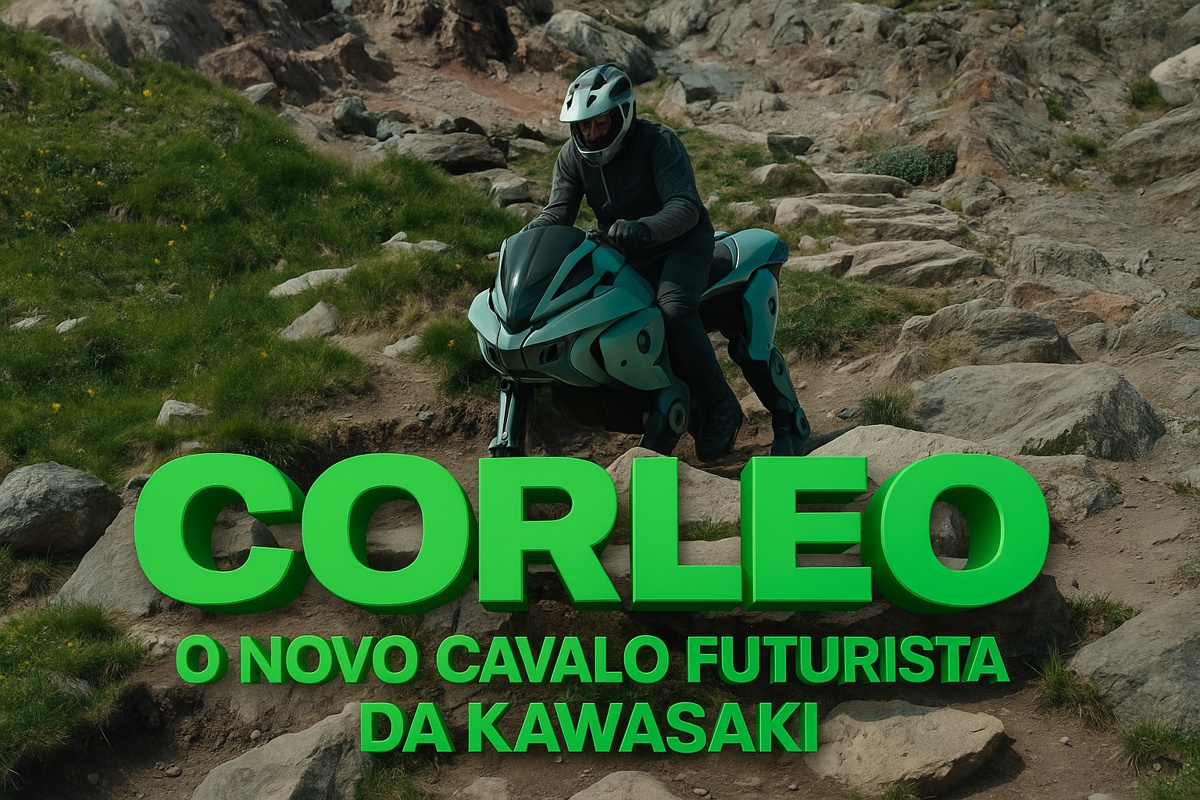
Futuristic Prototype Promises To Explore Extreme Terrain With Zero Emission
A bold innovation that could revolutionize the way of moving in challenging terrains was presented by Kawasaki Heavy Industries on April 3, 2024. The Corleo, a quadruped horse robot powered by hydrogen, was confirmed as a highlight for the Expo Osaka-Kansai 2025 in Japan. Furthermore, the project aims to create a new category of clean mobility using technology that virtually eliminates pollutants.
With this, the Corleo, inspired by a futuristic horse, was showcased in a video on the official Kawasaki channel, which has already garnered nearly 1 million views, as reported by Kawasaki Heavy Industries. However, even with public success, the prototype is still in the experimental stage. Therefore, its actual mobility is limited to posture and balance adjustments.
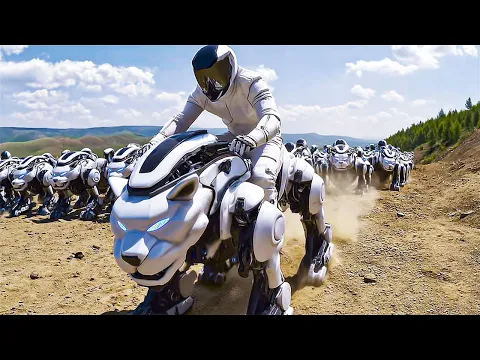

Technical Study Details Every Aspect
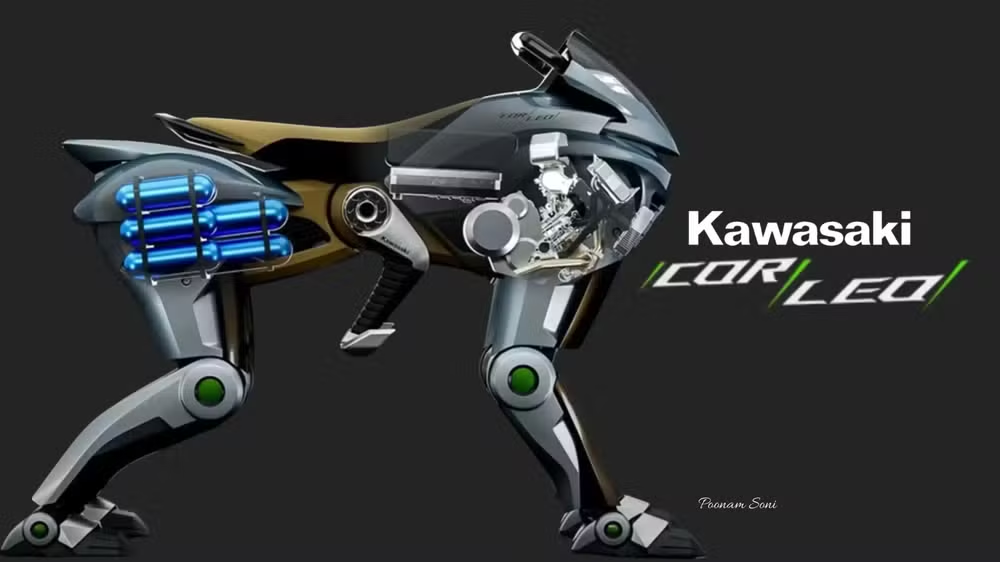
To understand its operation, specialized engineers developed a 150 cc engine, fueled by compressed hydrogen tanks. These tanks, made with reinforced materials, store gas at 350 or 700 bar. Thus, they ensure greater autonomy than traditional batteries.
-
The coldest region of Brazil will experience very hot weather in the first days of April, with maximum temperatures reaching up to 35 degrees in Rio Grande do Sul, and only in the last week of the month an intense cold front is expected to finally lower the temperatures in the South and Southeast.

-
Goodbye common refrigerator: essential appliance starts to gain competition with technology that preserves food for longer and reduces waste.

-
Germany discovers how to reuse old window glass without melting anything and can transform 220,000 tons per year into new high-performance panels, using material from nearly 150 million old windows that would be discarded.
-
China creates hypersonic engine that can make planes and missiles fly more than 6 times the speed of sound with less weight, more range, and without system change.


Moreover, hydrogen is injected into a internal combustion engine, similar to conventional vehicles. In this way, a rapid combustion occurs that moves pistons and generates mechanical force. Therefore, the main residue is water, making the environmental impact very low. As Kawasaki explained in April, this solution uses already available infrastructure, accelerating research.
Clean Mobility Gains Momentum
Currently, according to Journals Nikkei Mobility & Tech, hydrogen mobility is advancing rapidly. Meanwhile, the Corleo demonstrates how the combination of clean combustion and robotics can create new possibilities for sustainable transport.
To ensure safety, the Corleo features rubber hooves on its legs, inspired by real horses. With this, there is more traction and impact absorption, essential in rugged terrains. Thus, the robot promises access to locations that regular vehicles cannot reach.
Riding Simulation
In practice, the rider uses reins and stirrups to control movement. Additionally, a digital dashboard provides data such as humidity, center of gravity, and navigation in real-time. Meanwhile, LED projectors illuminate the path in low-light areas. According to Kawasaki, intelligent algorithms automatically adjust balance.
For this, sensors distributed throughout monitor the ground and help correct posture. Thus, the Corleo maintains stability even on uneven trails.
Kawasaki’s Vision for the Future
So far, Kawasaki emphasizes that the Corleo is only a concept. Therefore, there are no plans for mass production. However, the company highlights the potential to open new frontiers in sustainable mobility.
According to the official statement, “Corleo represents an unprecedented category of mobility device, allowing the exploration of previously inaccessible areas safely,” Kawasaki stated in April. For experts, projects like this show that the dependency on fossil fuels is steadily decreasing.
Environmental Impacts and Challenges
Meanwhile, the use of hydrogen, according to Nikkei Mobility & Tech, ensures virtually zero emissions. However, experts warn that there are still challenges, such as refueling infrastructure and maintenance. Therefore, partnerships with universities and research centers are essential, as detailed by the Kawasaki team in April interviews.
Summary of Technical Aspects
- Pressurized tanks, reinforced and lightweight, store hydrogen at 350–700 bar.
- 150 cc internal combustion engine, adapted for hydrogen.
- Articulated robotic legs, with rubber hooves for impact absorption.
- Digital dashboard displaying technical data in real-time.
- LED projectors, useful in low-light environments.
- Reins and stirrups, which simulate the feeling of riding a real horse.
Highlight at Expo Osaka-Kansai 2025
Therefore, the Corleo will be showcased as an attraction at the Expo Osaka-Kansai 2025, an event to be held in April 2025 in Japan. Moreover, experts believe that the project may inspire new research in off-road vehicles, ground drones, and automated exploration.
What Lies Ahead?
Just as major mineral discoveries transform economies, projects like the Corleo point the way to a cleaner mobility. However, the question remains: when will we see a hydrogen-powered horse robot in practical use?
Meanwhile, Kawasaki assures that the focus will be on maintaining safety, efficiency, and sustainability. And you, do you believe that this revolution should be accelerated or approached with caution? Leave your opinion!!







Seja o primeiro a reagir!