






 Portuguese


Kia Cadenza 2012 Offers Nearly 5 Meters of Luxury, V6 Engine, and Automatic Transmission at Roughly R$ 59,300.
At approximately R$ 59,339 in the August 2026 FIPE Table, the Kia Cadenza 2012 holds a unique position in the Brazilian used car market. This South Korean imported executive sedan costs almost R$ 36,000 less than the R$ 95,290 suggested retail price of the Hyundai HB20 Limited 1.0 manual 2026/2027, but belongs to an entirely different category: it measures 4.96 meters, has a wheelbase of 2.84 meters, and features a naturally aspirated 3.5-liter V6 engine capable of producing 290 hp.
The price difference is striking but also reveals the impact of depreciation on older imported executive sedans. When it arrived in Brazil in 2011, the Cadenza started at R$ 119,900 and competed with models like the Toyota Camry, Honda Accord, Hyundai Azera, and Ford Fusion.
Fifteen years later, it can be found for prices lower than many new compacts, retaining characteristics of a vehicle designed to offer space, performance, and comfort above the average.
-
Honda and Nissan Collaborate on Vehicle ‘Brains’ to Share ECUs, Operating System, and Control Software by 2029

-
End of an Era: 14 Cars Discontinued in 2026; Check if Yours is Among Them

-
Hyundai Recalls Cars from China and India to Boost Sales in Brazil
-
Cheaper than a new Argo and Onix: 2018 Hyundai Creta Pulse Plus with striking design, 1.6 flex engine, delivers torque of 16.5 kgfm, 6-speed automatic transmission, 431-liter trunk, and 17-inch wheels for around R$ 82,000


Kia Cadenza 2012 Priced Around R$ 59,300 in FIPE
Webmotors’ reference for August 2026 lists the Kia Cadenza 3.5 V6 automatic 2012 at R$ 59,339 in the FIPE Table.
The average price observed by the platform was R$ 62,140, while the listings reviewed by Webmotors ranged from approximately R$ 52,900 to R$ 75,000, indicating that the condition, mileage, and maintenance history create significant price variations among units.

This price range highlights the contrast with much smaller new cars.
The HB20 Limited 1.0 manual 2026/2027 has a suggested retail price of R$ 95,290. Considering the FIPE price of the Cadenza, the difference is around R$ 36,000.
This doesn’t imply that they are direct competitors. In reality, the comparison illustrates the significant depreciation a large executive sedan can undergo after more than a decade.
Nearly Five Meters Places the Cadenza in a Different Category
The 2012 Cadenza measures 4,965 mm in length, 1,850 mm in width, and 1,475 mm in height. The wheelbase is 2,845 mm, providing a spacious cabin for up to five passengers. The trunk has a capacity of 451 liters, while the fuel tank holds 70 liters.
When it launched in Brazil, its wheelbase exceeded the figures then reported for several major competitors.


In 2011, UOL highlighted that the Cadenza had a longer wheelbase than the Honda Accord, Ford Fusion, Toyota Camry, Hyundai Azera, and Sonata of that era, trailing behind the Chevrolet Omega among the compared models.
The weight also indicates its category, weighing approximately 1,655 kg, almost 1.7 tons before accounting for passengers and luggage.
V6 3.5 Engine Delivers 290 hp Without Turbo
Under the hood lies perhaps the main selling point for those considering a used Cadenza.
The engine features 3,470 cm³, six cylinders in V, 24 valves, and natural aspiration. The maximum power reaches 290 hp at 6,600 rpm, while the torque peaks at approximately 34.5 kgfm at 5,000 rpm.
There is no turbocharger.
The performance comes from the high displacement and the V6 setup, a configuration increasingly rare in passenger cars sold in Brazil.
The block is made of aluminum and features variable valve timing. The distribution uses a chain, while the fuel delivery is accomplished via multipoint injection.
All power is sent to the front wheels.
Automatic Transmission Has Six Gears
The V6 is paired with a six-speed automatic transmission, offering the option for manual gear selection.
For the early 2010s, it represented a setup consistent with what was expected from a large executive sedan.

The Cadenza wasn’t designed as a pure sports sedan. The priority was to combine strong responses with smooth operation and low noise levels during trips.
Even so, the numbers show that there was plenty of performance available.
The technical sheet consulted reports an acceleration of 0 to 100 km/h in approximately 7.7 seconds and a top speed of 230 km/h.
These figures remain respectable for a 1,655 kg sedan produced over a decade ago.
Independent Suspension on All Four Wheels Reinforces Executive Proposal
The suspension system also follows the expected architecture of a large sedan. At the front, the Cadenza uses an independent McPherson system. At the rear, there is an independent multilink configuration, a more sophisticated solution than the torsion axles found in many compact cars.
The brakes use discs on all four wheels, ventilated at the front.
The original wheels for the 2012 versions were made of alloy, fitted with 225/55 R17 tires in configurations recorded in Brazilian technical sheets.
The overall goal was to prioritize stability and comfort, especially on long road trips.
Equipment Reminds Us It Started as a Luxury Car
The current price may position it close to popular used cars, but its list of features was created for a different segment.
At its Brazilian debut, the entry-level configuration already offered items such as remote keyless entry, leather-trimmed seats, power adjustments, dual-zone digital climate control, seat heating, rain and light sensors, and parking sensors.
There were also xenon headlights, LED lights, an electric rear blind, and external mirrors with folding capability.
Some versions added a dual sunroof, with electric opening in the front area and a panoramic section for rear passengers.
In 2011, this package helped justify prices that reached R$ 124,900 or R$ 127,900 depending on the configuration.
Safety Features Were Extensive for Its Time
The Cadenza arrived equipped with various features that were not common in the Brazilian market at that time.
The list announced at launch included front, side, and curtain airbags, ABS brakes, electronic brake distribution, and electronic stability control.
Seatbelts with pre-tensioners and active headrests were also part of the package. These features help explain the car’s standing when new.
It was not a conventional mid-size sedan. The Cadenza replaced the Opirus as Kia’s top model at that time and attempted to attract consumers used to large imported sedans.
Fuel Consumption Reflects the Cost of Powering a 290 HP V6
The low purchase price does not make the Cadenza an economical car. The technical specifications record approximately 6.9 km/l in urban use and 9.7 km/l on highways with gasoline, numbers consistent with a sedan weighing almost 1.7 tons and equipped with a naturally aspirated 3.5-liter V6 engine.
During a review published by UOL at the time of launch, the vehicle showed that more aggressive driving could significantly reduce efficiency.
This means that the R$ 59,000 reference value only tells part of the story.
Anyone considering a used Cadenza needs to account for fuel, insurance, tires, parts, and maintenance costs compatible with an older imported executive sedan.
Maintenance Requires More Attention Than the Purchase Price Suggests
Here is where the comparison with a new HB20 reaches its most significant limit. A new hatchback offers warranty, widely available parts, and predictable maintenance costs.
The 2012 Cadenza has more complex technology, a V6 engine, and components associated with a vehicle that was originally expensive and low in sales volume in Brazil.
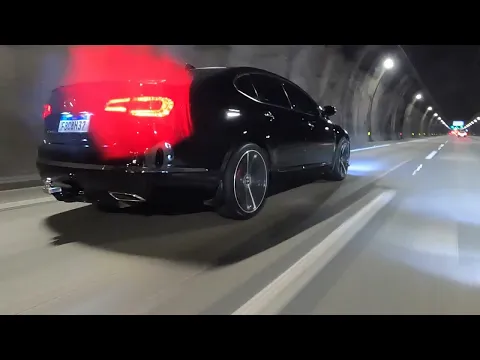
The current value of the car has dropped significantly. However, the price of parts has not necessarily followed the same trend.
Before buying, the maintenance history, operation of the automatic transmission, suspension, electrical system, air conditioning, sunroof when present, and condition of the engine need to be carefully evaluated.
A low-cost unit that has accumulated overdue maintenance can quickly consume the financial difference gained from the purchase.
Depreciation turned a R$ 120,000 sedan into a R$ 59,000 car
The historical contrast is significant. When it officially landed in Brazil in 2011, the initial configuration cost R$ 119,900. Higher versions reached R$ 124,900 and R$ 127,900.
In August 2026, the 2012 model appears in FIPE for R$ 59,339.
The nominal comparison does not account for inflation, so it does not represent a real loss of value in economic terms. Still, it shows how market positioning has changed.
The car that was born as an alternative to the Camry, Accord, Azera, and Fusion currently appears for a value lower than the suggested price of various new compact hatchbacks.
Cadenza delivers a lot of car for little money, but demands more later
The 2012 Kia Cadenza represents a well-known phenomenon in the used market: large executive sedans can lose their purchase value quickly while retaining engines, dimensions, and features originally developed for a higher segment.
For about R$ 59,3 thousand in FIPE, the buyer gets nearly five meters of body length, a 2.845-meter wheelbase, a 451-liter trunk, independent suspension on all four wheels, and a 3.5-liter V6 engine producing 290 hp connected to a six-speed automatic transmission.
The price is approximately R$ 36,000 below the suggested retail price of R$ 95,290 for a 2026/2027 HB20 Limited 1.0 manual.
However, the difference does not make the Cadenza a rational alternative for any buyer. It consumes more fuel, uses components from an imported executive car, and requires a much more rigorous analysis of the unit’s history.
It is precisely this contrast that makes the model so unusual in the Brazilian used market: the price has dropped to the territory of compact cars, but the size, the 290 hp V6, the interior space, and much of the mechanical complexity still belong to a sedan that was born to compete for buyers in a much higher category.


