





 Portuguese
  English
  Spanish
  5 min of reading
  0 comments


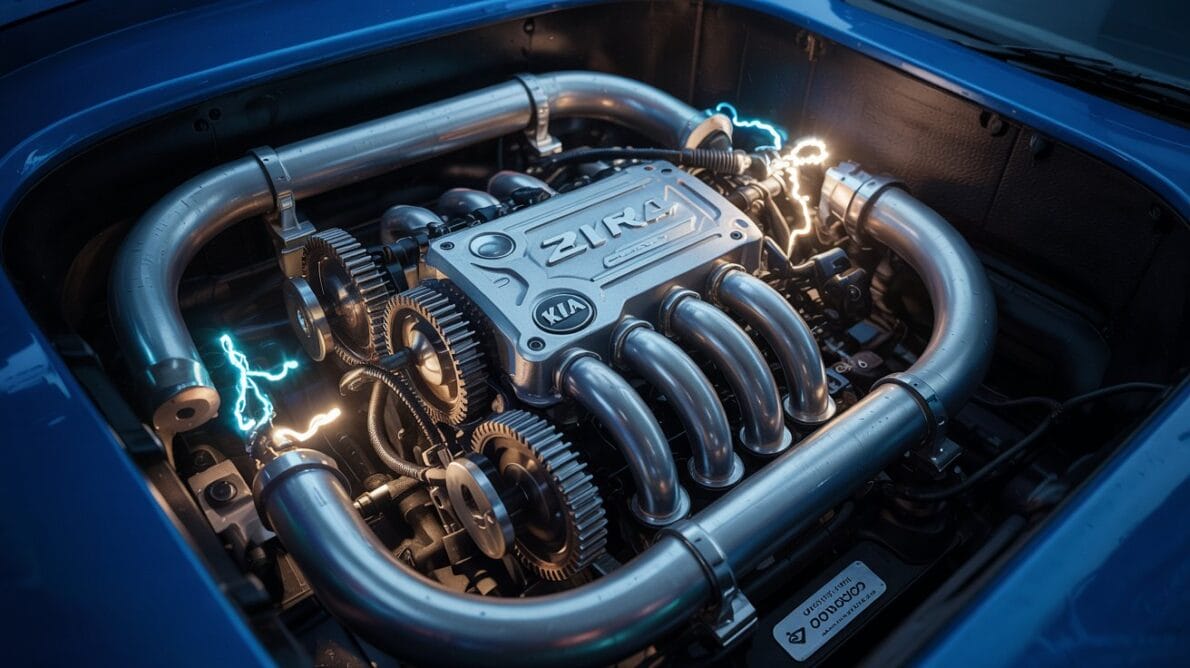
Kia Surprises The Market By Launching A New 2.5 Turbo High-Efficiency Engine Amid The Advancement Of Electric Cars, Challenging Global Trends And Betting On Hybrid Solutions And Extended Range To Maintain Presence In Diverse Strategic Markets.
In a move considered bold amid the global trend towards electrification, Kia revealed a new internal combustion engine during Investor Day 2025, reaffirming its commitment to hybrid solutions and extended range.
The decision attracted attention for going against the grain of many automakers, who are currently focusing their investments exclusively on 100% electric (EV) vehicles.
The new 2.5 turbo high-efficiency engine is aimed at hybrid models and electric vehicles with extended range (EREVs), a segment that has gained traction by offering the freedom of combustion with the benefits of electrification.
-
Less than a Tera TSI, up to 710 km of range and charging in 9 minutes: the new BYD Song Ultra expands the Chinese brand’s bet on increasingly faster, more technological, and competitively priced electric SUVs.

-
With a cost per shot close to zero, the DragonFire laser could change naval warfare in 2027 and provide British ships with nearly unlimited defense against drones.

-
A British startup creates tires that generate electricity in electric vehicles when passing over potholes, speed bumps, and cracks.

-
Scientists have created robots made with living cells that have their own nervous system, swim on their own, explore the environment, and self-organize without any genetic engineering, and now they want to do the same with human cells.


According to the South Korean brand, the engine delivers gains of 12% in power and 5% in thermal efficiency compared to previous versions used in models such as the Sorento and K5.
Engine Is Part Of A Modular And Versatile Strategy
Although Kia’s CEO, Ho Sung Song, did not disclose detailed specifications about the new engine, information presented during the event indicates that it will be part of a new family of modular powertrains.
This will allow the brand to adapt the engine to different types of vehicles and markets, while maintaining a focus on efficiency and performance.
The modularity also suggests that Kia will be able to integrate it with a new generation of hybrid transmissions and optimized drivetrain systems, further expanding usage possibilities.
This new family of engines not only supports the automaker’s strategy of multiple solutions but also anticipates trends for markets where full electrification still faces infrastructure barriers.
According to automotive industry analysts, Kia’s decision reinforces a pragmatic view on energy transition, balancing innovation and commercial reality.
In many countries—including Brazil—the penetration of electric vehicles still encounters costs, limited incentives, and insufficient charging networks.
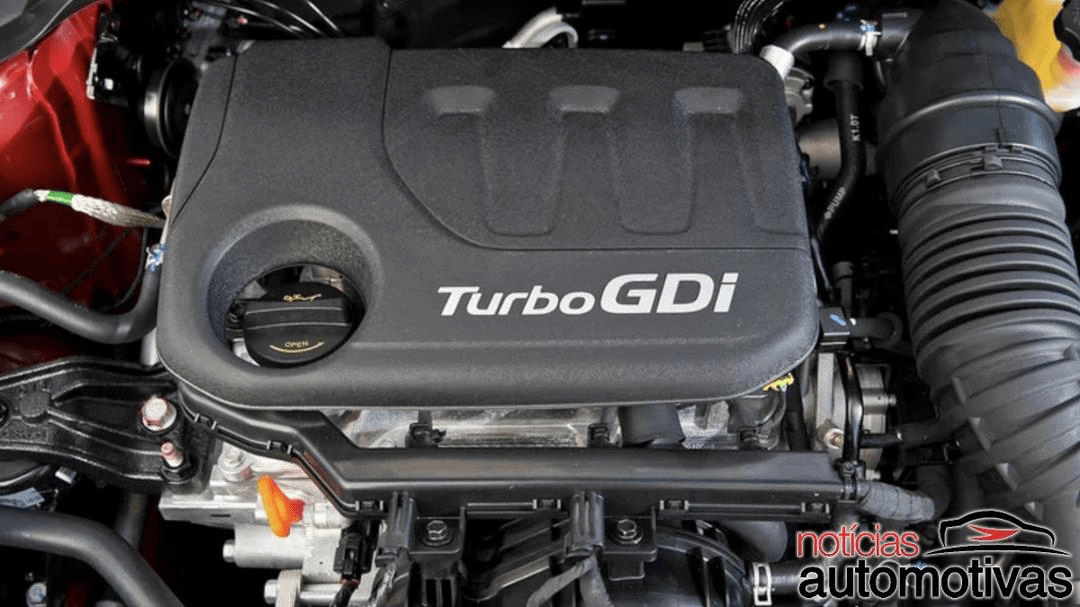
Engine Output Should Exceed 330 HP With Electric Support
Based on the characteristics of current models using the 2.5 turbo engine, such as the K5 GT and Sorento SUV, experts estimate that the new version could easily surpass 330 horsepower when paired with electric motors.
Furthermore, Kia promises noticeable improvements in the transition between combustion and electric propulsion, a crucial feature for performance and comfort in urban and highway driving.
The automaker also claims that acceleration will be more responsive and smooth, increasing competitiveness against hybrids from brands like Toyota and Honda, which currently lead this niche.
This new engine will be incorporated into a new platform designed for EREVs, vehicles that use the combustion engine solely as an energy generator, while the drivetrain is powered by electricity.
This concept, adopted by automakers like Nissan and BMW in some markets, ensures excellent energy efficiency and lower emissions in urban travel.
Kia Has Ambitious Growth Targets Until 2030
In addition to the technical announcement, Kia presented bold targets for its global expansion, aiming for a 4.5% share of the global automotive market by 2030.
To achieve this, the company plans to reach annual sales of 4.19 million units, a significant leap from its current capacity of 3.63 million.
Of this total, 1.26 million vehicles will be purely electric, while hybrids and EREV models will total 1.07 million.
In other words, more than half of the projected sales will involve some form of electrification, consolidating Kia’s multi-solution strategy.
Five New Models And Expansion In Strategic Markets
To achieve this target, the automaker will launch five new global models in 2025, in addition to restyling existing vehicles and creating three new variants.
One of the most anticipated launches is for a dedicated electric pickup truck for the North American market, with projected sales of up to 90,000 units per year.
Kia will also increase production of medium and large electric SUVs in the Americas and strengthen its lineup of compact and hatchback cars in Europe, where the demand for smaller and more economical cars remains high.
This diversification demonstrates that the company wants to be present in all segments, betting on both innovation and regional adaptability.
According to the company, production will be decentralized and adjusted based on local demands, which should also reduce logistics costs and emissions in vehicle transportation.
The strategy has already been adopted by other Asian automakers and has proven effective, especially in light of the growing environmental requirements in European countries.
Technological Realism In An Energy Transition Scenario
By maintaining significant investments in next-generation combustion engines, Kia sends a clear message to the market: total electrification is still not feasible on a global scale.
While pure electric vehicles represent the future, the transition requires intermediate solutions that meet the current conditions of consumers and infrastructure in each country.
The combination of efficient turbo engines with partial electrification offers high performance, lower consumption, and reduced emissions, without solely relying on charging networks, which are still limited in many areas.
In an interview with the South Korean portal Hankyung, a company spokesperson stated that “technological diversification is essential to ensure competitiveness in a transforming world.”
This statement encapsulates the logic behind the new engine: it is not about regression, but rather about a pragmatic evolution to meet a plural market.
The Automotive Sector Reconsiders The Exclusivity Of Electrics
While brands like Tesla, BYD, and Volvo remain committed to pure EVs, other manufacturers are starting to rethink their strategies, reevaluating the viability of combustion engines in emerging and rural markets.
Toyota, for example, has never abandoned hybrids and is now reaping the rewards of a gradual transition.
Kia’s decision could serve as an example for other automakers looking to balance innovation, sustainability, and commercial viability.
In an industry marked by rapid transformations, finding this balance may be the key to success in the coming decade.
What do you think? Do you believe combustion engines still have a place in the future, or is the era of electrics already irreversible? Share your opinion in the comments!





Seja o primeiro a reagir!