





 Portuguese
  English
  Spanish
  5 min of reading
  0 comments


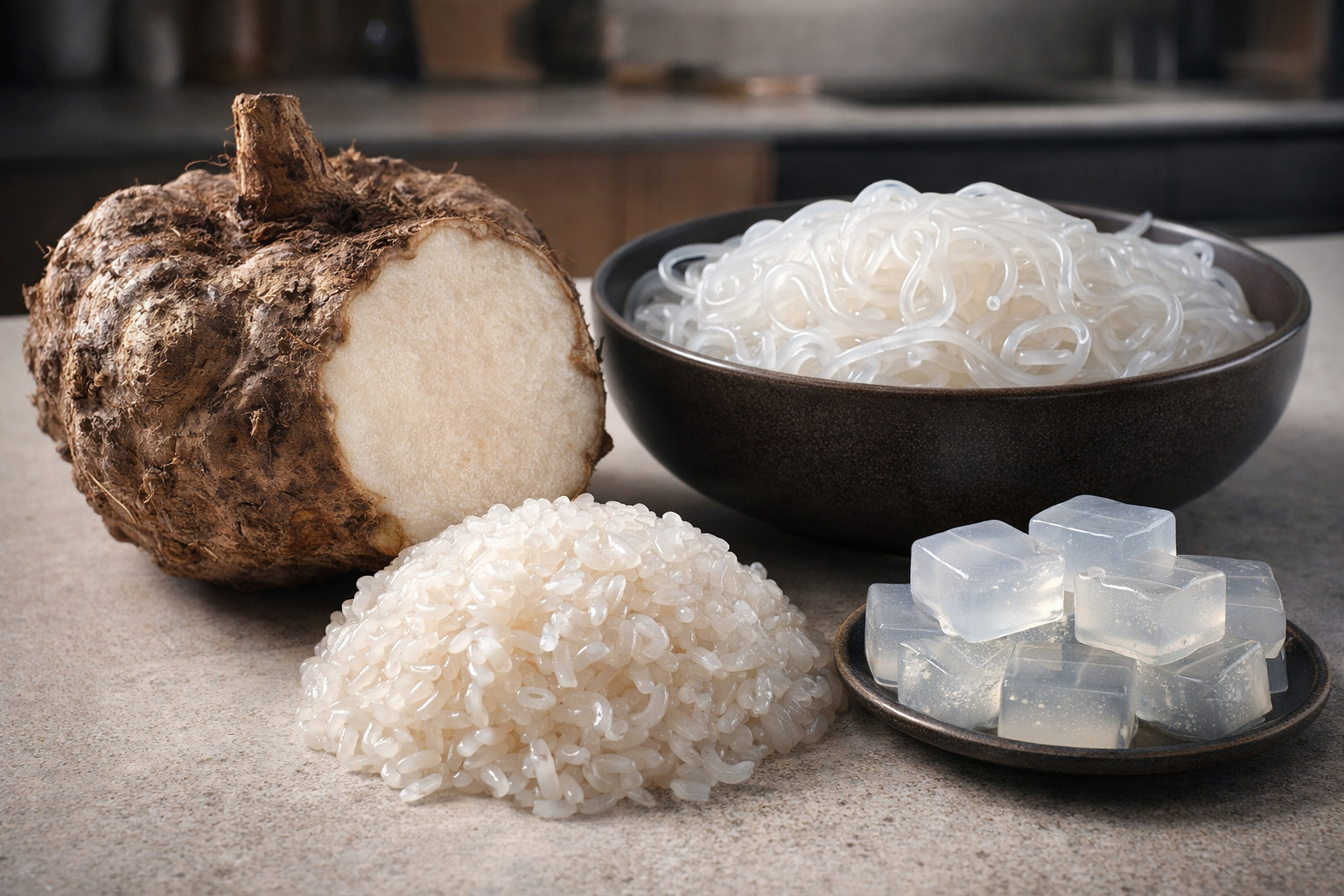
Konjac is an Asian root rich in glucomannan that forms gel in the body and gives rise to foods that are almost calorie-free.
The tuber of the species Amorphophallus konjac, popularly known as konjac, has been used for centuries in the diet and in traditional preparations in Asian countries such as Japan, China, and South Korea. In recent years, however, it has gained global prominence due to a specific characteristic: the ability to give rise to foods with very low caloric density, especially in fiber-rich formulations that increase the volume of food without proportionately raising the energy value.
This unusual combination has attracted the attention not only of consumers but also of researchers and the food industry, which have begun to explore konjac as a base for a new generation of food products. In recent scientific reviews, the ingredient is described as an increasingly used raw material in functional foods and food additives, precisely because of its technological properties and its behavior in the digestive tract.
The main compound responsible for this behavior is glucomannan, a highly viscous soluble fiber that exhibits unique physical and chemical properties when in contact with water. According to a review published in the journal Current Research in Food Science, the high hydration capacity and increased viscosity of glucomannan help to enhance satiety, as well as delay gastric emptying and modify the texture of the foods in which it is incorporated.
-
Hidden in a 75-hectare forest within a university in Minas Gerais, a newly discovered fungus reprograms the brains of spiders, turns the victims into obedient zombies, and forces them to die exactly where it needs to spread its spores.

-
The largest oil field in the United States had entire layers that no one knew existed, and the U.S. government has just confirmed 1.6 billion barrels hidden in rocks that have been invisible for decades.

-
A British startup has just done what no private company has achieved before: igniting plasma inside a nuclear fusion-powered rocket engine, and if it works at scale, trips to Mars could take weeks instead of months.

-
Technology created by a Brazilian identifies signs of autism in babies from 4 months old using a low-cost kit that is based on the observation of gaze in response to visual stimuli.

Glucomannan can absorb dozens of times its own weight in water
Glucomannan, extracted from the konjac root, is considered one of the dietary fibers with the highest known water absorption capacity.
When hydrated, it can absorb up to 50 times its own weight in water, forming a dense and voluminous gel. This characteristic is central to understanding how konjac works within the body and in derived foods.
When ingested, glucomannan:
- increases in volume in the digestive tract
- delays gastric emptying
- contributes to a prolonged feeling of satiety
This physical behavior transforms a small amount of substance into a significant volume within the digestive system.
Foods derived from konjac practically have no calories
From this property, various konjac-based foods have emerged, including:
- “shirataki” noodles
- konjac rice
- gelatins and desserts
- alternative pastas
These products share a common characteristic: they are predominantly composed of water and fiber, resulting in very low caloric value.
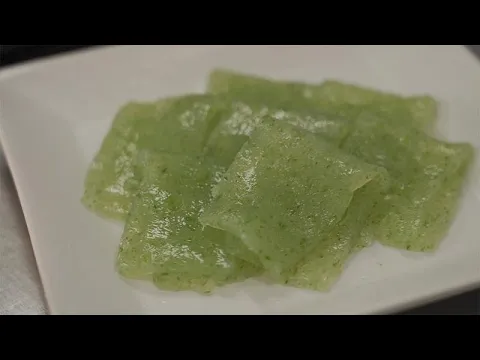

In some cases, whole servings contain less than 20 calories, a value much lower than that of equivalent traditional foods, such as wheat-based pastas. This occurs because glucomannan is not fully digested by the body, contributing little to caloric intake.
Traditional use in Asia dates back centuries of food consumption
Although it may seem like a recent innovation, konjac has long been used in Asian cuisine. In Japan, for example, it is the base of foods like konnyaku, a gelatinous block consumed in soups and traditional dishes. In China, its use is also associated with everyday food and traditional medicine.
This history reinforces that the consumption of the plant is not experimental but rather consolidated over generations.
One of the most visible applications of konjac is in creating substitutes for traditional foods. Shirataki noodles, for example, are produced from hydrated glucomannan, resulting in translucent strands with an elastic texture.
These products differ significantly from conventional pastas:
- do not contain gluten
- have a gelatinous structure
- have low energy content
The characteristic texture is a direct result of gel formation, which maintains cohesion even with a high water content.
The food industry uses konjac to develop low-calorie impact products
With the increasing demand for foods with lower caloric density, the industry has begun to incorporate konjac into different formulations. Glucomannan is used as:
- thickener
- stabilizer
- water retention agent
These properties allow for the creation of products with greater volume and lower energy content, which significantly alters the final nutritional composition.
The effect on the body is linked to physical interaction rather than chemical
Unlike substances that act through complex chemical reactions, the effect of konjac is directly related to its physical behavior. The formation of gel in the digestive tract modifies the dynamics of digestion, influencing: the speed of nutrient absorption, the feeling of gastric fullness, and the metabolic response after a meal.
This mechanism is widely studied in research on soluble dietary fibers. And although it is widely used, konjac requires specific care in consumption.
Due to its high expansion capacity, it is recommended to be ingested with an adequate amount of water. In concentrated forms, such as capsules or supplements, improper use can pose a risk.
Therefore, regulatory bodies in different countries have already established guidelines for the safe consumption of glucomannan.
Recent popularity is linked to the search for low-calorie foods
The growth of konjac in the global market is associated with changes in eating behavior. Consumers have been seeking alternatives that:
- reduce caloric intake
- maintain food volume
- offer new substitution options
In this context, konjac stands out for bringing together rare physical characteristics in a single ingredient.
The plant represents an example of how natural properties can transform foods
The case of konjac illustrates how a plant with specific properties can give rise to broad applications in food.
The ability to absorb water and form gel not only alters the structure of foods but also redefines how the body interacts with them.
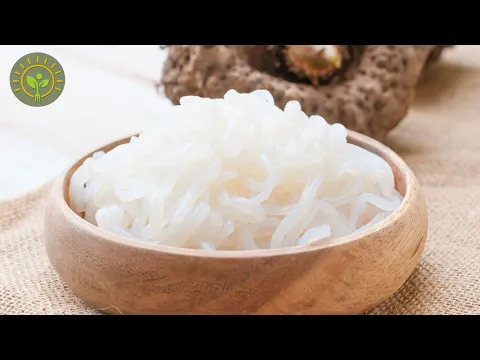
This type of transformation shows how natural ingredients can be explored to create new food categories.
With the growth of konjac-derived foods, a relevant discussion arises: to what extent can the eating experience be modified by ingredients that alter texture, volume, and the perception of satiety without increasing caloric load?
As new technologies and ingredients continue to be developed, konjac becomes a concrete example of how science and food can converge to create products that challenge traditional standards and expand the possibilities of what is understood as food.







Seja o primeiro a reagir!