





 Portuguese
  English
  Spanish
 6 min of reading
  0 comments


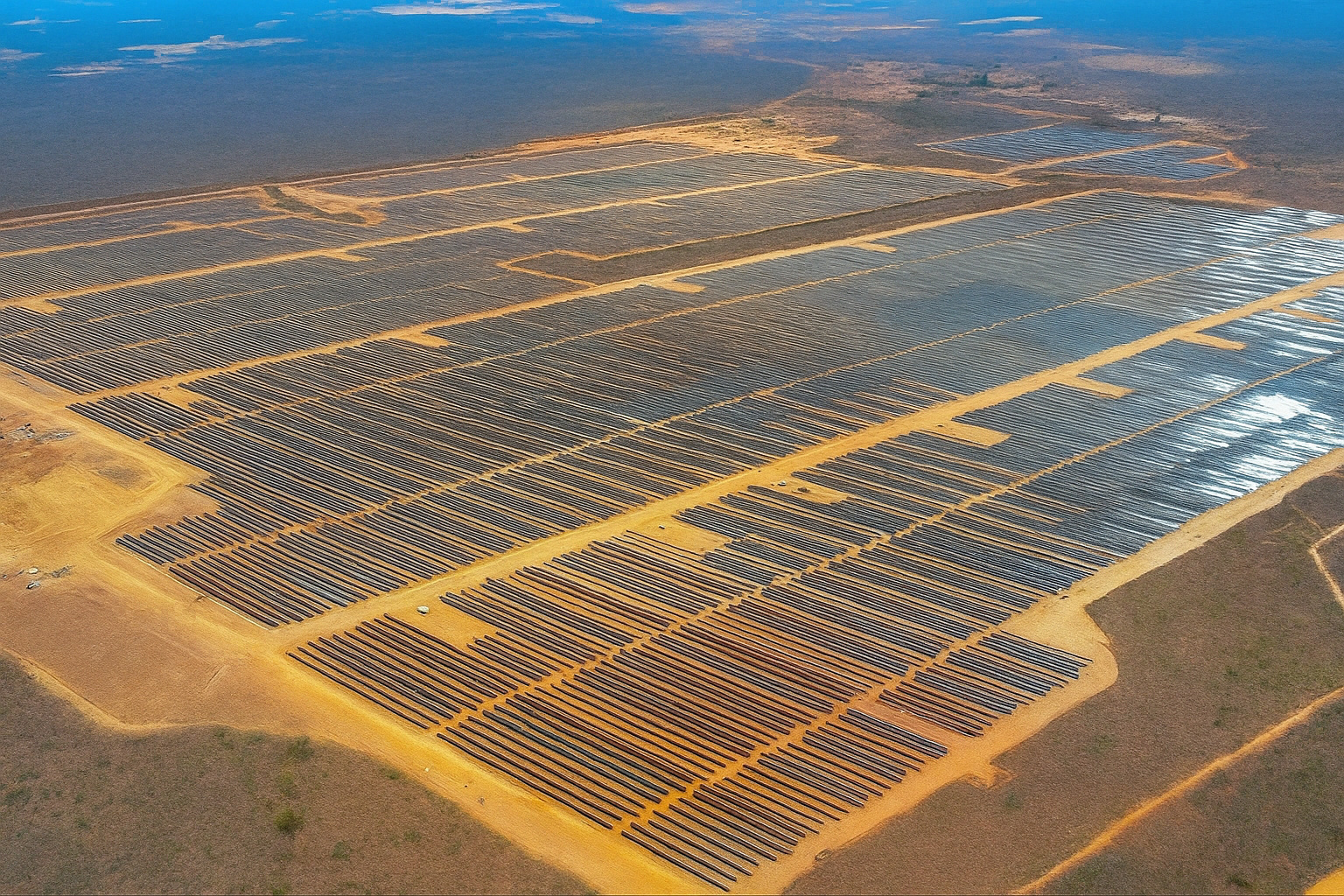
Discover How the Arapuá Photovoltaic Complex Advances Solar Generation and Strengthens Ceará as a Strategic Hub for Renewable Energy.
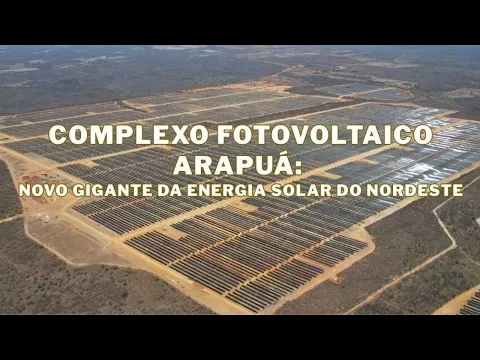
Kroma Energia, one of the most relevant companies in the solar energy sector in Brazil, recently completed the installation of the Arapuá photovoltaic complex, located in Jaguaruana, Ceará.
Moreover, this project marks a significant advancement in the history of solar generation in the Northeast, not only due to its scale but also because of the economic, technological, and environmental impact it brings to the region.
With 388,800 modules spread over an area equivalent to 644 soccer fields, the Arapuá photovoltaic complex has an installed capacity of 247 MWp.
-
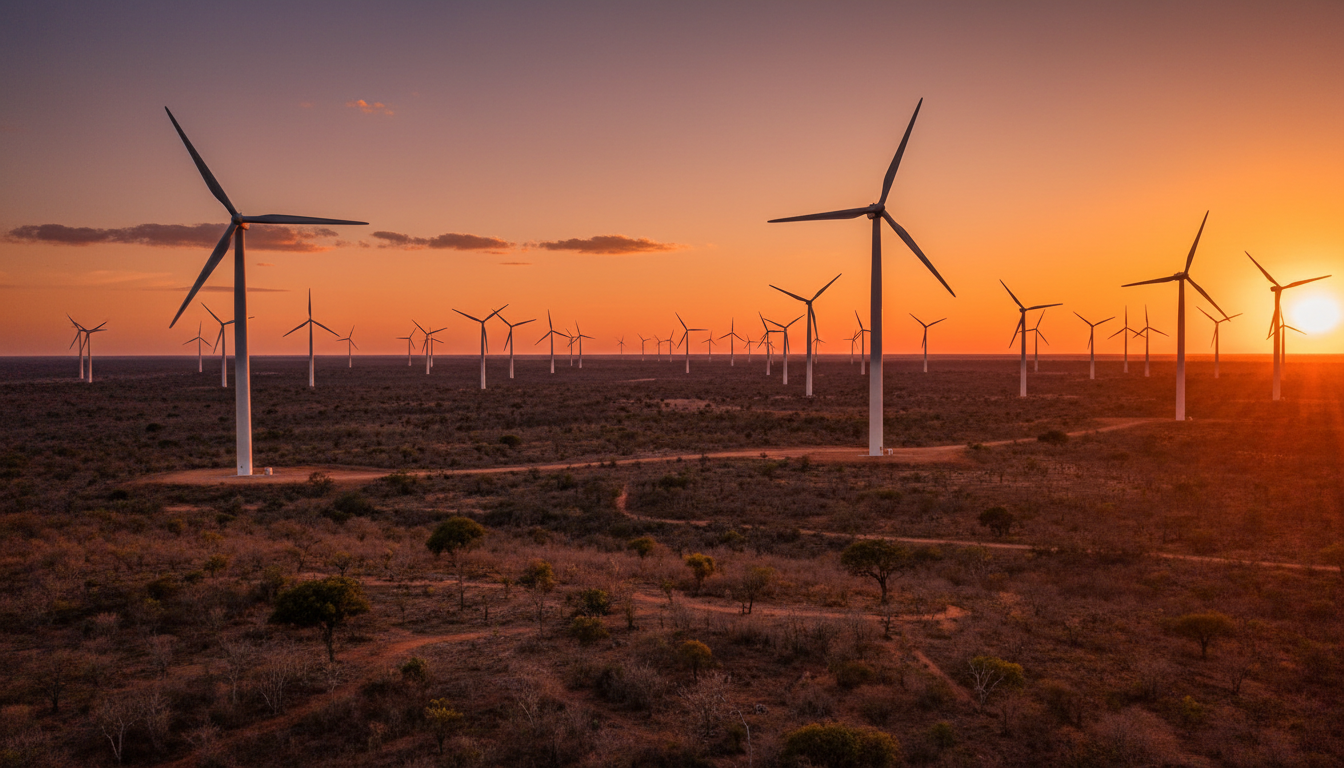
The Brazilian Northeast is receiving the largest wave of investments in clean energy ever seen in the country, with R$ 200 billion in wind and solar, 9,000 km of transmission lines, and a promise that could change the economy of 60 million people.
-
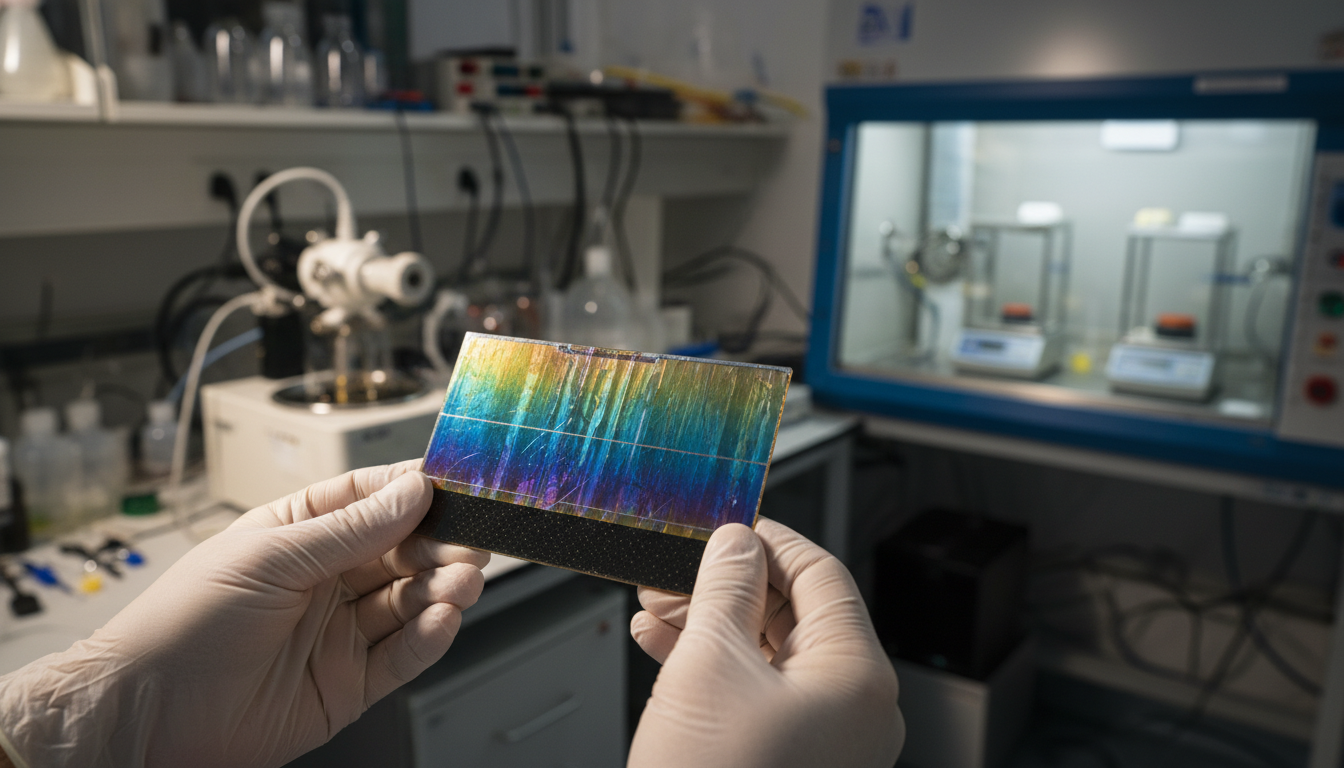
Chinese company creates solar cell that breaks the physical limit of silicon with 34.85% efficiency and promises to revolutionize electricity bills with panels that generate 20% more energy starting in 2026.
-
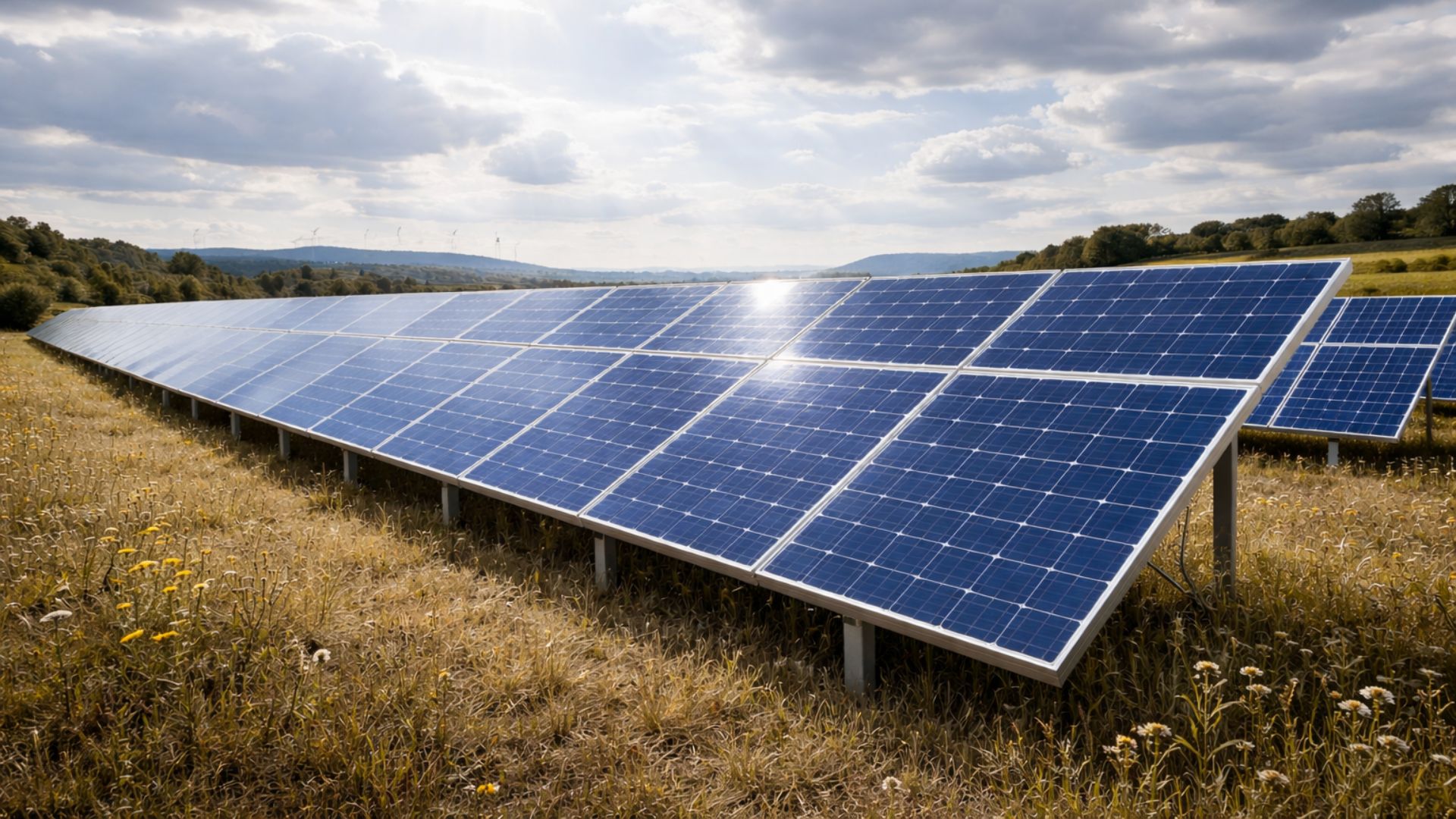
Jacareí advances with a photovoltaic plant and bets on sustainability to transform public management with clean solar energy, reducing operational costs and strengthening energy efficiency in essential services.
-
Maricá transforms Risca-Faca into Leonel Brizola Neighborhood with solar energy and promises to reduce costs for families while promoting dignity, urbanization, and social development in a historically vulnerable community.

Thus, it is expected to produce 537 GWh per year, enough to supply over 290 thousand residences.
Therefore, the completion of the installation launches the testing and partial energization phase, scheduled for November, bringing Ceará closer to establishing itself as a national reference in clean energy.
Historically, Brazil’s Northeast has ideal conditions for solar energy exploration.
Additionally, the abundance of solar radiation and vast land facilitates the installation of large photovoltaic projects.
Kroma Energia, controlled by businessman Rodrigo Mello, took advantage of this favorable scenario to create a large-scale project, aligning cutting-edge technology with positive socioeconomic impacts.
Thus, the Arapuá photovoltaic complex stands out as a symbol of Brazil’s potential in centralized solar energy generation.
Furthermore, the project reinforces the perception that Brazil, especially the Northeast region, can play a strategic role in the global energy transition.
Moreover, the increase in investments in renewable energy highlights the country’s ability to integrate economic growth and environmental sustainability.
This ensures that clean electricity production becomes a pillar of the national economy.
Technology and Integration into the Energy Matrix
The venture showcases the technological advancement and thus strengthens the national energy matrix.
Through the integration of advanced systems such as solar trackers, inverters, and substations, Kroma Energia ensures efficiency and stability in electricity generation.
Thus, each module of the complex converts sunlight into electrical current and then transforms it into alternating current compatible with distribution networks.
This process guarantees that energy reaches the National Interconnected System reliably, reinforcing the energy security of the country.
In addition to generating energy, the Arapuá photovoltaic complex positively impacted the local economy during construction.
Thus, hundreds of direct and indirect jobs were created, involving professionals from various fields, from civil and electrical engineering to logistics and maintenance.
Thus, the project contributed to the regional development, consolidating Jaguaruana and Ceará as strategic hubs for solar generation in the Northeast.
The size and complexity of the project required detailed planning and strict execution.
With 68,400 piles and 3,600 installed trackers, the construction demanded efficient logistics and cutting-edge technology.
Therefore, each step, from the installation of the modules to the calibration of the systems, was planned to maximize efficiency and durability.
Alexandre Guerra, project manager at Kroma Energia, stated:
“With the installation of the last module and the start of electrical connections, we are in the final stretch of a project that stimulated the local economy and involved hundreds of professionals.
The beginning of testing marks a new phase, bringing us closer to the completion of the project.”
Additionally, the project demonstrates how advanced solar engineering can be efficiently applied in large-scale ventures.
As a result, the experience gained at Arapuá serves as a reference for future projects in other regions of the country.
This allows to replicate installation and maintenance techniques more quickly and safely.
Solar Energy in the Brazilian Historical Context
Solar energy plays a historical and strategic role in Brazil.
Since the first experimental projects in the 1980s, the country has evolved from small installations to large-scale complexes like Arapuá.
Moreover, this growth results from public policies that encourage renewable sources, investments in research and development, and the reduction of technological costs.
This has made solar energy increasingly competitive.
The Arapuá photovoltaic complex also underscores Kroma Energia’s commitment to sustainability.
Thus, the generation of clean energy reduces greenhouse gas emissions, aligning with national and international energy transition goals.
Additionally, the operational efficiency of the venture allows Brazil to explore its solar potential responsibly, balancing economic growth with environmental protection.
The Northeast region, historically reliant on hydroelectric and thermal sources, now benefits from a new energy vector.
Thus, the Arapuá photovoltaic complex diversifies the electrical matrix, ensuring greater resilience and security in supply.
Therefore, this change strengthens the electrical system and creates opportunities for new research, technological development, and the expansion of infrastructure for distributed generation.
Furthermore, the project encourages innovation policies and fosters partnerships between companies, universities, and research centers.
This creates a clean technology ecosystem that can evolve over time and generate solutions for future energy challenges.
Advances in Solar Engineering and Local Impacts
The project highlights the importance of modern solar engineering.
Additionally, the installation of solar tracking systems, capable of following the sun’s path throughout the day, increases light capture efficiency and maximizes energy production.
As a result, the investment in state-of-the-art technologies makes the Arapuá photovoltaic complex a model of innovation applied to sustainability.
It serves as a reference for future ventures in Brazil and Latin America.
The execution of the project integrated the local economy directly.
Thus, suppliers, transporters, and service providers worked together, generating a multiplier effect in the region.
Moreover, the training of local professionals strengthened the renewable energy sector and ensured qualified labor for future projects.
The Arapuá photovoltaic complex contributes to the energy transition and promotes regional development.
Therefore, Jaguaruana and Ceará, by hosting a project of this magnitude, establish themselves as strategic centers for investment in clean energy.
Thus, this context reinforces the Northeast’s position as a protagonist in the national scenario, showing that large investments in sustainable infrastructure generate positive impacts in multiple dimensions.
The success of the project inspires other initiatives in neighboring states and reinforces investor confidence in the renewable energy sector.
Additionally, it demonstrates that large-scale solar energy generation is viable and profitable in Brazil.
Technology, Future, and Sustainability
Technically, the venture combines high-efficiency solar modules, modern inverters, and robust substations.
Thus, this technological setup guarantees that the energy generated is reliable and consistent, even during variations in solar radiation.
Furthermore, the integration with the National Interconnected System allows the Arapuá photovoltaic complex to significantly contribute to large-scale supply.
This enhances the stability of electrical supply in the country.
Looking to the future reinforces the importance of the completion of the Arapuá photovoltaic complex in Brazil’s energy transition.
Thus, projects like this show that it is possible to reconcile economic growth, technological innovation, and environmental sustainability.
Therefore, Ceará becomes an example of how Brazilian states can harness natural resources to generate clean energy, create jobs, and strengthen the regional economy.
In summary, the Arapuá photovoltaic complex from Kroma Energia represents a historical milestone for solar energy in the Northeast.
Moreover, the completion of the installation, the start of the testing phase, and the forecast of partial energization constitute significant achievements.
With advanced technology, positive socioeconomic impacts, and relevant environmental contributions, the project reinforces Brazil’s role as a leader in renewable energy generation.
It establishes standards for future initiatives in the sector.








Seja o primeiro a reagir!