






 Portuguese
  Spanish


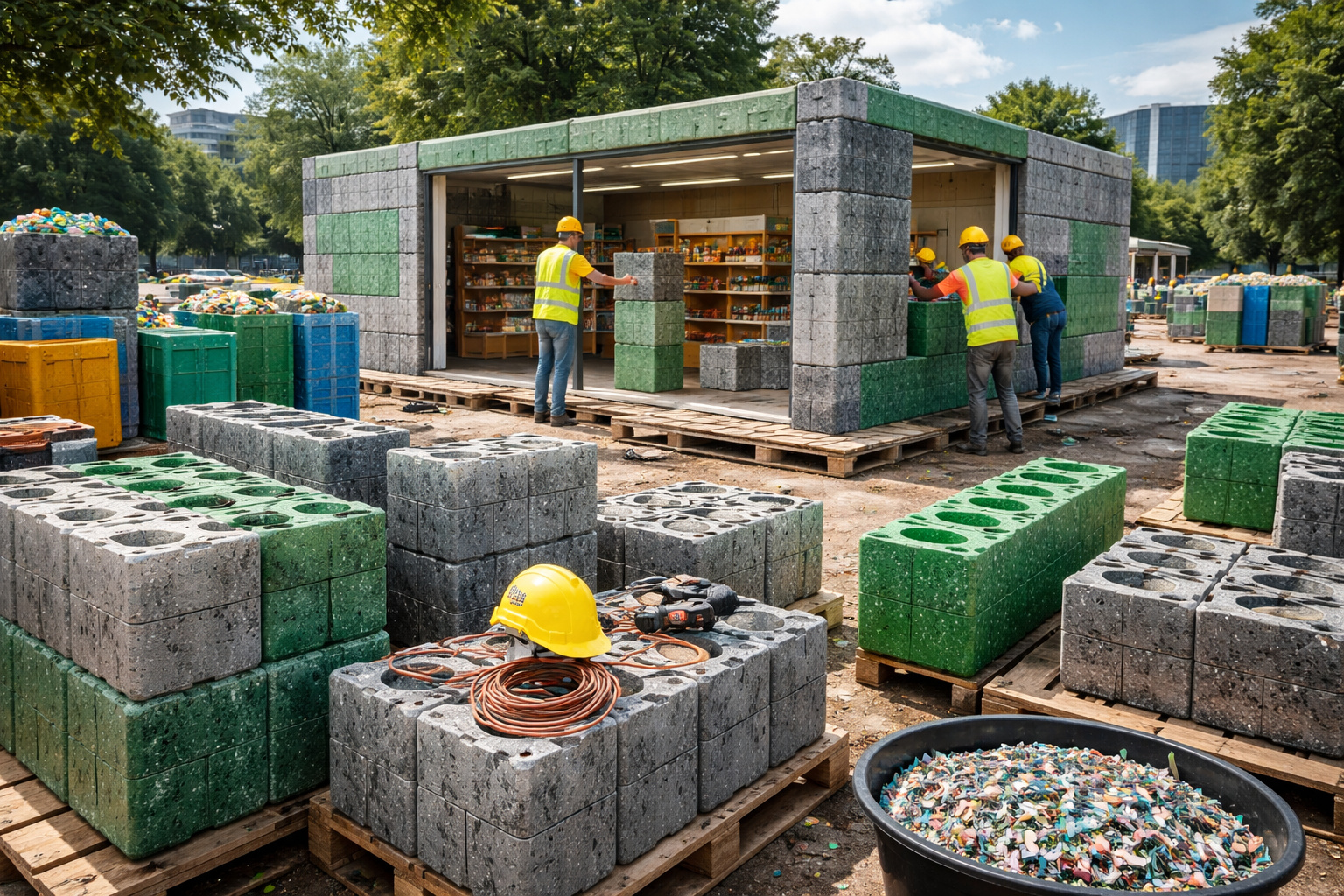

Technology developed from waste such as açaí bowls and coffee capsules reduces costs, construction time, and already serves major national brands
An innovative solution in the construction industry is gaining ground in Brazil by transforming plastic waste into reusable modular structures.
The startup Umbloco developed blocks made from recycled plastic that allow for faster, more economical, and sustainable constructions, serving companies like Localiza, Havaianas, Chili Beans, and Fini, according to data released by the founders in 2025.
Furthermore, the proposal arises in a context where the country ranks among the largest generators of plastic waste in the world, with low recycling rates in the recent past.
-
Giant 3,600-ton Crane Breaks Two World Records by Installing World’s Largest Single-Piece Forged and Welded Hydrogenation Reactor, Weighing 3,037 Tons, in Chinese Petrochemical Plant in Just Six Days

-
$80 Million Bridge in Brazil Cuts Travel Time from 30 Minutes to 1 Minute, but Audit Reveals Major Flaws
-
Man Builds Stone Bed with Granite Rocks and Hand-Sawn Cedar Beams, Home Extension Garners Over 437,000 Views on Bonus Bolts Channel

-
Brazilian Researcher Develops Color-Changing Roof Tile to Reduce Air Conditioning Use by Up to 15%




Origin of the idea and project evolution
Initially, the idea was born in the academic environment when Lucas Lopes developed the concept as a final project in administration.
In this context, the project was inspired both by family experience in the sector and by the need to reduce waste in the construction industry.
Subsequently, in 2021, Fabio Iori joined as a co-founder and strengthened the development of the solution.
At the same time, for about two years, the product was improved with support from Sebrae and the Institute of Technological Research, which contributed to technical and industrial validation.
Finally, after various adaptations and tests, the startup was officially launched in 2023.
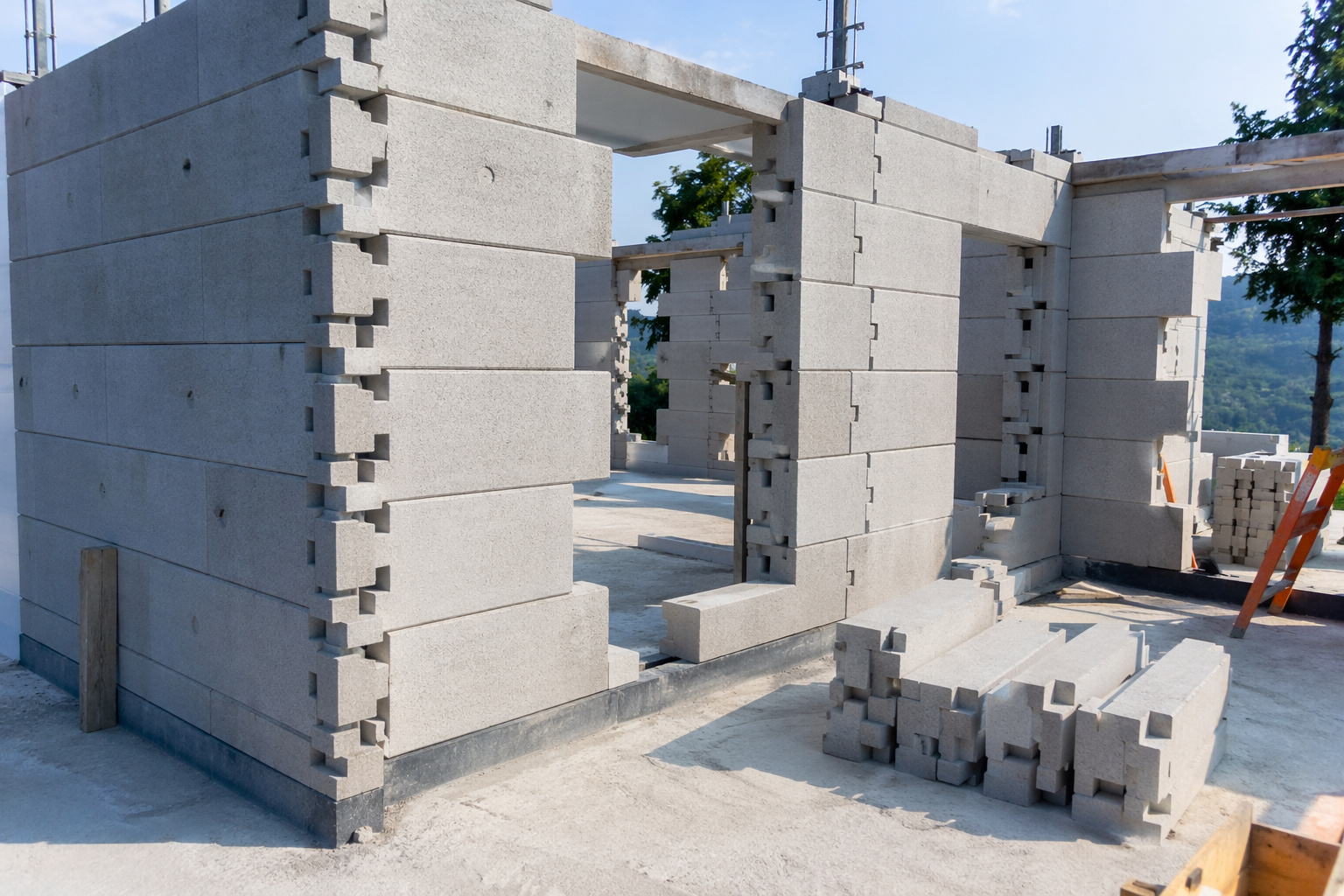
Modular technology reduces costs and construction time
Currently, the blocks produced by the company use recycled plastic collected by cooperatives and industrial partners.
Next, this material undergoes a transformation process with additives until it becomes suitable for use in the construction industry.

Additionally, the pieces allow for simplified assembly, eliminating the need for specialized labor.
Consequently, construction time can be reduced by up to 90%, while costs can drop by about 40%, according to the founders.
At the same time, the blocks can be disassembled and reused, which increases logistical flexibility and reduces waste.
Still, an internal metal structure ensures the support and safety of the constructions.
Commercial expansion and entry into retail
Later, in 2024, the holding company Moreco acquired 30% of the startup, expanding its presence in the market.
As a result, the company began to access the franchise sector and expand its applications in retail.
In this scenario, the network The Best Açaí began to reuse discarded bowls to build new modular units.
Additionally, participation in the fair of the Brazilian Franchise Association contributed to accelerating the generation of new contracts.
Environmental impact and new industrial projects
Since its founding, more than 100 tons of plastic have already been reused by the company, according to data presented by the founders in 2025.
At the same time, new industrial partnerships have expanded the reach of the technology.
In this sense, during the Web Summit Rio 2025, the startup began collaboration with the company 3 Corações.
From this, an industrial process capable of separating plastic and aluminum from coffee capsules was developed, allowing for the reuse of the material.
Plans for international expansion
Finally, the startup has already begun its international expansion with the opening of a company in Portugal.
Additionally, negotiations with local partners are underway, as reported by the founders.
Thus, the modular construction model based on recycled plastic consolidates as a viable alternative to reduce costs, accelerate construction, and increase waste reuse.
In light of this scenario, can solutions like this definitively transform the way the construction sector deals with waste and sustainability?


