





 Portuguese
  English
  Spanish
  3 min of reading
  4 comments





The Explosion of Labor Shortage in Brazil Reveals a Heated Market, Companies Without Qualified Professionals, and an Intense Competition for Workers
The Brazilian economy is experiencing a moment of intense activity. The unemployment rate is at the lowest historical level, and only 5.6% of the population is without work. However, the labor shortage is a huge problem.
This scenario of labor shortage could indicate a phase of satisfaction among companies, with advances in hiring and qualifying the workforce. However, reality shows an opposite picture: even with the low rate, the market faces a crisis marked by the difficulty of finding qualified labor.
Blackout in Various Sectors and Severe Labor Shortage
The current situation points to a blackout affecting employers in various sectors. With so many people occupied, high turnover, and insufficient technical training, companies see an uncertain horizon.
-
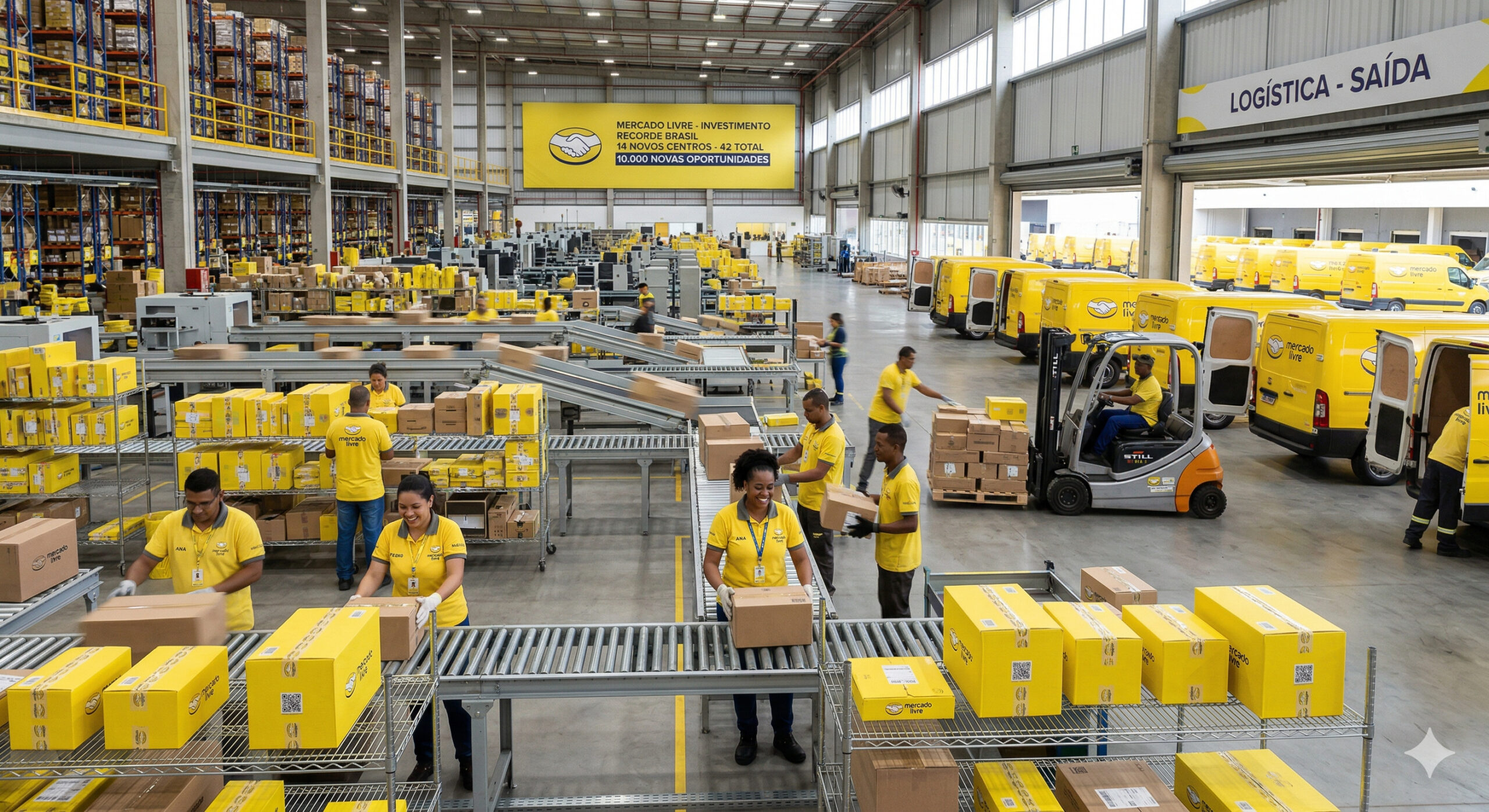
Mercado Livre “opens the vault” and announces a record investment of R$ 57 billion in Brazil in 2026, a value 50% higher than the previous year, with an expansion plan that includes 14 new logistics centers, totaling 42 units in the country and hiring an additional 10,000 employees.
-
How investment in technology can revolutionize the national economy and enhance industrial gains, according to a study that highlights the direct impact on productivity, innovation, and wealth retention within Brazil.

-
The largest food company on the planet, JBS, has just opened a 4,000 square meter laboratory in Florianópolis to develop customized proteins that modulate muscle mass gain, immune response, and metabolic performance.

-
After nearly 30 bids and competition among industry giants, a Spanish company purchases one of the largest airports in Brazil for almost R$ 3 billion and takes over the management of Galeão in a concession that will last until 2039.


Up to 80% of companies already feel the impact of this shortage. Often, available professionals refuse to work on weekends or comply with extended hours during peak demand periods, such as the end of the year. This trend has worsened over time.
The unavailability of labor is linked to many workers working independently.
Especially among younger people, it is common to find professionals leaving formal jobs in search of greater autonomy, as seen with app drivers.
For this group, traditional work represents a limitation that no longer makes sense, leading to what is called voluntary informality.
One driver reports that, upon acquiring a new vehicle, he found financial independence and flexible hours. For other workers, formal employment has become less attractive than the possibility of defining their own earnings and schedule.
This trend is profoundly altering the behavior of the economically active population.
Impacts on Industry and Technical Training
The industrial sector appears to be among the most concerned with the current scenario. A recent CNI survey indicates that 62% of companies in the sector face difficulties in hiring qualified professionals.
In the industry’s assessment, the problem is directly related to workers’ training.
The country faces a historical challenge in the educational matrix. Although the number of young people with technical education is increasing, it remains low.
In addition to the educational aspect, there are also changes in the profile of workers. The average time spent in a job has decreased.
In retail, the reduction reaches 7% over the last decade, with an average tenure of only 26 months.
The lack of training contributes to this cycle, as poorly qualified workers take longer to progress and leave their positions quickly.
As a result, companies invest less in training, fearing that the employee will not stay for long.
Change in Profile and Lack of Attractiveness
The modernization of the labor market has brought more flexibility and new possibilities.
However, traditional sectors such as industry and retail continue to require physical presence, which contrasts with the current demand for remote work.
Experts highlight that many young people seek positions that offer comfort, digital involvement, artificial intelligence, or marketplace operation, preferably from home.
This change in behavior has amplified the challenge for companies, which face a void on the horizon.
The search for autonomy and more flexible conditions grows, while roles that require in-person attendance struggle to attract candidates.
Companies’ Responses to the Labor Shortage
In light of this scenario, companies are trying to build their own solutions. Training programs and more attractive recruitment processes are essential to tackle the labor shortage.
The strategy involves making formal employment more appealing in the face of competition from autonomous activities.
Experts assert that it is necessary to create employer branding programs and strengthen the organizations’ reputation to attract workers.
The idea is to offer an experience capable of competing with the flexibility of the informal market, highlighting values, benefits, and real growth opportunities.
In this scenario, the significant challenge is to balance the modernization of the market with the need to keep essential positions active.
To achieve this, companies aim to transform the way they present themselves to professionals, making the formal environment more attractive and competitive against the new choices of the Brazilian workforce.










MEU DEUS NOSSA MIDIA E MESMO TENDENCIOSA,NO BRASIL OS EMPRESARIO CADA DIA ESTAO MAIS RICOS POREM O QUE ELES PAGAM PARA CLASSE TRABALHADORA E VERGONHOSO,OS PIORES PATROES DO MUNDO TA NO BRASIL SOBREM ARVARENTO.
Eu não encontro essas vagas, tenho qualificações, curso superior, pós e já enviei zilhoes de currículos e até agora só frustração.
Não se fala em salário. Será que já tentaram pagar mais? Participação nos lucros? Oferecer tempo para o trabalhador suprir suas necessidades? Sou do tempo que não podíamos pagar a conta de luz no banco porque a empresa não permitia. Talvez sejam esses fatores importem.