





 Portuguese
  English
  Spanish
  4 min of reading
  0 comments


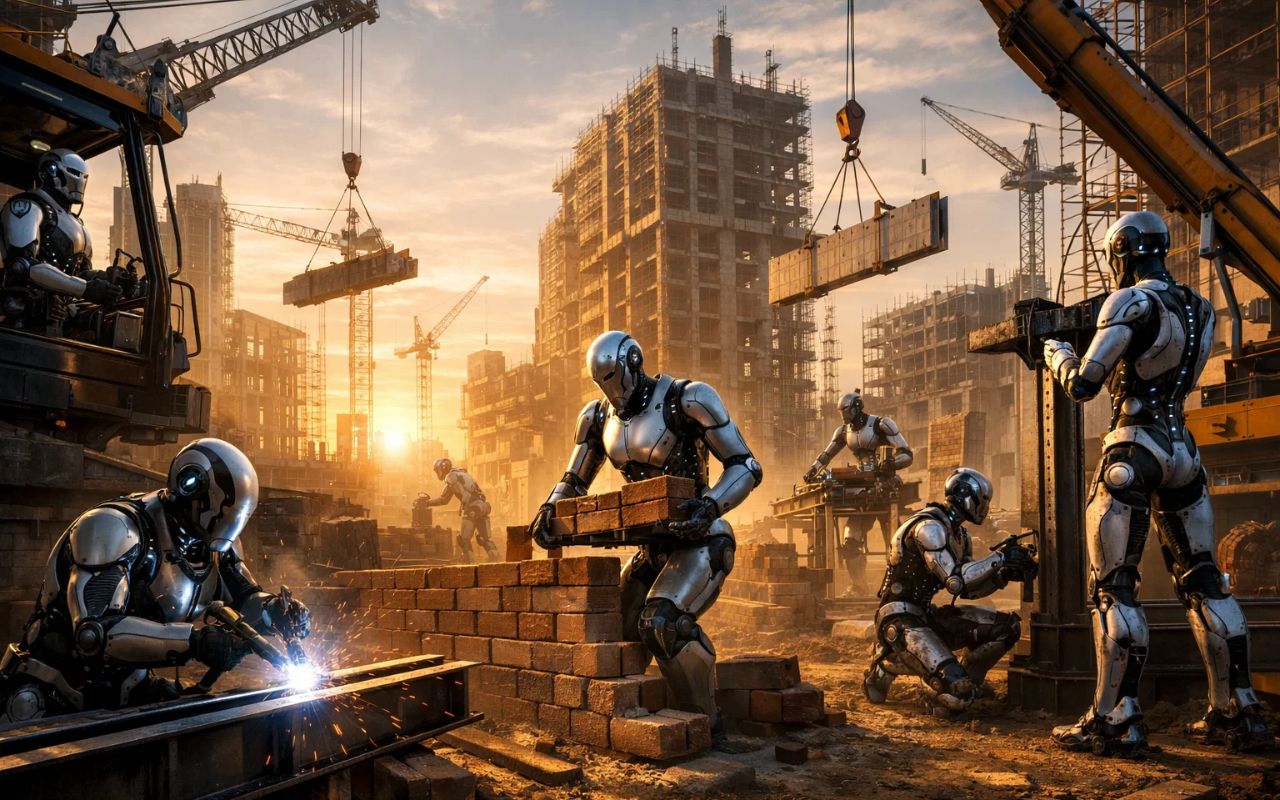
Japan intensifies adoption of AI robots to address labor shortage, maintain essential services, and expand participation in the global market.
In the face of a growing labor shortage, Japan has accelerated the use of AI (artificial intelligence) robots to sustain its economy and maintain essential services. The movement involves companies, investors, and the government, gained momentum in 2024 and 2025, and is occurring nationwide, especially in factories, logistics centers, and infrastructure. The strategy aims to address the lack of workers caused by an aging population while positioning Japan as a global leader in technology by 2040.
Japan faces labor shortage and bets on AI robots
The adoption of AI robots in Japan is not happening due to mass job replacement, but rather out of necessity. The labor shortage is already directly impacting essential sectors, making it difficult to continue operations.
According to a Reuters/Nikkei survey from 2024, the lack of workers has become the main reason for companies to invest in automation. Thus, technology has shifted from a strategic option to an urgent necessity.
-
Natville puts R$ 700 million on the table for new factories in the Northeast, generating jobs and boosting the local economy.
-
With 74% of companies facing difficulties in hiring, technicians and engineers in renewable energy are becoming scarce in Brazil and are essential to support the expansion of solar, wind, and green hydrogen projects.

-
Historic bankruptcy of Centauro shocks the market, and the century-old company puts more than 500,000 products, machines, and complete infrastructure up for online auction.

-
New shoe factory in Ceará is expected to create 400 jobs and strengthen the local economy.

Moreover, the Japanese population has shrunk for the 14th consecutive year in 2024. Currently, only 59.6% of the inhabitants are of working age, which further exacerbates the situation.
Japanese government sets ambitious goals with AI robots
To tackle this challenge, the Japanese government announced robust plans. In March, the Ministry of Economy, Trade, and Industry established the goal of capturing 30% of the global robotics market with AI robots by 2040.
Additionally, the country allocated about $6.3 billion to boost the development of what is called “physical AI.” This concept combines artificial intelligence with machines capable of interacting with the real world, such as industrial robots.
The initiative has political support from Prime Minister Sanae Takaichi, who emphasizes the importance of technology for economic future.

Industry leads the use of AI robots in Japan
Currently, the industrial sector is the main driver of AI robot implementation in Japan. Every year, tens of thousands of machines are installed, mainly in the automotive industry.
This advancement is possible because the country already has a strong tradition in robotics. In 2022, Japanese manufacturers were responsible for about 70% of global industrial robot production.
Furthermore, Japan dominates the manufacturing of essential components, such as sensors and actuators — parts that allow robots to “sense” and “act” in the environment.
Labor shortage drives innovation in logistics and services
With the labor shortage, new applications of AI robots are rapidly emerging in Japan. In logistics, for example, autonomous forklifts and intelligent storage systems are already a reality.
Meanwhile, in data centers and industrial facilities, inspection robots perform repetitive and high-risk tasks. This reduces the need for human intervention and increases safety.
According to investors interviewed by TechCrunch, the focus has shifted from just productivity to include maintaining essential services.
Companies develop advanced solutions with AI robots
Japanese and global companies have been accelerating the development of AI robots. One example is SoftBank, which combines computer vision and language models with real-time control systems.
This allows robots to interpret environments and perform tasks with greater autonomy. In other words, they not only follow commands but also “understand” what is happening around them.
Another relevant company is Mujin, which creates platforms capable of integrating different robots in complex logistics operations.
Japan seeks balance between hardware and software
Despite its leadership in hardware, Japan faces challenges in the complete integration of systems. Meanwhile, countries like the United States are advancing more rapidly in solutions that combine software, data, and machines.
According to industry experts, developing AI robots requires deep knowledge of both software and the physical limitations of equipment. This makes the process more expensive and complex.
Nevertheless, traditional companies like Toyota, Mitsubishi Electric, and Honda continue to lead in scale and implementation.
Future indicates expansion of AI robots in Japan
The advancement of AI robots in Japan indicates a structural transformation in the economy. Unlike other countries, the focus is not on replacing workers but on compensating for the labor shortage.
Moreover, the sector is moving towards a collaborative model. Large companies and startups are working together, creating a hybrid innovation ecosystem.
In this context, solutions like those from Terra Drone show how the combination of data and automation can enable autonomous systems in the real world.
Therefore, as the population ages, Japan reinforces its bet on technology to ensure productivity, growth, and economic continuity — with AI robots at the center of this transformation.
With information from Olhar Digital









Seja o primeiro a reagir!