





 Portuguese
  English
  Spanish
  5 min of reading
  0 comments


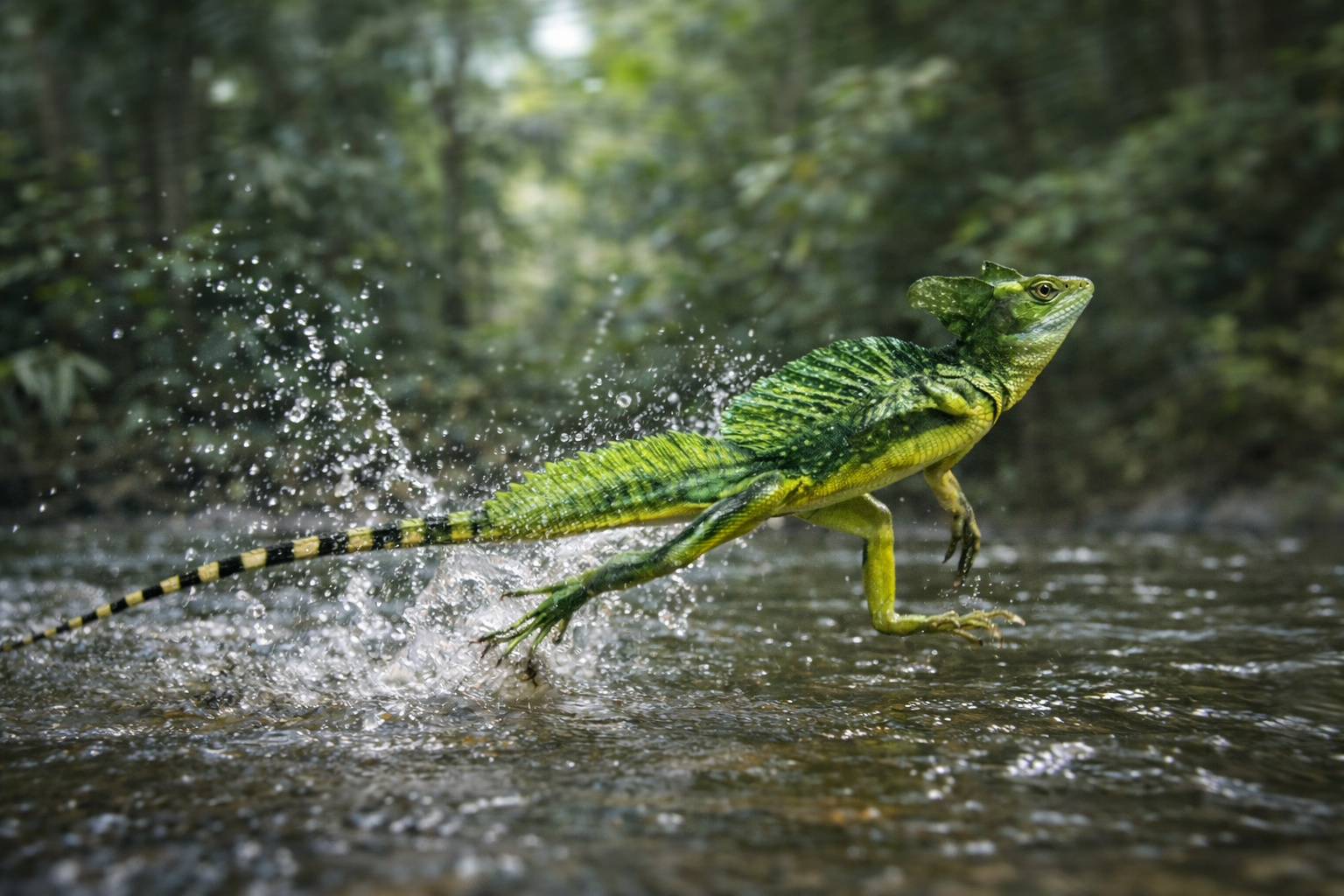
Known as the Jesus Lizard, the Basiliscus basiliscus runs on water at up to 2 m/s using extreme physics, turning rivers into escape routes in the tropical forests.
The first reaction from anyone who sees it is always the same: this shouldn’t be possible. An animal the size of a bottle, measuring up to 80 centimeters from snout to tail tip, running on a river as if it were an invisible bridge, without sinking, without stopping, without documentary dramatization. Yet, the Basiliscus basiliscus — popularly known as the Jesus Lizard for its ability to “walk on water” — has been doing this for thousands of years in Central America, mainly in the wet and forested ecosystems of Costa Rica, Panama, Colombia, and Nicaragua.
What seems like a miracle, however, is pure applied physics: muscular energy, leg geometry, surface tension, and timing. And when the predator — typically a bird, a snake, or a mammal — is just a few meters away, every millisecond decides life.
Why It Can Run on Water
To the layman, the mechanism happens too quickly to be noticed. But in slow motion, the scene reveals an impeccable biomechanical design. Upon touching the water, the lizard generates a strong vertical impact that creates a small air and water cavity — almost a momentary “pocket” — and immediately pushes backward with enough force to support its weight for a few hundredths of a second. Before the water collapses and the body sinks, the next foot is already hitting again.
-
With a cost per shot close to zero, the DragonFire laser could change naval warfare in 2027 and provide British ships with nearly unlimited defense against drones.

-
A British startup creates tires that generate electricity in electric vehicles when passing over potholes, speed bumps, and cracks.

-
Scientists have created robots made with living cells that have their own nervous system, swim on their own, explore the environment, and self-organize without any genetic engineering, and now they want to do the same with human cells.

-
Students create a solar-powered ambulance that operates without a plug, without fuel, and still keeps medical equipment running in remote areas.


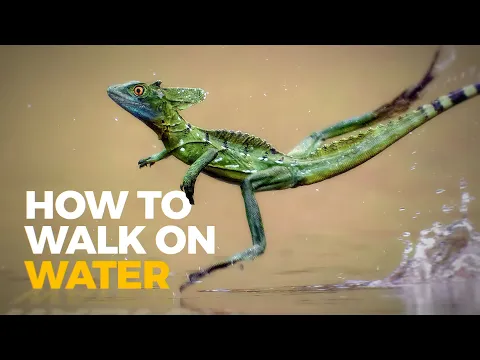

This cycle repeats between 5 and 10 times per second, depending on the age and size of the animal. Juveniles, being lighter and having a higher strength-to-weight ratio, are even more efficient and can go further across the surface. That’s why, ironically, the younger ones are the true “record holders” of the species.
Research from the University of Florida and biomechanics laboratories in the United States and Europe has described three essential conditions for “running on water”:
- High speed upon first contact, reaching approximately 2 meters per second
- Wide hind legs with lateral lobes, increasing contact and the volume of air trapped
- Very fast sequential vertical impulses, keeping the body out of the water
When the cycle fails — due to fatigue, too deep water, or loss of traction — the lizard inevitably sinks. But, contrary to what many believe, it swims very well and continues its escape submerged, using the aquatic environment not as a stage, but as a refuge.
Surface Tension, Microbubbles, and the Physics Behind the “Crossing”
Science has taken decades to understand the phenomenon. It’s not just speed. It’s not just strength. And it’s not just surface tension. The current consensus combines several factors:
- Surface tension helps, but it’s insufficient for large masses
- Cavity generated by impact traps air for fractions of a second
- Microbubbles reduce resistance and act as temporary cushions
- Feet with skin lobes increase area and delay water collapse
- Attack angle of the feet provides necessary vertical thrust
- Step frequency maintains the cycle before the body is overcome by gravity

Literature describes this as “running over a collapsing fluid cavity,” a rare mechanism in the animal kingdom, shared only by some insects (like Gerridae) and some tropical lacertids — but never on scales comparable to the Basiliscus.
Why Only Young Ones Can Run Long Distances?
The adult Basiliscus weighs more and has a larger body volume, making the phenomenon less efficient. Juveniles have already been filmed crossing entire streams, jumping logs, and running over water for several meters before reaching the vegetation.
Adults can do it too, but generally over shorter distances, using swimming to complete the escape afterward. This creates a combined strategy: first, water as a bridge, then water as a trench.
Water as Boundary and as Survival Route
The humid forest of Central America is an environment with many ecological pressures: raptors, arboreal snakes, felines, bush dogs, and humans. Dense vegetation makes linear escapes difficult, and water creates boundaries between territories. But for the Basiliscus, the river is not a boundary: it’s a road.
For terrestrial predators, the chase ends at the shore. For the Basiliscus, it’s just where the advantage begins. This explains why this ability has been selected over time.
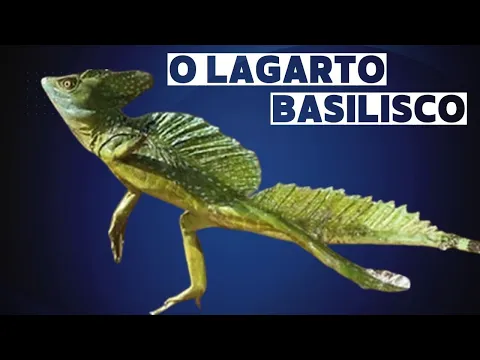
The classic scene captured in BBC documentaries shows a juvenile being chased by a snake, diving into the underbrush, jumping from a branch, and at the riverbank, making the decision that few species would make: running on water.
The Metabolic Cost of the Feat
Running on water consumes energy in large amounts. The metabolism of the Basiliscus accelerates, the tail muscles stabilize the body, and breathing keeps up with the rhythm. Then, when it reaches the opposite shore, it usually pauses for a few seconds before entering the vegetation — a reflection of the intense energy expenditure of the process.
Researchers describe this as a “burst escape” behavior, a burst of energy to maximize survival in immediate risk scenarios.
This type of explosive escape is common in terrestrial running lizards but rare in aquatic environments.
Where It Lives, Who Are Its Natural Rivals, and How the Environment Shaped Its Behavior
The Basiliscus lives in shaded areas near watercourses of humid forests. It’s no coincidence: aquatic escape only makes sense if water is always nearby.
Its diet includes insects, small crustaceans, eggs, fruits, and even small vertebrates. Its predators include raptors like hawks, snakes like boas and colubrids, and small to medium-sized carnivorous mammals.
The ecological division is clear: the Basiliscus is an intermediary, neither top nor base, and its success depends on geography. Without rivers, it would be just another fast lizard; with rivers, it is an evolutionary anomaly.
When Water Wins
It doesn’t always work out. In wider rivers, when the thrust diminishes or when the animal is tired, it sinks. But this doesn’t mean defeat. It swims, dives, and uses submerged logs and vegetation as visual barriers.
This behavior shows that “walking on water” is not a constant show, but an emergency resource. And like any emergency resource, it depends on specific conditions: proximity to the shore, temperature, absence of waves, and limited distance.
In the End, the Basiliscus Teaches the Same Lesson as the Goat at the Dam, But in a Different Way
In the case of the Alpine goat, the secret of life was in the invisible salt and vertical concrete. Here, the secret lies in the water, the timing, and the milliseconds.
The Basiliscus doesn’t challenge logic — it exposes its fragility. It shows that what we call a “miracle” is often just an unlikely arrangement of physics, evolution, and opportunity.
Where we see river, it sees road. Where we see risk, it sees exit. Where we see boundary, it sees territory.
And that’s how a lizard up to 80 centimeters long, with wide feet, temporary microbubbles, and quick impulses, becomes one of the most improbable and fascinating creatures in Central America.







-

Uma pessoa reagiu a isso.