





 Portuguese
  English
  Spanish
  10 min of reading
  0 comments


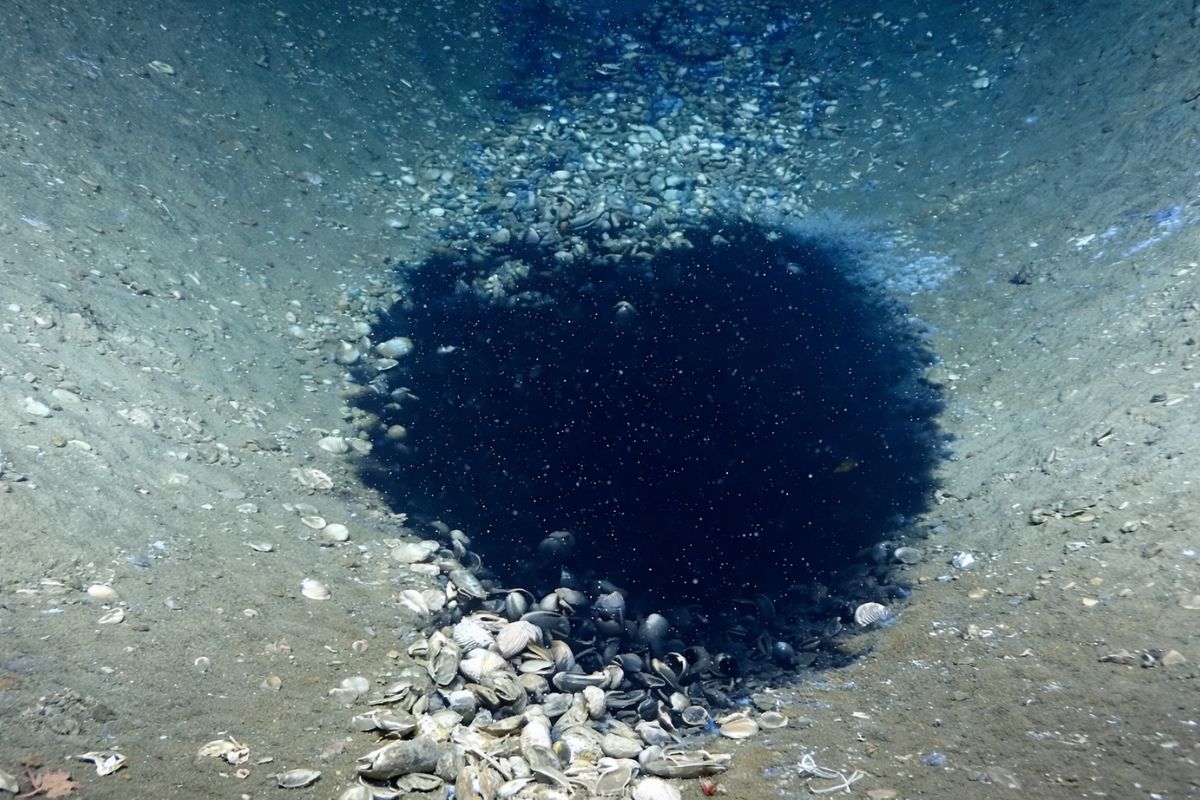
From The Gulf Of Mexico To The Mediterranean, Scientists Have Mapped Brine Pools So Dense And Toxic They Behave Like Lakes Within The Ocean, Preserving Dead Animals For Years And Nourishing Entire Ecosystems That Live Without Light And Without Oxygen At The Bottom Of The Sea.
At first glance, the ocean floor should be just cold mud, silence, and darkness. But in some specific points, geology and chemistry combine to create something that should not exist: brine pools with sharp edges, defined surfaces, and boundaries that normal seawater cannot cross. In these locations, the ocean folds in on itself and forms isolated lakes, true “parallel worlds” kilometers deep.
What Are Brine Pools At The Bottom Of The Sea
Most known brine pools concentrate in the Gulf of Mexico and the Eastern Mediterranean. The explanation begins millions of years ago when ancient seas evaporated and left behind gigantic layers of salt buried under sediments.
This salt, buried and pressed, still moves slowly. It cracks the seabed, forms domes, opens fissures, and, in some spots, dissolves upon contact with groundwater.
-
The coldest seawater ever recorded in Earth’s history was hidden under extreme ice 717 million years ago and reached an impressive -15°C.
-
China has launched the world’s first floating artificial island, a scientific structure designed to face open seas, test equipment weighing hundreds of tons, and reach depths of 10,000 meters.
-
China accelerates global science and may surpass the United States in 2 years with increased public investment, continuous growth, and direct impact on the global technological competition.

-
Scientific studies indicate that drought may be strengthening a much greater silent threat: more resistant superbugs.

The result is streams of extremely concentrated brine, loaded with salts, methane, and other compounds.
When this heavier mixture meets the ocean floor, it does not mix with the normal water: it sinks, accumulates in depressions, and forms entire underwater lakes.
These brine pools defy a basic rule of the ocean: water mixes with water. Here, it does not. The density is so high that the surface of the brine behaves like a separate liquid, with its own waves and defined edges.
Fish that cross the boundary can die within seconds from osmotic shock. Bodies of crabs and crustaceans are preserved at the bottom for years. And around them, extreme ecosystems emerge that live off chemistry, not sunlight.
Now, you will get to know 10 of these underwater lakes, from the salt basins of the Mediterranean to the deep canyons of the Gulf of Mexico.
10. Green Canyon Brine Pool – The “Mussels Ring” Of The Gulf Of Mexico
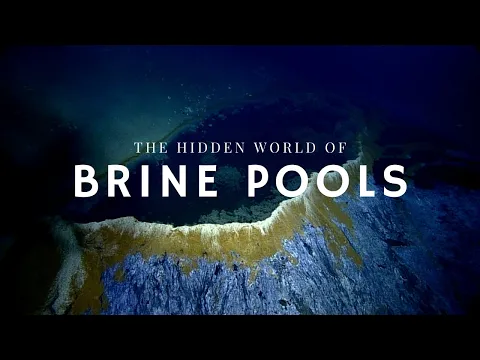

In Green Canyon, in the Gulf of Mexico, the brine pool first appears as a darker spot on sonar. Only up close does it become clear that it is an entire lake within the sea.
The brine is so dense that it forms a stable surface, as if someone had cut a liquid hole in the ocean floor.
Anything that falls in does not come back. The osmotic shock is so violent that fish crossing the edge die almost immediately, sinking like stones in this thick liquid. Still, life finds a way to settle around.
A ring of giant mussels grows at the edge of the pool. They do not rely on light, but on bacteria that transform methane and sulfide into energy.
In some expeditions with the submersible Alvin, scientists recorded carpets of orange bacteria spreading across the sediment, forming thick filaments that resemble copper wires emerging from the ground.
Green Canyon seems to repel everything that approaches the brine, but at the same time creates an unexpected biological belt along the edges.
It is a perfect example of how brine pools can kill in the center and sustain life at the edges.
9. Alaminus Canon Pool – The Brine Pool That Undulates Beneath The Submersible

Also in the Gulf of Mexico, Alaminus Canon houses a brine pool in which the surface behaves like an independent film from the ocean.
When the submersible passes nearby, the dense layer undulates, as if it were a liquid sheet separated.
The chemical difference between normal sea and the interior of the lake is extreme. Fish crossing the boundary die almost instantly, unable to withstand the brutal change in salinity and composition.
This pool forms where saline water from underground escapes to the sea, carrying not only superconcentrated brine but also gases from deeper layers of the crust, such as radon.
To locate these points, researchers launch instruments into the water at dawn and look for small variations that indicate the presence of brine even before it is seen.
On the edges, the story changes. Tubular worms, mollusks, and mussels settle because they rely on bacteria that transform sulfide and methane into energy.
It is an entire community replacing sunlight with pure chemistry. But the boundary is relentless: one misstep, and the brine pool becomes a lethal abyss.
8. Benok Basin Brine – The Lake That Manufactures Crystals In The Eastern Mediterranean

Leaving the Gulf of Mexico and moving to the Eastern Mediterranean, the Benok basin stands out for a rare behavior: the brine pool not only accumulates but begins to produce crystals within its own underwater environment.
In one of the expeditions, scientists collected blocks of gypsum the size of human fingers, formed directly on the bottom of the basin. This happens because ancient layers of salt on the slopes are dissolving again.
As this salt encounters seawater again, the mixture becomes so saturated that some minerals precipitate again, now at the very bottom of the ocean.
The surrounding sediments are dark and exude a strong sulfur smell, indicating that intense chemical reactions are still occurring.
Benok impresses less for the appearance of the lake and more for the idea that the sea is literally “remaking” part of its geology, crystal by crystal.
7. Thatis Deep – High Temperature, Metals And Extremophile Microbes In The Red Sea

In the Red Sea, Thatis Deep is a brine pool that does not attract attention for its shape but rather for its chemistry. The water there is too salty, low in oxygen, and hot enough to expel most marine life.
Analyses show that the brine holds traces of dissolved metals, such as iron and manganese, at levels much higher than normal seawater.
This indicates that hot, ancient fluids continue to circulate underground, releasing minerals and altering the composition of the lake.
Even in this scenario, specialized microorganisms have adapted to each layer of the brine pool. Some use sulfur as an energy source, while others exploit metallic compounds that would be pure poison for common animals.
The result is microbial communities distributed in “chemical levels,” like neighborhoods separated by temperature, density, and composition.
Thatis Deep functions less as a static lake and more like a natural laboratory, where minerals, heat, and microbial life continuously reorganize.
6. AC601B – The Twin Brine Pool Hidden More Than 2 Km Deep

At the bottom of the Gulf of Mexico, there is a brine pool that many researchers only get to know after studying the main lake of Alaminus: AC601B, a twin lake separated and hidden more than 2 kilometers deep.
Even being just a few meters from the already famous lake, it behaves like a world apart. The surface is so dense that it forms an almost motionless mirror, undulating only when the submersible gets very close to the edge.
Under this film, the brine is so concentrated that no animal can tolerate crossing the boundary. The interior is completely oxygen-free and loaded with compounds that make the environment hostile.
Within a few centimeters of transition, the brine pool is already capable of killing.
When scientists drilled the sediments linked to this lake, they found a clear pattern: the closer to the brine, the more active the microbial community.
As if the extreme chemistry of AC601B attracted just the life forms that thrive where the traditional ocean fails.
5. Tyrobrine Basin – A Chemical Reliquary Of The Prehistoric Mediterranean

Tyrobrine Basin lies in the western part of the Mediterranean, about 3,300 meters deep, and was one of the first brine pools discovered in the modern region.
In the 1980s, expeditions registered a thick, dark sheet of still water cutting through the floor, with a boundary so sharp it looked ruler-straight.
The brine there has up to 10 times more salt than regular sea water, is a few degrees warmer, and contains no oxygen at all.
This combination creates a dense, motionless layer sustained by an extremely thin transition zone, where the water changes density and composition over a minimal interval.
The origin of this brine pool dates back to when the Mediterranean nearly dried up millions of years ago. Layers of salt formed at that time are now slowly dissolving underground, nourishing the basin. It is as if part of that ancient sea is still concentrated at the bottom.
In the sediments, Tyrobrine holds clues about past climates, the circulation of the Mediterranean, and the chemistry that ruled during the age of the great salt rocks. Microorganisms occupy specific bands, shaped by extreme gradients of salt and nutrients.
Unlike some lakes in the Gulf of Mexico, the spectacle here is discreet: almost no visible life, but intense chemistry acting in silence.
4. Latalante Basin – A Liquid Ceiling Separating Two Worlds

Among the brine pools in the Eastern Mediterranean, Latalante Basin is one of the most alien-like.
It occupies a depression more than 3,500 meters deep, isolated by a layer of water so dense that it forms a true liquid ceiling over the lake.
Discovered in 1993 by a French ship, the basin only exists because ancient layers of salt, remnants of a nearly dry Mediterranean, continue to dissolve and nourish the brine accumulated at the bottom.
The brine in Latalante is nearly saturated, about eight times more concentrated in salts than the ocean.
The extreme difference generates a transition zone of just over 1 meter, where the water changes density so quickly that nothing can circulate between the upper and lower parts.
The oxygen from the sea does not descend. The brine below does not rise. In this narrow frontier lives one of the most unique microbial communities ever recorded, organisms that use ammonia, methane, and sulfur as energy sources, replacing light with chemistry. Above, everything seems normal. Below, the environment is too hostile for larger animals.
Latalante has become a testing ground for extreme habitability on Earth and, by extension, for what may be possible in oceanic worlds beyond our planet.
3. Brian Pool NR1 – The Liquid Mirror Discovered By A Military Submarine

Among all the submarine lakes ever found, few have a story as unique as Brian Pool NR1, discovered in 1989 by a military submarine that hardly appeared in public records.
At about 650 meters deep, researchers noticed that the seabed seemed to give in to an oval depression.
In the center, there was a perfectly static surface: a brine pool so smooth that it looked like a liquid mirror guarded by the ocean.
The brine is so loaded with salts and so low in oxygen that it functions as an absolute boundary. It does not mix, dilute, or welcome common marine life.
But at the edges, the pattern repeats: a band of mussels grows sustained by bacteria that transform methane and sulfides into energy, while marine worms infiltrate among the shells.
Decades after the discovery, new expeditions returned to the lake to understand how these mussels attach to such unstable ground and why certain microbial communities thrive where nearly everything fails. The NR1 revealed a type of brine pool that seems still, but pulses with chemistry, methane, and microbial life.
2. Orca Basin – The Largest Brine Pool Ever Recorded
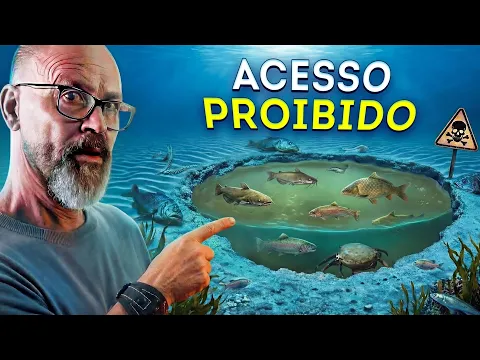
In the Gulf of Mexico, Orca Basin only reveals its strangeness in the final meters of the descent. The water becomes dense, milky, almost still.
Suddenly, the largest brine pool ever recorded appears: a basin over 100 square kilometers filled with water so concentrated in salt that it forms its own surface at the ocean floor.
Sensors slow down as they cross this layer, as if touching an invisible physical boundary. The brine comes from salt layers from the Jurassic period, which are slowly dissolving through deep fissures.
When this fluid reaches the basin, it becomes so heavy that it does not mix with the ocean, creating an oxygen-free environment where everything that falls remains intact.
The Orca Basin functions as a time capsule. Sediments accumulate in order, preserving records of thawing, changes in rivers, and ancient methane pulses.
Unlike other lakes in the Gulf, there are no large visible colonies of mussels or worms at the edge. It is an almost silent void, which does not impress with abundant life, but with its ability to preserve history.
1. Hot Tub Of Despair – The Bathtub Of Death That Preserves Bodies For Years
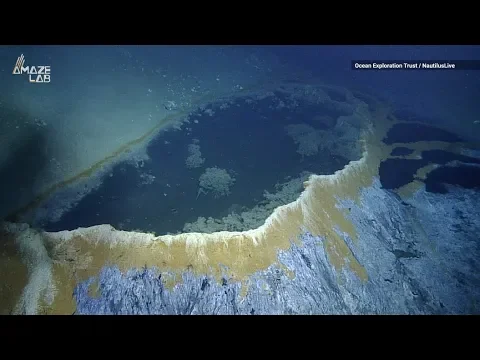
Topping the list of the most extreme brine pools is the Hot Tub of Despair.
It lies about a thousand meters deep in the Gulf of Mexico and looks like an isolated cauldron: elevated mineral edge, motionless surface, and an interior so salty that it behaves like a liquid separated from the sea.
The water there is about four times more concentrated in salt than the surrounding ocean, heavy enough to support instruments that touch its surface without sinking immediately.
The environment is lethal. The combination of dense brine, methane, and toxic gases kills any animal that crosses the boundary, and bodies remain preserved at the bottom as if they had been kept in natural formaldehyde.
Scientists have observed crabs, fish, and small crustaceans motionless inside, appearing to be alive at first glance but dead for years.
The edge shows bright mineral deposits that denounce the aggressive chemistry of the place. In some spots, the water from the pool overflows, forming small dense streams that trickle outward, as if the bathtub were always on the verge of overflowing.
It is one of the most surreal scenes ever recorded at the bottom of the sea, a visual reminder that the ocean still hides environments that seem to belong to another planet.
Brine Pools: Natural Laboratories Of Extreme Worlds
Brine pools are both killers and creators. In the center, they kill fish and preserve bodies in liquid chambers without oxygen.
At the edges, they sustain communities that have learned to live on methane, sulfur, metals, and other sources of chemical energy.
They record the memory of ancient seas, reveal how geology continues to shape the ocean floor, and demonstrate that life can adapt to conditions that, in theory, should be impossible.
For those seeking to understand extreme habitability, these brine pools are some of the most valuable natural laboratories on the planet.
And you, would you dare to go down in a submersible to get close to one of these brine pools or would you prefer to observe these “lakes of death” only through a screen?



-

-

-

-

-

14 pessoas reagiram a isso.