





 Portuguese
  English
  Spanish
  5 min of reading
  0 comments


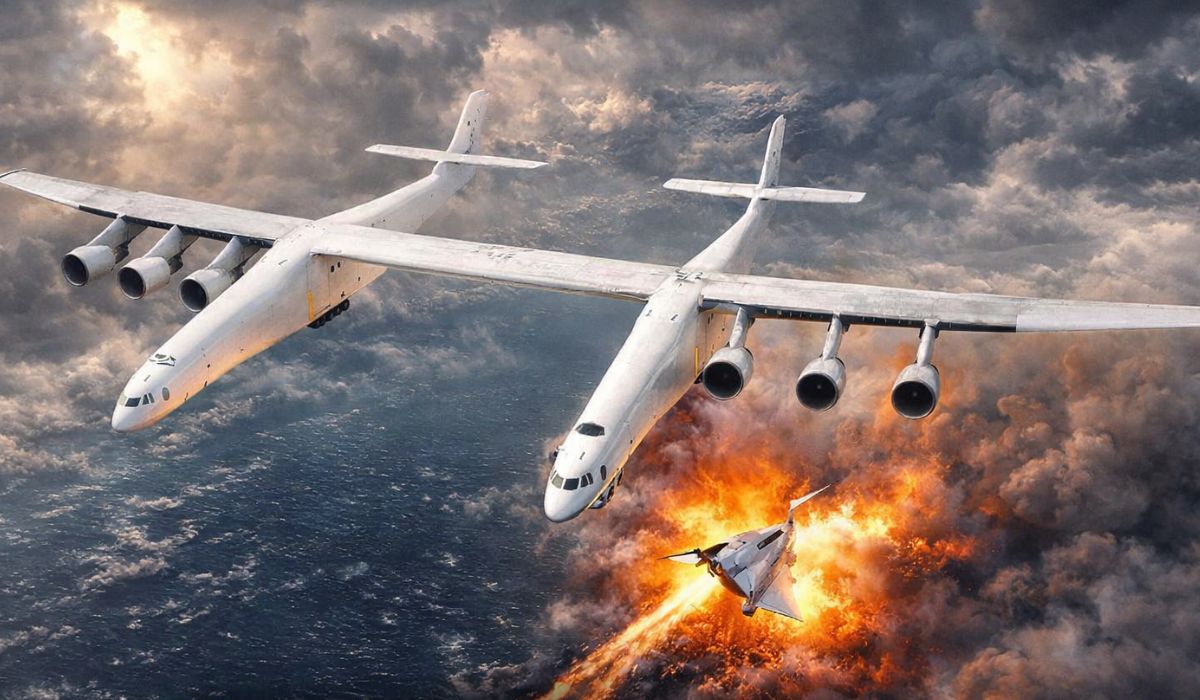
Largest airplane in wingspan in the world, the Stratolaunch Roc has taken a strategic position in the hypersonic tests of the United States, gathering unusual dimensions, air launch, and reusability in a program closely monitored by the industry and the Pentagon.
The Stratolaunch Roc has established itself as the largest operational aircraft in the world by wingspan and has taken on a relevant role in the hypersonic tests conducted in the United States.
Developed as an air launch platform, the aircraft is used to carry the Talon-A vehicle to high altitudes before separation in flight.
According to Stratolaunch and American authorities, the model aims to increase the flexibility of trials and reduce the interval between test missions.
-
Neuralink, the company specialized in brain chips founded by Elon Musk, announced that it intends to implant thousands of brain chips thanks to large-scale production.
-
Hummer H1X3: The 60-ton car, 14 meters long, and $25,000 tires – all for a single owner in the United Arab Emirates.

-
A city in the United States has a secret to handle peak electricity demand and can supply power to about 300,000 homes for up to 4 hours.

-
In the desert, at an altitude of 5,000 meters, there is a radio telescope that consumes as much energy as a city and relies on artificial oxygen to operate.


The proposal of the program is to shift part of the operation to the air.
Instead of starting the entire process from a fixed ground base, the system carries the test vehicle already attached to the aircraft structure to the planned altitude for launch.
The company claims that this configuration can facilitate recurring test campaigns in technologies capable of operating above Mach 5.
What is the Stratolaunch Roc
Also called Model 351, the Roc was designed to carry large payloads under the center section of the wing and release them during flight.
The aircraft has a twin fuselage, high wing, and six engines derived from Boeing 747.
On the official Stratolaunch website, the model appears with 385 feet of wingspan, equivalent to about 117.3 meters, and a maximum takeoff weight of 1.3 million pounds, something close to 590 tons.
The payload capacity reported by the company exceeds 500,000 pounds, about 226.8 tons.
The configuration with two fuselages was adopted to allow the transport of large vehicles in the center of the structure, below the wing.

Only the right fuselage houses the cockpit, from where the crew conducts the takeoff, climb, and the stage prior to the payload launch.
According to Stratolaunch, the arrangement of twin fuselage and high wing was designed to make the release of payloads in the aircraft’s central axis safer.
The design also responds to a technical requirement of the project: to support large external masses without compromising stability during flight.
How hypersonic launch in flight works
In the operation described by the company, the Roc takes off with the Talon-A attached under the central wing.
After reaching the altitude defined for the mission, the aircraft releases the vehicle, which continues alone and activates its propulsion system.
In June 2024, Stratolaunch reported that it had expanded the operational envelope of the Roc to 35,000 feet, about 10.7 kilometers, to support future sustained hypersonic missions.
This type of launch is treated by the company as an operational alternative to tests conducted exclusively from the ground.
The central point of the program, however, is not the use of the Roc as a weapon, but rather its use as a test platform.
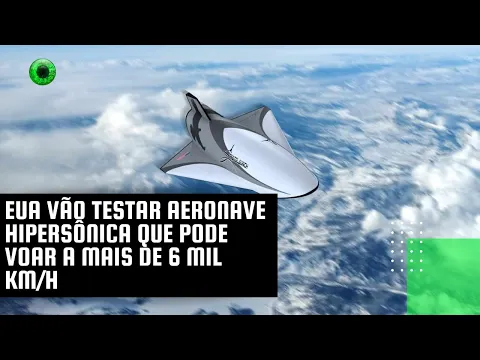
In Stratolaunch’s institutional material, the Talon-A is described as an autonomous and reusable vehicle aimed at experiments in a hypersonic environment.


Tests of the Talon-A and confirmed flights
The development of the program occurred in stages.
In March 2024, Stratolaunch and Reuters announced the first powered flight of Talon-A1.
At the time, the company reported that the vehicle reached high supersonic speeds, close to Mach 5, but did not publicly detail all the altitude and speed data from the mission.
The operation was treated as an initial step in validating the launch in flight and the propulsion of the system.
Later, in May 2025, Stratolaunch announced the completion of a second hypersonic flight with recovery of Talon-A2, conducted in March of that year.
In the same statement, the company revealed that the first successful hypersonic flight of TA-2 had occurred in December 2024.
According to Reuters, based on information from the Pentagon, the two tests occurred after launch from the Roc, with a trajectory over the Pacific, speed above Mach 5, and landing at the Vandenberg Space Force Base.
The publicly released data indicates that the recovery and reusability phase has become central to the project.
Why the Pentagon follows the program
In the United States, the hypersonic area has been treated as a technological priority.
In this context, Stratolaunch’s system is presented as a test platform for sensors, engines, communications, and other test payloads.
Reuters reported that the Talon-A vehicles are intended to serve precisely this type of technical development.
There is also an industrial dimension to this process.
The Department of Defense reported that Stratolaunch is involved in the MACH-TB program through a contract awarded by Leidos for flight testing services.
In an official statement, the U.S. government stated that the reusability of the vehicle represents a milestone by potentially reducing the preparation time between missions, with expectations of shortening the interval from months to weeks.
The logic of the program, therefore, is linked to the repetition of tests in shorter windows.
For the Pentagon, this could help accelerate evaluation and development cycles.
For the company, reusability is presented as a factor capable of making the process more frequent and operationally more efficient.
Dimensions of the largest airplane in the world by wingspan
In addition to its strategic function in testing, the Roc draws attention for its dimensions.
The Guinness recognizes the Stratolaunch as the largest airplane in the world by wingspan, with 117.35 meters.
On the manufacturer’s website, the comparison is direct: the wing exceeds the length of a football field.
The structure features six Boeing 747 engines and was designed to transport large masses to the launch point, without relying on a traditional vertical ramp.

This technical set makes the Roc a unique aircraft in the aerospace sector, both for its size and for the role it plays in test campaigns.
While other hypersonic programs remain tied to more conventional launch models, Stratolaunch has adopted a system based on a large aircraft and a vehicle designed to return to the runway after the mission.
With the tests already conducted and the recovery of the Talon-A2 officially confirmed, the program has entered a new phase of observation by the industry and American authorities.








Seja o primeiro a reagir!