





 Portuguese
  English
  Spanish
  3 min of reading
  0 comments


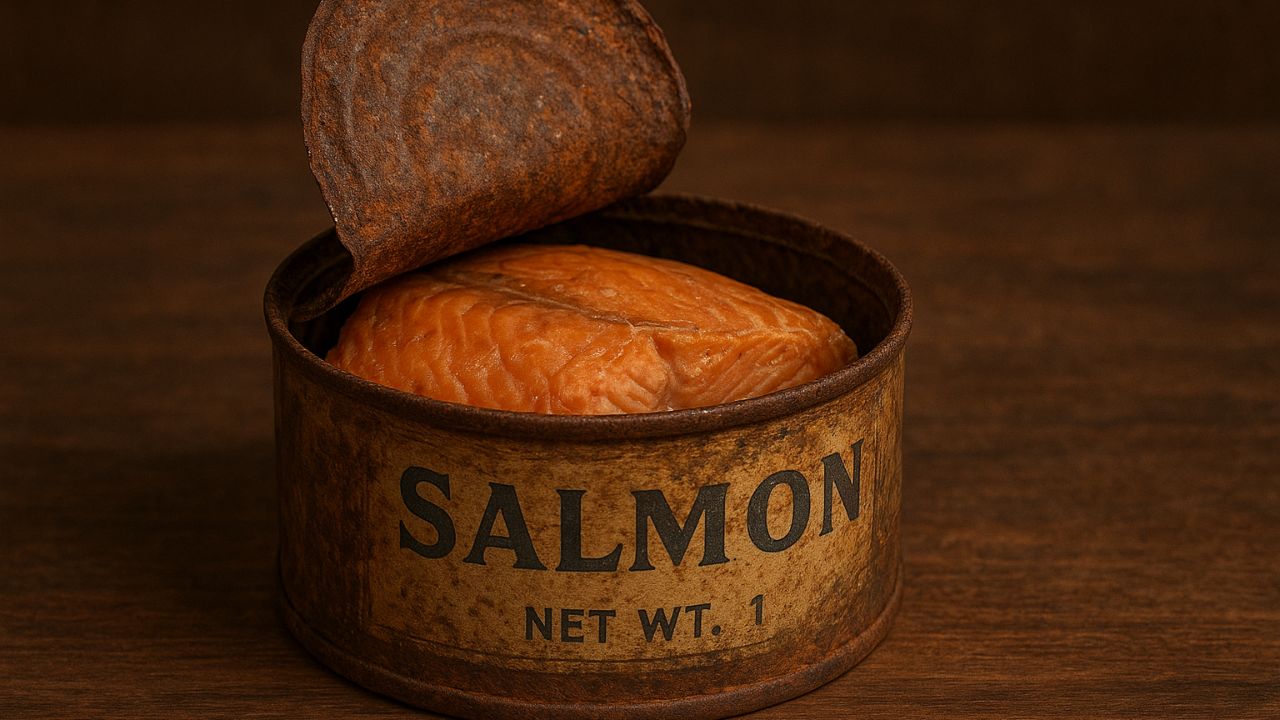
A Can of Expired Salmon Surprised Scientists When Opened. The Find Revealed Secrets About the Oceans and Marine Life.
An ordinary can of expired salmon, forgotten for decades, turned into a significant scientific discovery. When opening a can produced about 50 years ago, international researchers found preserved biological signs that help explain how the oceans functioned in the past — and how they are today.
The study, conducted by scientists from the University of Washington, analyzed hundreds of cans over more than 40 years of industrial salmon production. The goal was clear: to understand whether the seas from decades ago were healthier than they are today. The answer came from inside the can.
The analysis revealed that a can of expired salmon can hold much more than fish. It preserves environmental information, records biological patterns, and becomes a kind of “historical record” of nature.
-
Scientists use artificial intelligence to create nearly indestructible steel that does not rust and could change the way industrial energy and oil parts are produced.

-
Instead of buying new electric trucks, India is removing the diesel engines from old vehicles and installing electric propulsion for 40% of the price, and this simple idea could be the solution that polluted megacities around the world have been waiting for.

-
Circles in the Sahara plantations: ISS reveals Sharq El Owainat, in Egypt, irrigated by a center pivot with water from the Nubian Sandstone Aquifer, growing between 1998 and 2019, 290 km from the nearest city.

-
40% still call it a fraud: Soviets monitored Apollo, mirrors on the Moon still return lasers today and rocks confirm it; in 2026, 4 astronauts will return to lunar orbit and the race restarts against China.

Why Does An Expired Can of Salmon Interest Science?
At first glance, opening a can past its expiration date seems merely curious.
The salmon was caught, processed, and canned without knowing that decades later it would be examined under microscopes and modern laboratory analyses.
As a result, researchers were able to compare samples of current fish with those from decades ago, assessing what has changed in the marine environment over time.
What Was Found Inside The Expired Can of Salmon
Upon examining the interior of the cans, scientists encountered the presence of microscopic worms called anisakids.
These parasites, despite their negative reputation, are important indicators of ecological balance.

They only exist in environments with a healthy food chain. Their cycle depends on interlinked genes among crustaceans, fish, and marine mammals.
In other words, where they appear, there is enough life to sustain the entire ecosystem.
Researcher Chelsea Wood explained the importance of this finding:
“The presence of anisakids is a sign that the fish on your plate came from a healthy ecosystem.”
More Than 170 Cans Analyzed Over The Decades
The study was not limited to a single can of expired salmon. In total, 170 samples were opened and examined.
All were produced between 1979 and 2021.
The analyzed fish belonged to four different species and originated from coastal regions of Alaska.
Each can served as a piece of a large environmental puzzle.
The result was surprising: in several species, the number of parasites remained stable — and in some cases, even increased.
This indicates that the oceans in that region maintained a certain balance over time.
Parasites Do Not Mean Problems — They Mean Life
It is common to associate parasites with diseases. However, in the field of ecology, they function as extremely valuable environmental indicators.
When a species survives and reproduces over decades, it means that the environment can sustain a whole complex food chain.
Thus, contrary to what it seems, finding worms in an expired can of salmon is not a bad sign — it is a sign of living nature.
Would An Expired Can of Salmon Pose A Health Risk?
Despite the curiosity, researchers emphasize that the can continues to be safe from a sanitary perspective, as the industrial canning process subjects the fish to high temperatures.
This eliminates any biological risk. In other words, there is no health danger associated with the find. The value of the discovery is exclusively scientific and environmental.
This research shows that common everyday objects can become true scientific treasures.









-

-

3 pessoas reagiram a isso.