





 Portuguese
  English
  Spanish
  4 min of reading
  0 comments


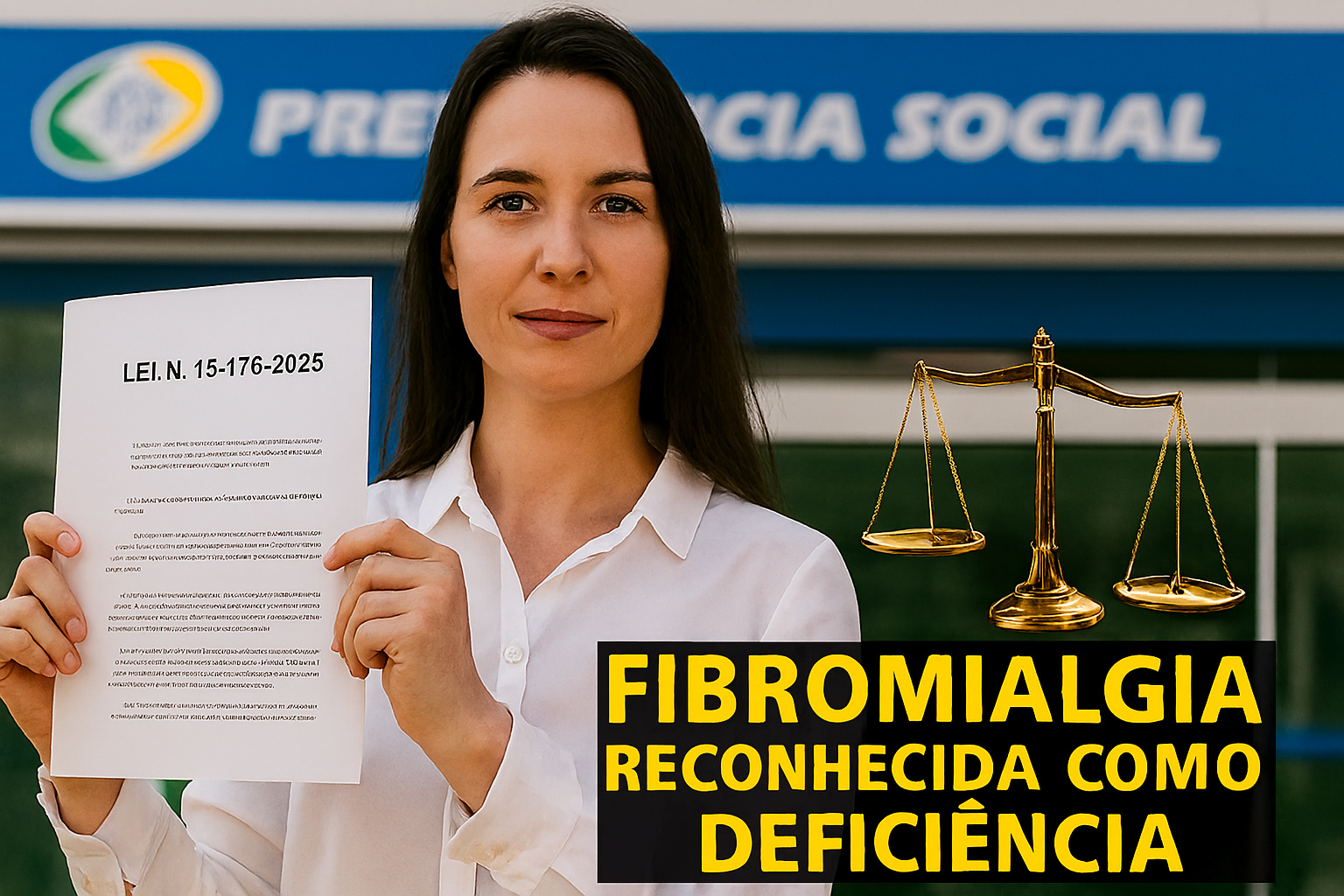
Law No. 15.176/2025 Recognizes Fibromyalgia as a Disability in Brazil, Ensuring Access to Early Retirement, BPC/LOAS, and Social and Labor Rights Previously Restricted to Other Disabilities.
On July 24, 2025, Law No. 15.176/2025 was enacted, making history by recognizing fibromyalgia as a disability for all legal purposes in Brazil. This change addresses years of struggle by patients, doctors, and health advocacy organizations that sought to equalize the rights of people with fibromyalgia to those guaranteed to individuals with physical, sensory, or intellectual disabilities.
From now on, those suffering from the syndrome will have expanded access to social, welfare, and labor benefits, including the possibility of applying for early retirement and accessing the Continuous Cash Benefit (BPC/LOAS), paid by INSS in the amount of R$ 1,518 in 2025.
What the New Law Says
Law 15.176/2025 amends the Statute of the Person with Disabilities and extends legal protection to those with fibromyalgia. This means that:
-
The noise law will no longer be in effect at 10 PM starting in June with a new rule valid during the 2026 World Cup.

-
The Chamber opens a debate on driver’s licenses at 16 years old as part of a reform that includes around 270 proposals to change the Brazilian Traffic Code and may redesign rules for licensing, enforcement, and circulation in the country.

-
The new Civil Code could revolutionize marriages in Brazil with “express divorce” and changes that could exclude spouses from inheritance.
-
Banco do Brasil sues famous influencer for million-dollar debt and intensifies debate on delinquency, risks of seizure, and direct impact on Gkay’s credibility.


- Fibromyalgia will be considered a disability for legal purposes in all spheres: health, welfare, social assistance, transport, and accessibility;
- Patients have the right to priority service in public and private offices;
- States and municipalities may regulate the exemption from taxes, such as IPVA for adapted vehicles or those exclusively used by the patient;
- The BPC/LOAS, an aid benefit of one minimum wage, can be requested by patients in vulnerable situations;
- Recognition opens the possibility for early or disability retirement, provided that the functional limitation is proven.


The Importance of Legal Recognition
Fibromyalgia is a chronic syndrome characterized by widespread pain, intense fatigue, sleep disturbances, and cognitive impairment. It is estimated to affect about 2% to 3% of the Brazilian population, according to data from the Brazilian Society of Rheumatology, being more common in women between 30 and 55 years old.
Until the law was approved, patients frequently faced medical disbelief, difficulties in INSS assessments, and denials of social benefits, due to lack of legal classification. Now, with the condition recognized as a disability, the evaluation will carry a different legal weight, providing greater legal security for administrative and judicial requests.
Possible Benefits with Law 15.176/2025
Among the main rights that can be accessed by individuals with fibromyalgia are:
- Continuous Cash Benefit (BPC/LOAS): paid in the amount of R$ 1,518 in 2025, intended for low-income individuals with disabilities;
- Retirement due to permanent disability or early retirement: subject to a medical report and biopsychosocial evaluation that proves the disability;
- Priority in public tenders within the quota for persons with disabilities;
- Priority service in public and private services;
- Possibility of exemption from state and municipal taxes, such as IPVA, depending on local regulations.
Evaluation Still Necessary
Despite the progress, the law does not automatically guarantee benefits to all patients with fibromyalgia. To access the BPC or retirement, it will be necessary to:
- Undergo medical evaluation by INSS;
- Submit to a social evaluation, which analyzes income conditions, family context, and disease impact;
- Demonstrate that fibromyalgia compromises the ability to work or live independently.
In other words, the law recognizes the right, but access will depend on case-by-case verification, preventing fraud and ensuring social justice.

Social and Economic Impacts
The enactment of the law represents a milestone for millions of Brazilians. In practice, it means that thousands of people previously invisible to the system now have legal support to fight for their rights.
From an economic standpoint, the measure may increase demand for INSS benefits. However, experts argue that this expenditure is, in fact, an investment in dignity and public health, as patients with fibromyalgia often need financial support to survive and care for their health.
Pain Finally Recognized by the State
Law 15.176/2025 symbolizes a victory against prejudice and invisibility. For years, fibromyalgia was treated as a subjective condition, difficult to diagnose and often discredited in medical assessments. Now, with official recognition as a disability, Brazil takes a historic step to ensure that the chronic pain of millions of people is treated with seriousness.
More than just a legal text, this law represents a gesture of social justice. It opens doors for patients to gain access to a minimum income, dignified retirement, and respect in public and private services.
The big question is: will the implementation of the law be enough to change the lives of those who suffer in silence, or will we still see resistance in accessing benefits?










-

-

-

-

13 pessoas reagiram a isso.