





 Português
  Inglês
  Espanhol
  5 min de leitura
  0 comentários


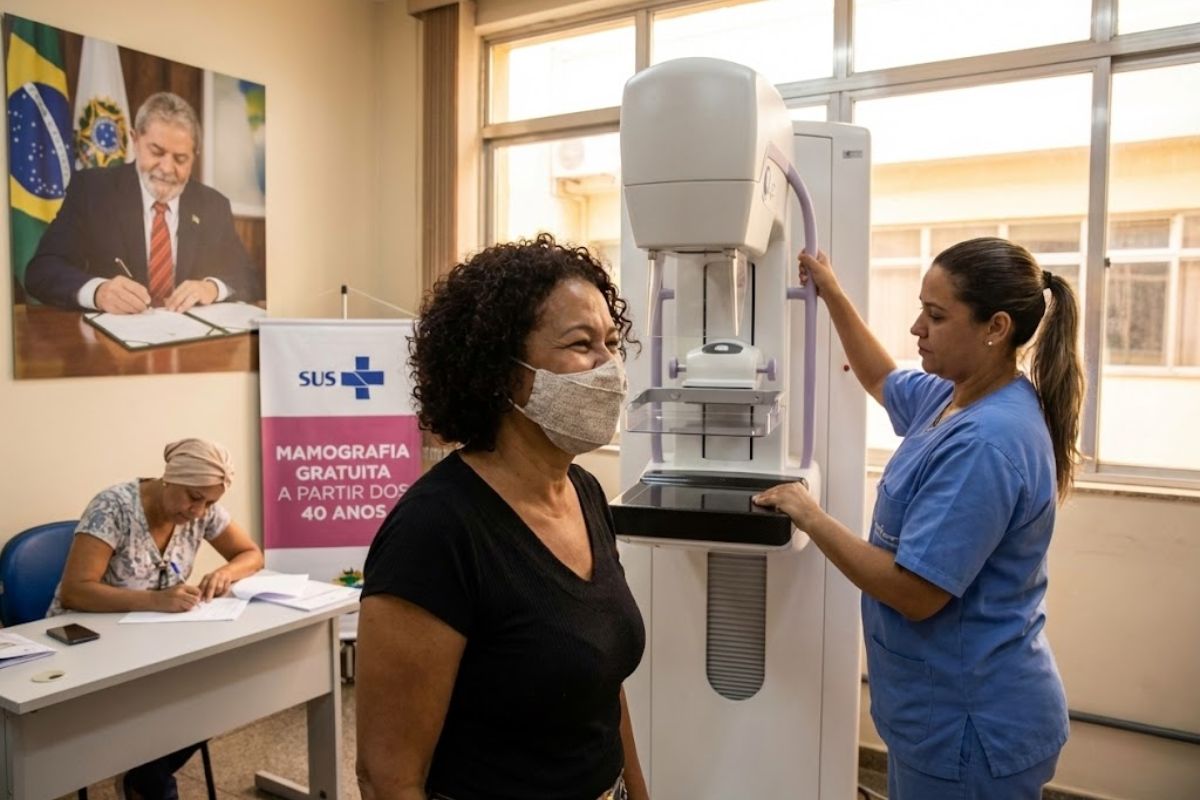
On Friday (19), Law 15.284 was sanctioned, guaranteeing Brazilian women the right to free mammography through the SUS starting at 40 years old, expanding breast cancer screening, anticipating early diagnosis, and reinforcing the goal of increasing exam coverage across the country in the coming years.
In 2023, 20,000 women died from breast cancer in Brazil, according to the National Cancer Institute. For 2025, the projection is over 73,000 new cases in the country. In light of this scenario, President Luiz Inácio Lula da Silva sanctioned Law 15.284 on Friday (19), which guarantees free mammography through the SUS starting at 40 years old for every woman, even without apparent symptoms.
The new right expands access to the exam used for early breast cancer diagnosis, focusing on an age group where the disease is already significant. Between 40 and 49 years old, 23% of estimated cases are included, and identifying the tumor before it grows significantly increases the chances of cure, health experts and authorities emphasize.
What Changes with Law 15.284 for Mammography in the SUS
Until the approval of the new law, the recommendation for mammography through the SUS was mainly directed at women aged 50 to 69 years, an age range with higher diagnoses and intervals of two years between one exam and another.
-
The Senate approves a bill that criminalizes misogyny, hatred, or aversion towards women, and includes the crime in the Racism Law with a penalty of up to 5 years.

-
Chamber Approves Bill That Allows Pepper Spray for Women Over 16 and Imposes Strict Rules for Purchase, Possession, and Use as Self-Defense

-
Chamber Approves Law to Combat Leucaena, Fast-Growing Plant That Dominates Land and Threatens Native Species in Various Regions of the Country

-
Asset Division: Know What Cannot Be Divided in Case of Divorce


Younger women had access to the exam in specific situations, such as clinical suspicion, noticeable changes in the breasts, or history of hereditary cancer.
With Law 15.284, all women aged 40 and over gain the right to mammography through the SUS even without showing signs or symptoms.
The exam is no longer restricted to scenarios of higher risk or suspicion and becomes part of the screening routine for a larger segment of the female population.
The new rule has been incorporated into Law 11.664 of 2008, which already dealt with actions for the prevention, detection, treatment, and follow-up of cancers of the cervix, breast, and colorectal.
Now, this legislation also includes the anticipation of the age for the exam in the public network.
Breast Cancer Remains the Leading Cause of Death Among Women in Brazil
Breast cancer is identified by the Inca as the leading cause of death among women in the country. In 2023, 20,000 Brazilian women lost their lives due to the disease, reinforcing the need for public policies focused on both prevention and early diagnosis.
For 2025, the institute estimates more than 73,000 new breast cancer cases. The age group from 40 to 49 years concentrates 23% of this incidence, showing that many women fall ill before the age of 50. By offering free mammography to this group, the SUS begins to act earlier, when several tumors are still small and easier to treat.
Health authorities highlight that organized screening through mammography is considered one of the main strategies to combat the disease, precisely because it allows tumors to be discovered when they cannot yet be felt in a self-exam.
Origin of the Proposal and Political Support for Change
The expansion of access to mammography originated from a project by Senator Plínio Valério of Amazonas, from PSDB, which received support from the federal Executive.
Alongside President Lula, the signatories of Law 15.284 include Ministers Alexandre Padilha of Health, Macaé Evaristo of Human Rights, and Márcia Lopes of Women.
According to the senator, anticipating the age for the exam will save many lives, as it will allow more women to access healthcare within the recommended period, based on each patient’s clinical profile.
The logic is clear: the earlier the tumor is detected, the greater the chances of successful treatment.
During an event at the end of September, when he announced that the government would publish the new law, Minister Alexandre Padilha described the offer of mammography starting at 40 in the SUS as a historic decision.
He emphasized that Brazil is expanding rights at a time when other countries are imposing access barriers.
The Challenge is to Expand Exam Coverage Nationwide
Despite free mammography being guaranteed by law, one of the major challenges is to turn this right into real and widespread access.
The head of the Early Detection and Network Organization Division at Inca, Renata Maciel, warns that the coverage of the exam is still low in several regions.
According to her, the goal is to reach 70% coverage. Today, there are Northern states with around 5.3% of mammograms performed, while Espírito Santo reaches 33%.
This disparity shows that the postal code still influences access to early diagnosis, and that it will be necessary to invest in organizing the network, equipment, and teams to reduce inequalities.
The focus of Inca is to strengthen organized screening, where women undergo mammography every two years, in accordance with technical guidance.
In practice, this involves calling patients, ensuring exam schedules, expediting reports, and assuring fast referrals for treatment when there is suspicion.
Self-Examination Helps, But Does Not Replace Free Mammography
Breast self-examination continues to be recommended as a way for women to better understand their bodies and notice changes.
However, experts highlight that only mammography can detect very small tumors that are not yet palpable.
It is precisely this ability to identify lesions at an early stage that makes mammography central to the strategy against breast cancer.
With the new right to free mammography through the SUS starting at 40 years old, the goal is for more women to undergo the exam regularly and have the chance to intervene before the disease progresses.
The combination of organized screening, access to timely treatment, and clear information about warning signs is seen as a way to reduce mortality and prevent many families from being impacted by late diagnoses.
Healthy Habits Also Play a Role in Prevention
In addition to the exam, breast cancer prevention involves daily lifestyle changes.
The Inca and the World Health Organization remind us that engaging in physical activities, maintaining a healthy weight, and reducing alcohol consumption are actions that help lower the risk of developing the disease.
Breastfeeding is also considered a protective factor, helping to reduce the chances of breast cancer throughout life.
Among the risk factors, experts cite aging, genetics, hormonal replacement, family history, late menopause, pregnancy after age 35, use of oral contraceptives, sedentary lifestyle, obesity, and alcohol consumption.
With the new law combining early diagnosis through free mammography and preventive guidelines, the country aims to act on two fronts: avoid part of the cases and, when cancer appears, detect it as early as possible.
Did you know that you have the right to free mammography through the SUS starting at 40 years old, and how access to the exam is in your city?










-

-

2 pessoas reagiram a isso.