





 Portuguese
  English
  Spanish
 4 min of reading
  0 comments


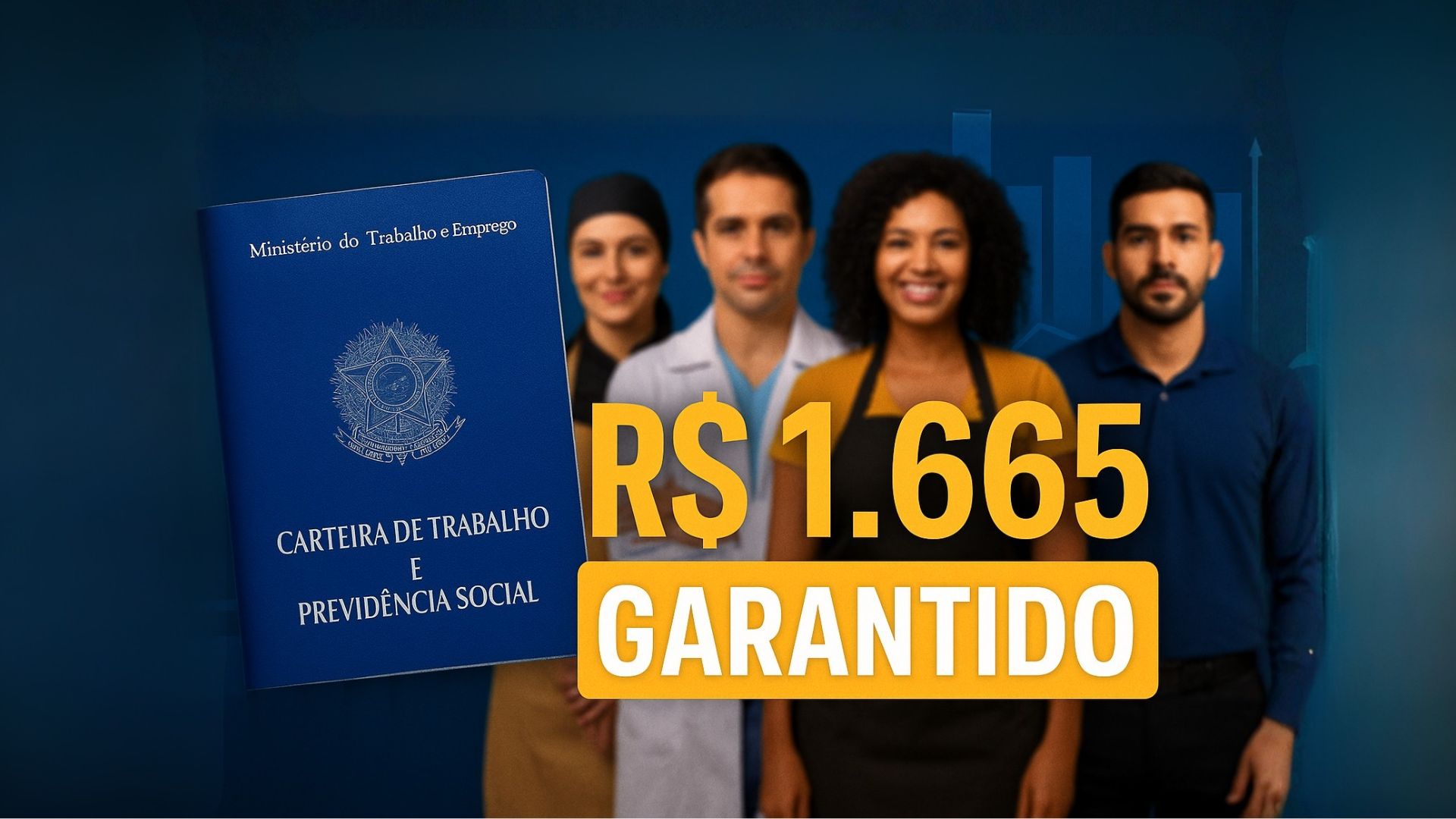
Change in Regional Minimum Wage Alters the Remuneration of Workers in Specific Sectors in Rio de Janeiro and Reinforces Differences Between National and State Minimum Wage.
In 2025, while the national minimum wage is set at R$ 1,518, a state law in effect in Rio de Janeiro establishes a minimum of approximately R$ 1,665 for some workers in the food, beauty, and personal services sectors who do not have their own collective agreement.
The value corresponds to one of the ranges of the regional minimum wage in Rio and serves as a mandatory reference for employers in these activities.
This state minimum does not replace the national minimum but complements it.
-
The largest food company on the planet, JBS, has just opened a 4,000 square meter laboratory in Florianópolis to develop customized proteins that modulate muscle mass gain, immune response, and metabolic performance.

-
After nearly 30 bids and competition among industry giants, a Spanish company purchases one of the largest airports in Brazil for almost R$ 3 billion and takes over the management of Galeão in a concession that will last until 2039.

-
The Federal Revenue Service now automatically cross-references everything you declare with data from banks, credit cards, brokerage firms, and insurance companies, and any discrepancy between your income and your expenses triggers an alert in seconds.

-
Amid global tensions, Brazil blocks the United States’ proposal at the WTO and paves the way for a trade crisis and possible retaliations.


The employer must always respect the higher amount between the two.
As the range around R$ 1,665 remains above the federal minimum wage in effect in 2025, it becomes the minimum threshold for professionals classified in this category in the state.
Operation of the Regional Minimum Wage in Rio de Janeiro
The regional minimum wage is authorized by the Complementary Law No. 103/2000, which allows federal units to set their own minimums for categories that do not have nationally defined values or agreements and collective conventions.
These minimums are organized into ranges and consider factors such as qualification, responsibility, and cost of living.
In Rio de Janeiro, the regional minimum is structured into six wage ranges, as provided in state legislation that remains in force and continues to be used in 2025.
Values published by state agencies and representative entities vary from just above R$ 1,200 in the initial ranges to over R$ 3,100 in the higher ranges.
The range that approaches R$ 1,665 covers specific groups of workers.
The ranges were last updated in 2019.
Since then, some values have fallen below the federal minimum wage, which makes it mandatory to use the national minimum in the ranges where it is higher, according to labor law experts.
Meanwhile, the values that remain above the federal minimum, such as the range of R$ 1,665, remain valid as a mandatory reference for employers whose categories do not have a collective agreement.
Thus, when referring to the “law that transfers the payment of R$ 1,665” to workers in the state, it is about the simultaneous application of the national minimum wage and the state legislation that sets higher wage ranges for certain functions.
Professions Included in the Range of R$ 1,665
The range around R$ 1,665 includes some workers in food, beauty, and personal services, especially those without a defined minimum in a collective agreement.
This group includes professionals who work in food preparation in commercial establishments and aesthetic service technicians, such as hairdressers, barbers, manicurists, pedicurists, and makeup artists, according to the classification adopted by the regional minimum wage.
The classification depends on the function performed and the economic activity of the company.
In food establishments, workers directly involved in meal preparation are typically placed in this intermediate range.
In the beauty segment, the value serves as a reference for technical functions that require specific training or professional qualification.
The regional wage represents only a minimum, not a maximum limit.
Companies can pay above it, depending on market conditions and the qualifications required.


Relationship Between Regional Minimum Wage and National Minimum Wage in 2025
In 2025, the national minimum wage of R$ 1,518 impacts pension benefits, the salary bonus, unemployment insurance, and employment contracts in states without their own regional minimum wage.
In states with a regional minimum wage, the employer must adopt the highest value among the national minimum, the state minimum, and the one defined by collective agreement.
Currently, five states maintain regional minimum wages: Rio de Janeiro, São Paulo, Paraná, Rio Grande do Sul, and Santa Catarina.
In 2025, São Paulo adopts a minimum of R$ 1,804 for workers without a specific collective agreement.
In Paraná, the values range from R$ 1,984.16 to R$ 2,275.36, depending on the professional range.
In Rio Grande do Sul and Santa Catarina, the minimums are also organized into ranges and are above the federal minimum.
Minas Gerais and Bahia do not have a regional minimum and follow the national minimum wage, although some categories have minimums defined by collective negotiations.
Debate on Updating the Regional Minimum Wage in Rio
Although the regional minimum wage in Rio remains in effect, union representatives claim that the values are outdated, as the last update occurred in 2019.
In the lower ranges, where the state minimum fell below the national minimum wage, the federal value prevails.
Even so, according to labor relations experts, the ranges where the state minimum remains above the national minimum — such as the one approaching R$ 1,665 — still have practical effects for workers in intermediate sectors.
For these groups, state legislation continues to define a minimum above the national one.
There are discussions on a possible update of the regional minimum wage, but so far there has been no approval of new legislation.
Given this scenario, how many workers in the food, beauty, and personal services sectors in Rio de Janeiro know the applicable regional minimum for their role and check if the amount paid corresponds to what is provided in the current legislation?







Seja o primeiro a reagir!