





 Portuguese
  English
  Spanish
  5 min of reading
  3 comments


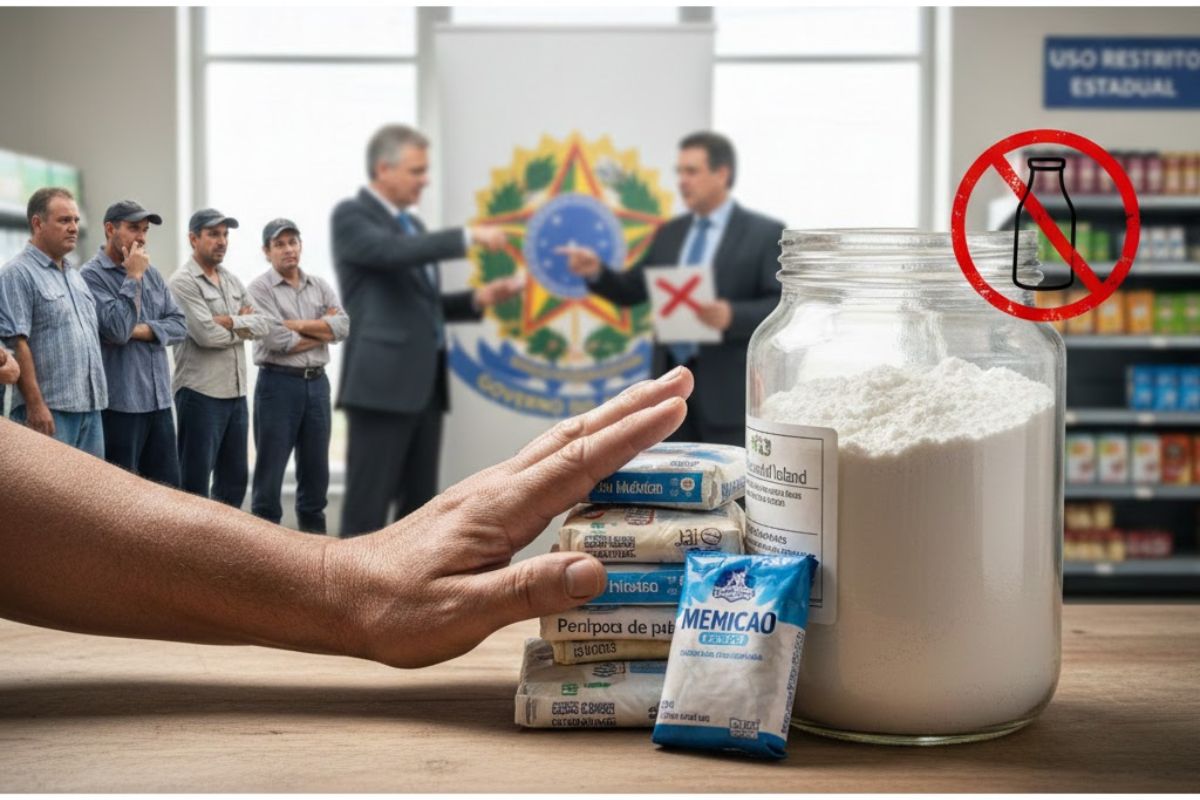


Amid Dumping Investigations Against Argentina and Uruguay, Powdered Milk Became the Focus of Dispute in Brasília, With Minas Leading Pressure, Santa Catarina and Paraná Creating Restrictions and a National Bill Trying to Prohibit the Reconstitution of Imported Product for Human Consumption Throughout the Territory of Brazil
Producers of powdered milk in Minas Gerais raised the tone and took the crisis directly to the Planalto, demanding an immediate suspension of imports from Mercosur. They claim that the massive entry of Argentine and Uruguayan products, at prices considered artificially low, undermines the competitiveness of the national chain, pressures cooperatives, and leaves thousands of family producers in a situation of economic risk.
While the Ministry of Development, Industry, and Trade conducts anti-dumping investigations against the two neighboring countries, lawmakers from Minas Gerais and sectoral entities are trying to accelerate the political response. The offensive includes not only the request to block foreign powdered milk but also the prohibition of its reconstitution as liquid milk or industrial input, in an attempt to limit the space of the imported product within the entire dairy industry.
Minas Producers Put Powdered Milk at the Center of the Crisis
The recent movement is led by producers from Minas Gerais, a state responsible for about 27 percent of national production, with approximately 9.3 billion liters per year.
-
Brazilian city bets on the business environment to generate jobs and attract investments in the energy sector — secretary reveals strategy at Macaé Energy 2026.

-
50 viaducts, 4 tunnels, 28 bridges, and 40 kilometers of bike paths: BR-262 in Espírito Santo will receive 8.6 billion reais for the largest engineering project in the state’s history, inspired by the Immigrant Highway in São Paulo.

-
Brazil produces too much clean energy and doesn’t know what to do with it: over 20% of solar and wind capacity was wasted in 2025 while investors flee and 509 renewable generation projects were abandoned in the last year.

-
Piauí will produce a new fuel that replaces diesel without needing to change anything in the truck’s engine and reduces pollutant gas emissions by half: truck drivers from all over the Northeast are already celebrating the news that will arrive later this decade.

In a letter sent to President Luiz Inácio Lula da Silva, articulated by Federal Deputy Zé Silva, the group calls for the immediate suspension of powdered milk imports from Mercosur.
According to Minas leaders, the shipments of Argentine and Uruguayan powdered milk are arriving in Brazil at prices below the costs practiced abroad, which drives down internal prices and puts those who produce fresh milk in the country at a disadvantage.
The producers argue that without some type of barrier, the profitability of the activity tends to decrease further, leading to farm closures, reduced investments, and weakening of regional cooperatives.
Anti-Dumping Investigations Against Argentina and Uruguay
The political scenario unfolds as the MDIC conducts anti-dumping investigations against Argentina and Uruguay, opened by Vice President Geraldo Alckmin at the beginning of the month.
The target is the export practices of powdered milk to Brazil at prices lower than those in the domestic markets of those countries.
The National Confederation of Agriculture claims that this price difference characterizes classic dumping, with offers of cheaper powdered milk abroad to gain market share at the expense of local industry.
If the investigations confirm the practice, the government may adopt trade defense measures, such as tariffs, quotas, or additional restrictions, significantly altering the flow of imports in the dairy sector.
Southern States Test Restrictions on Imported Powdered Milk
While Brasília discusses federal measures, Southern states have already moved forward with their own rules.
In Santa Catarina, Deputy Father Pedro Baldissera introduced a bill that prohibits the use of imported powdered milk and derivatives like whey in the production of food intended for human consumption.
The justification cites reports of the replacement of fresh milk with reconstituted product in yogurts, cheeses, and curds.
In Paraná, the reaction was even more direct.
The state approved legislation that prevents the reconstitution of foreign powdered milk for sale as liquid milk or for use in the derivatives industry.
In practice, this limits the space for imported products within the local chain, favoring the use of raw milk produced in the state itself.
These regional movements serve as a political and regulatory laboratory for a possible national rule on powdered milk.
Bill Seeks to Extend the Prohibition to All of Brazil
At the federal level, Zé Silva is trying to expedite the processing of Bill 5738 2025, which aims to prohibit throughout the country the reconstitution of powdered milk and imported derivatives for human consumption.
The proposal directly targets the strategy of using foreign products as a base for liquid milk and various industrialized dairy products.
Some in the sector believe that by limiting the use of imported powdered milk throughout the chain, the project would create a structural barrier to the expansion of products from Argentina and Uruguay.
For supporters of the measure, this would help protect local farmers, cooperatives, and industries from competition they consider unfair.
However, critics argue that the restriction may increase input costs, reduce industrial options, and ultimately impact the consumer’s wallet.
Impacts on Farmers, Cooperatives, and Consumers of Powdered Milk
From a production standpoint, the offensive against imported powdered milk is viewed by producers and cooperatives as a way to maintain internal prices at levels that make the activity viable.
With Brazil surpassing 34 billion liters annually, the entry of large volumes of reconstituted product may, according to the sector, disrupt the balance between national supply and industrial demand.
On the consumer side, the impact is less direct but significant.
If the prohibition on the reconstitution of imported powdered milk limits the supply of cheaper inputs for derivative industries, there is a risk of cost pass-through to final products like cheeses, yogurts, and curds.
At the same time, supporters of the restrictions argue that protecting the domestic productive base is essential to ensure supply and sanitary quality in the long term.
The central conflict is between protecting the national chain and the risk of increased prices for consumers.
Political and Economic Debate Still Open
For now, the dispute surrounding powdered milk remains open.
The anti-dumping investigations still need to be concluded, the bill in Congress depends on political maneuvering, and states are advancing with their own initiatives, creating a regulatory mosaic that increases uncertainty for industries and producers.
In this context, powdered milk has ceased to be merely a shelf product and has come to symbolize the clash between commercial integration in Mercosur, defense of local production, and consumer sensitivity to price variations in basic items.
How the federal government, Congress, and states will balance these interests will define the future space of imported products on the tables of Brazilians.
Given this scenario, do you think Brazil should restrict imported powdered milk to protect national producers, even if this could raise dairy derivative costs for consumers?







Sou pequeno produtor de leite tá na hora de autoridades olharem pra nossa realidade, pra cidade querem reduzir jornada de trabalho enquanto nós produtores estamos trabalhando 365 duas do ano e amargando só prejuízo interrompem imediatamente entrada de leite, estamos implorando nem bancos não estão nos ajudando mais
Concerteza os produtores de leite do Brasil estão morrendo a míngua
Sem dúvida, tem que restringir o uso do leite em pó importado, devido a concorrência desleal e inviabilizando a atividade local, e futuramente poderá haver uma disparada nos preços.
Com toda essa queda no preço do leite, não houve redução do preço ao consumidor, a indústriaestá aproveitando pra aumentar sua margem de lucro.